Managed Switches, Firewalls and Access Points: What Operating Each Device Class Actually Involves
A task matrix by device class: core firewalls and routers, access switches and wireless access points, what each needs daily, each quarter and on an event, and how that maps to price categories.
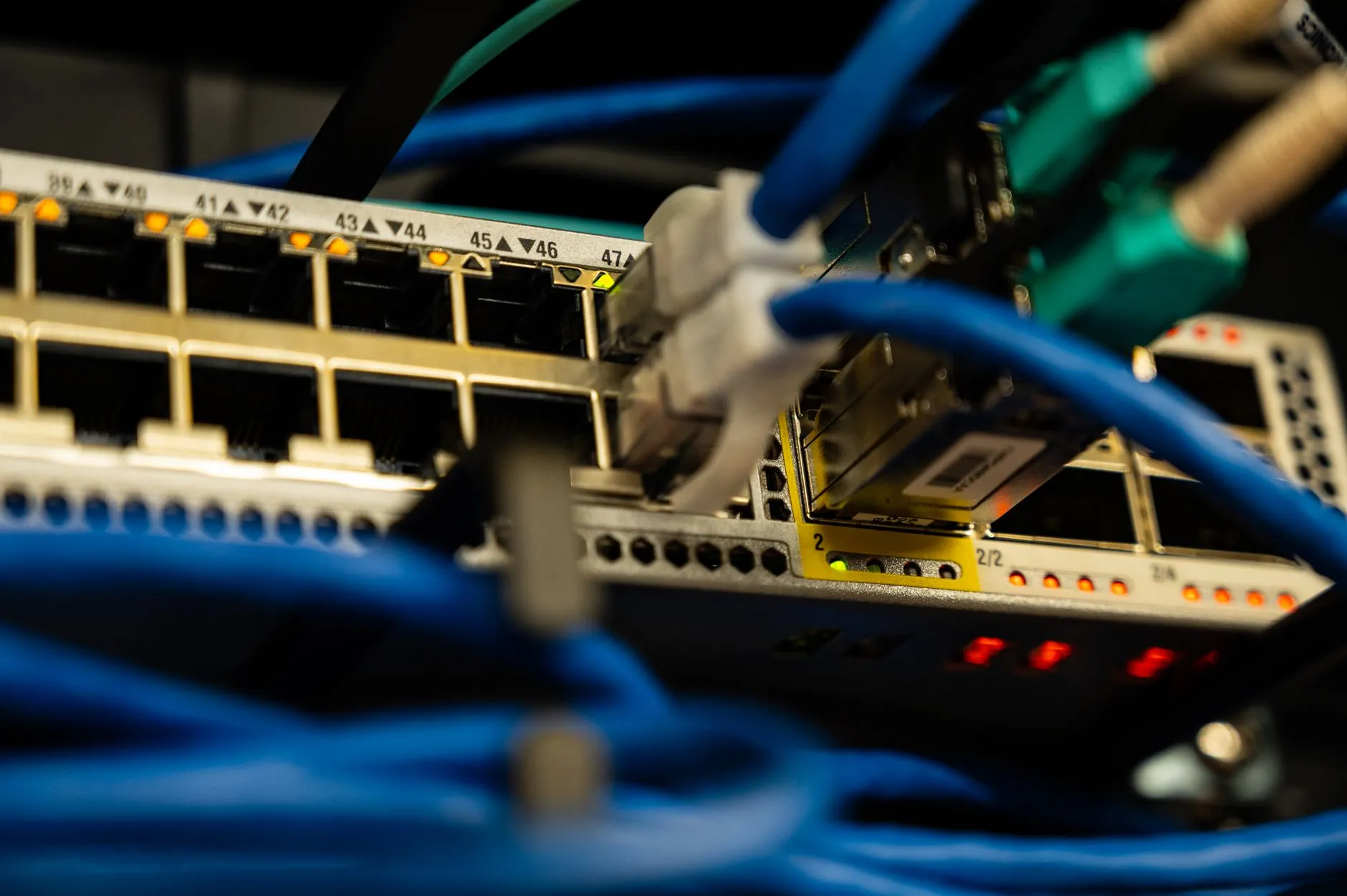
Quick answer: A managed switch service keeps access switches configured, backed up and watched: ports, VLANs, PoE and loops. Firewall and core-device operations add policy review, log handling and failover checks, which carry the most risk. Access point operations focus on radio settings, roaming, firmware and the controller. That difference in work is why each class is priced differently.
A managed switch service, a managed firewall and a managed access point service are three different jobs, even when one provider runs all three. Firewalls and core devices carry the most risk, because one wrong rule can cut off a whole site or open it to the internet. Access switches carry the most volume: many ports, many VLANs and power for phones and access points. Access points carry the most variability, because radio conditions change with the building and the people in it. This guide sets out, class by class, what operating each one involves day to day, each quarter and when something happens.
The same three classes appear as separate lines on our network and server maintenance pricing page. For how those lines add up into a monthly fee, read how per-device network pricing is calculated.
The short answer: three device classes, three different jobs
Managed network devices share a baseline, monitoring, backups and an asset record, but the work on top of it differs by class. The rule of thumb: firewalls are about policy, switches are about configuration, and access points are about radio.
Core network and security devices: firewalls, routers and core switches
Core devices are where a mistake has the widest effect, so their operation is built around careful review and controlled change. A managed firewall and switch at the core of a network decide what reaches the internet, what reaches each VLAN and whether a second site can connect at all.
Policy review, logs and high-availability state
The firewall rule base is the part that drifts. Rules are added for a project or a supplier and never removed, until nobody can say why a port is open. NIST SP 800-41 recommends that firewall policy be managed and reviewed over the device's whole life, not only at installation. A practical cadence is a light check every month, a full review at least once a year, and a review after any major change. Our firewall rule review checklist lists what to look at.
Logs matter because the firewall is often the only record of what crossed the network boundary. They should be exported off the device, kept for an agreed period and searchable when something needs investigating. Where firewalls run as a high-availability pair, both members need watching: a pair that has silently lost its standby unit looks healthy until the active one fails.
- Daily: reachability, CPU, memory and session load; VPN tunnel and internet line status; HA pair health; security alerts from the device
- Each quarter: rule base review against current business needs; firmware level against vendor advisories; certificate and licence expiry dates; log export check
- On an event: new rule or VPN on request, with a ticket, reason and backup before and after; emergency firmware for an exploited vulnerability in an agreed window; failover investigation; carrier escalation for a line fault
Why core devices have the highest rate
A core device has the largest blast radius: one change touches every user behind it. Changes need more preparation, a backup, often a test plan and a rollback step, and some can only run in a maintenance window. Policy review and log handling are recurring work that switches and access points do not need. That is why core network and security devices carry the highest network rate on our price list. The category also covers wireless controllers and VPN, WAF and IPS appliances. Where this operating work ends and security monitoring begins is set out in NOC vs MSP vs SOC.
Access switches
Access switch work is about keeping a large number of ports consistent, documented and recoverable. A managed switch service watches each switch for errors, keeps its configuration backed up, and makes port and VLAN changes on request.
Ports, VLANs, PoE budget, stacking and loops
Most user-visible network problems start at the access switch: a port in the wrong VLAN, a failing cable that keeps dropping a link, or a phone that will not power up because the switch has run out of Power over Ethernet budget. Each of these is visible to monitoring before it becomes a complaint, through interface error counters, link flaps and PoE usage.
Loops are the other risk. A cable plugged back into the same switch, or a small unmanaged switch under a desk, can flood the network in seconds. Loop protection settings need to be in place and checked. Where switches are stacked, the stack needs watching as one unit and as its members, because a stack that loses a member can keep running at reduced capacity without anyone noticing.
- Daily: reachability; uplink status and utilisation; interface errors and flapping ports; PoE usage; stack member status
- Each quarter: firmware level; unused-port and VLAN tidy-up; uplink capacity trend; configuration backup check
- On an event: port or VLAN change on request; isolation of a looping or faulty port; diagnosis of a failed switch and coordination of the replacement
Configuration backups and restoring a replacement
The value of a switch backup shows on the day a switch dies. With a current configuration stored off the device, a replacement of the same model can be loaded and back in service in the time it takes to rack it. Without one, every port, VLAN and uplink has to be rebuilt from memory. Backups should be taken automatically and after each change, and the restore process should be tested.
Access switches carry a lower rate than core devices because each change has a smaller effect and the work is more repeatable. They carry a higher rate than access points because each switch has more configuration to keep correct.
Wireless access points and the controller
Access point operations are about radio quality and consistency across the building. A managed access point service runs the controller, watches each access point and keeps firmware and settings aligned.
Channels, power, roaming, firmware and the hosted controller
Wi-Fi complaints usually come from coverage gaps, interference between neighbouring access points, or devices that do not roam cleanly as people move. Channel and transmit power settings decide most of this, and the right values change when walls move, desks are added or a neighbour installs a new network. Firmware needs to stay consistent across all access points under the same controller. NIST SP 800-153 sets out the security side: authentication, encryption settings and keeping wireless configuration under control.
On our service, the hosted controller is included in the access-point rate. For access points you bought, we run adoption, SSIDs and VLANs, monitoring, firmware in agreed windows, a daily configuration backup kept three years and a monthly availability report.
- Daily: access point up/down; client counts; controller health; rogue or interfering networks flagged by the controller
- Each quarter: firmware across all access points; channel and power review; SSID and authentication settings; capacity in busy areas
- On an event: SSID or password change on request; investigation of a coverage complaint; replacement of a failed access point and re-adoption
How operations relate to a site survey
Operations can tune a wireless network that was designed well. They cannot fix one with too few access points or access points in the wrong places. That needs a wireless site survey, which is a one-off project priced on its own page. Access points carry the lowest network rate because each one has little individual configuration once the controller holds the settings.
The baseline every device class shares
Every managed network device, whatever its class, should come with the same four basics.
Asset list, warranty, lifecycle and alerts
- Asset record: model, firmware, location and owner for every device, recorded at onboarding
- Configuration backup: stored off the device and dated
- Warranty and lifecycle: warranty status and the vendor's end-of-support date, so replacements are planned rather than forced
- Alerting: routine events by email and logged as tickets; critical events by phone to a named contact
CIS Controls v8 treats asset inventory and network infrastructure management as separate, foundational controls, which is a useful check on whether a provider covers both.
How device classes map to the pricing categories
The price list mirrors the work described above. Each category has its own monthly rate per device, with graduated tiers:
- Core network and security devices: firewalls, routers, core switches, wireless controllers, VPN, WAF and IPS appliances
- Access switches
- Wireless access points, with the hosted controller included
- UPS units, with environment sensors and PDUs in the same room counted with the UPS
- Servers, virtual and physical, on their own lines
The current rates are on the network and server maintenance pricing page. If your users also need day-to-day support, our managed IT support plans cover people and laptops, and the network devices join the same agreement per device. A Microsoft 365 security audit and managed backup services cover the cloud side of the same office.
Managed switch service: FAQ
How often should firewall rules be reviewed?
A light check every month and a full review at least once a year is a sensible minimum, plus a review after any major change such as a new site or supplier. Internet-facing rules deserve the most attention.
How is a switch's configuration restored after replacement?
The replacement is loaded with the last configuration backup taken off the old switch, then checked port by port against the record. With a current backup, this is a short job; without one, the configuration has to be rebuilt.
Do access points need a managed controller?
Most business access points are run from a controller, either on site or in the cloud, which holds the settings and pushes firmware. On our service, the hosted controller is included in the access-point rate.
Are there restrictions on device brands?
We work with the brands you already have. The service page lists equipment we have run; if your model is unusual, we confirm support during the intake survey before you sign.
What happens when a device's warranty has expired?
We still operate it, and diagnose faults remotely. For repair cover, you can renew with the manufacturer or use third-party maintenance; our guide to third-party hardware maintenance versus OEM support compares the two.
How many devices does a switch stack count as?
It depends on how the stack is built and managed. List the stack as it is, with its members, and we tell you how it is counted before you sign. The same applies to firewall pairs.
Are UPS units in scope?
Yes. Each UPS is monitored for power, battery and runtime, and counts as one device. Environment sensors and PDUs in the same room count with it.
Do the devices stay at our premises?
Yes. Your devices stay in your office or data centre and remain yours. We operate them remotely from our operations centres and send a local engineer when hands are needed.
Next step
Brocent has provided managed IT services since 2007 and has more than 360 long-term clients. For a composite scenario, not a client case, of a firewall that had never been reviewed, see why a telco-supplied router was not enough for a Hong Kong manufacturer. For what happens across a month, read what remote network operations includes. When you are ready, enter your device counts on the network and server maintenance pricing page or send your device list through our contact form.
Sources and check dates
We read the sources below on 15 November 2026. This article describes operating practice and Brocent's own service; it contains no statistics.
- Brocent managed network operations service description and pricing (device categories and what each rate includes)
- NIST SP 800-41 Rev. 1, Guidelines on Firewalls and Firewall Policy (policy management over the device's life)
- NIST SP 800-153, Guidelines for Securing Wireless Local Area Networks (wireless configuration and security)
- NIST SP 800-92, Guide to Computer Security Log Management (log export and retention)
- CIS Critical Security Controls v8 (asset inventory and network infrastructure management)

Rogue Yu
IT Service Delivery Director, vCIO
Leads Brocent's global IT service delivery from Beijing and Singapore, with 15+ years in the role. Still designs network, hybrid cloud, managed IT and security solutions himself; senior ITIL and PMP certified.
View vCIO profileShare:
Ready to take action?
Turn these insights into a roadmap for your business.
Book a 15-minute no-obligation consultation with our APAC IT experts. We'll review your current setup and provide a tailored IT roadmap within 24 hours.
Explore all servicesFree Checklist
10 Critical Checks Before Expanding IT to Greater China
PIPL compliance, network segmentation, bilingual helpdesk setup, and more — everything your IT team needs before Day 1 in China.
Request the checklist →📬 Monthly Asia IT Insights
China compliance updates, cybersecurity alerts, and IT tips for APAC teams — once a month.
No spam. Unsubscribe anytime.
Related Articles
Nov 03, 2026
Network & IT Hardware Maintenance Services: What's Included, Pricing Models & SLAs (Hong Kong and Singapore, 2026)
Sep 04, 2026
The Router From the Telco Wasn't Enough: A Hong Kong Manufacturer's Managed Firewall Upgrade

Oct 30, 2026
Firewall Rule Review Checklist: How Often to Review and How to Clean Up