Server & Network Maintenance Costs for Hong Kong SMEs
What Hong Kong SMEs pay monthly for server and network maintenance: physical hosts vs VMs, firewalls and APs, 8×5 vs 24×7 scope, onsite dispatch and quarterly billing.
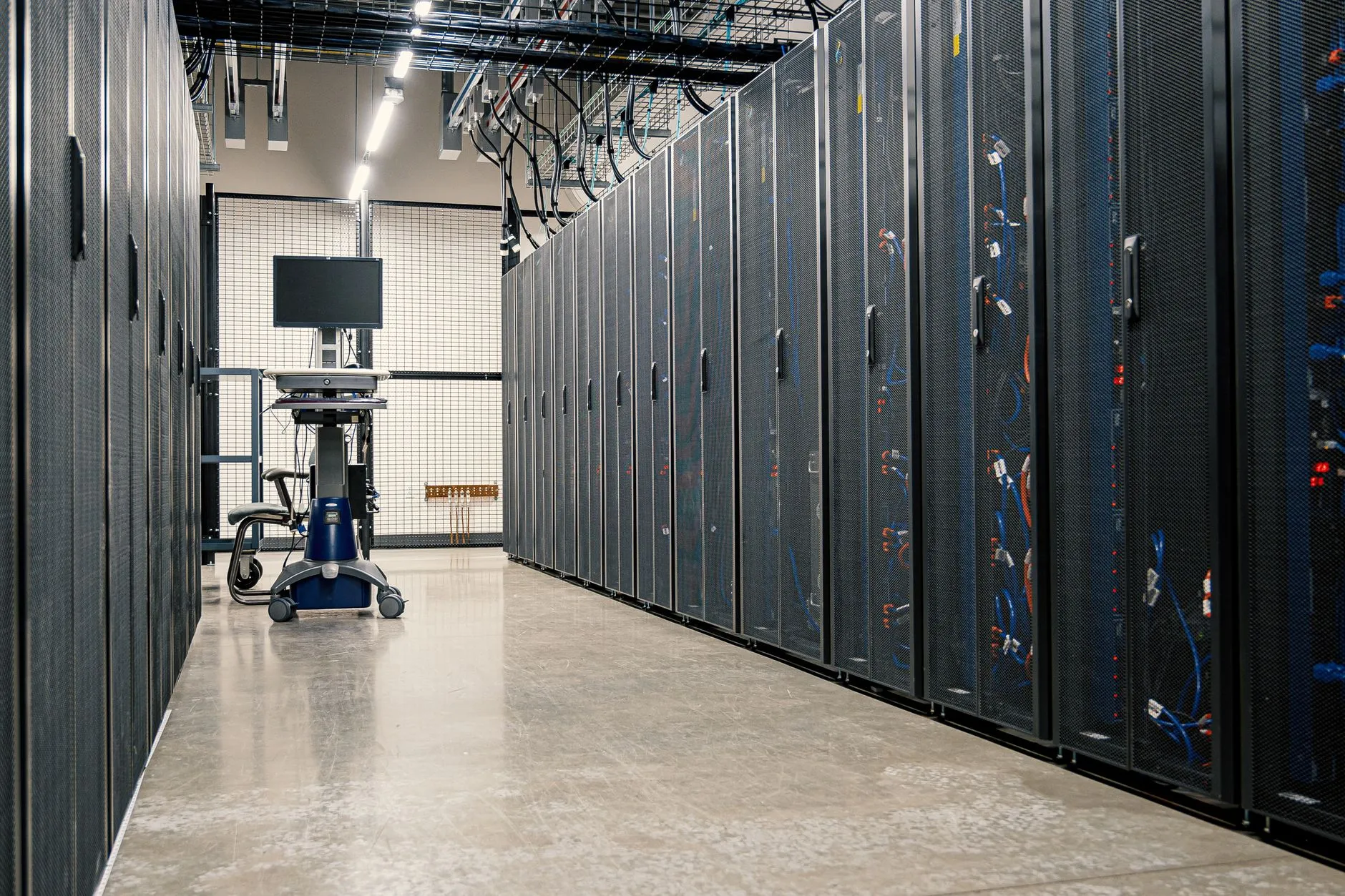
Quick answer: Transparent per-device network and server maintenance for a Hong Kong SME starts at a US$99/month (~HK$776) minimum for a small cloud-first office and typically runs around US$965/month (~HK$7,563) for a 30–60 staff office running 2 firewalls, 4 switches, 8 Wi-Fi APs, 1 UPS, 1 physical host, and 3 virtual servers (excl. tax, 6 Nov 2026 FX rate). Under Brocent's published rate card, physical servers start at US$270.08 (~HK$2,117)/month and virtual servers at US$150.04 (~HK$1,176)/month, including 24×7 monitoring, business-hours remote operations, OS patching, and monthly reports—with on-site visits budgeted separately.
Ask three Hong Kong IT vendors to quote monthly network and server maintenance for a 40-person office in Kwun Tong or Central, and you will often receive three wildly different proposals: HK$2,000, HK$8,000, and HK$18,000 per month. The gap rarely reflects different labour costs; it reflects hidden scope differences—whether virtual machines count separately from physical hosts, whether monitoring runs 24×7 or only during office hours, whether OS patching is actually performed, and whether on-site engineer visits are quietly padded into the monthly retainer.
This guide breaks down what a Hong Kong SME's monthly maintenance fee should cover, how physical servers, VMs, firewalls, switches, and access points are priced, what drives costs up or down, and how quarterly-in-advance billing works in practice. Every Brocent figure below matches our published network and server maintenance pricing schedule.
How Hong Kong SMEs Are Billed: Per-Device Retainer vs. Token Packs
Hong Kong SMEs generally encounter three commercial models when buying infrastructure maintenance:
- Break-fix / token packs only: You prepay blocks of engineer hours (tokens) and call when something breaks. Cash outflow stays low during quiet months, but nobody monitors UPS batteries, firewall firmware advisories, or RAID disk warnings until a server goes offline on a Monday morning.
- Bundled all-inclusive office retainer: One flat monthly fee claims to cover servers, network gear, user laptops, and unlimited on-site visits. In reality, vendors pad the retainer to insure against heavy on-site call-outs, and exclusions around hypervisors, weekend patching, or hardware faults only surface during an outage.
- Per-device infrastructure maintenance + separate annual on-site allowance: Every network appliance and server carries a published monthly rate covering 24×7 monitoring, remote operations, configuration backups, OS patching, and monthly reporting. Physical visits are purchased separately as an annual allowance priced from published dispatch rates.
For Hong Kong SMEs, the third model is the easiest to audit: finance teams can reconcile every line on the invoice against the physical rack and hypervisor console, and growing offices pay only for the exact devices they add.
Physical Hosts vs. Virtual Servers and Network Devices: Exact Pricing & Scope
A common surprise in Hong Kong server maintenance quotes is discovering mid-contract that one physical server hosting four virtual machines counts as five billable items—or worse, discovering that guest VMs were never patched at all because only the hardware host was monitored.
Why physical hosts and VMs are priced separately
Managing a physical server and managing a virtual server (VM) require distinct operational work:
- Physical server operations cover bare-metal and hypervisor health (VMware ESXi, Microsoft Hyper-V, or Linux KVM), out-of-band management interfaces (iDRAC/iLO/IPMI), RAID array and disk health, power supply and thermal alerts, host firmware checks, and hypervisor patching.
- Virtual server operations cover guest operating-system monitoring (CPU, RAM, disk capacity, critical Windows/Linux services, event logs), scheduled operating-system patching in approved maintenance windows, account and log hygiene, and remote troubleshooting when an application service hangs.
Pricing physical servers and VMs on separate, transparent lines ensures both layers are actively patched and monitored rather than falling into a grey area between "hardware" and "application."
Published per-device monthly rates (USD and HKD reference)
Brocent publishes one global USD price list across all markets (valid until 31 December 2026; HKD reference figures below use our 6 November 2026 exchange rate of HK$7.8373 per US$1, rounded to whole dollars; all prices exclude applicable local taxes). Tiers are graduated, meaning only devices above each threshold move into the lower tier:
| Device Type | Tier 1 (Net 1–20 / Srv 1–5) | Tier 2 (Net 21–60 / Srv 6–15) | Tier 3 (Net 61+ / Srv 16+) | Included in Monthly Fee |
|---|---|---|---|---|
| Core network & security (firewalls, routers, core switches, VPN/WAF/IPS) | US$47.47 (~HK$372) | US$45.10 (~HK$353) | US$42.72 (~HK$335) | 24×7 monitoring, business-hours remote ops, config backup, monthly report |
| Access switches | US$23.20 (~HK$182) | US$22.04 (~HK$173) | US$20.88 (~HK$164) | 24×7 monitoring, port/VLAN changes, config backup, monthly report |
| Wireless access points (APs) | US$4.50 (~HK$35) | US$4.28 (~HK$34) | US$4.05 (~HK$32) | 24×7 monitoring, hosted wireless controller incl., daily backup (3-yr retention) |
| UPS units (rack sensors & PDUs in same room count with UPS) | US$21.00 (~HK$165) | US$19.95 (~HK$156) | US$18.90 (~HK$148) | 24×7 power/battery/temp monitoring, alerts, incident log |
| Virtual servers (VMs) | US$150.04 (~HK$1,176) | US$142.54 (~HK$1,117) | US$135.04 (~HK$1,058) | 24×7 monitoring, business-hours remote ops, OS patching, monthly report |
| Physical servers | US$270.08 (~HK$2,117) | US$256.58 (~HK$2,011) | US$243.07 (~HK$1,905) | 24×7 monitoring, host/OS patching, remote ops, monthly report |
A minimum monthly fee of US$99.00 (~HK$776) applies across network and servers combined. Note also that environment sensors and rack PDUs sitting in the same server room count with their UPS rather than generating extra device charges, and wireless access point fees include the hosted controller at no extra monthly charge.
8×5 Remote Operations vs. 24×7 Monitoring and Response Tiers
When comparing Hong Kong proposals, separate monitoring hours, alerting hours, and engineer remediation hours. Many SMEs overpay for 24×7 engineer retainers they do not need—or accidentally buy an 8×5 monitoring package that stays blind all weekend.
- 24×7 monitoring and alerting (standard on every device): Automated 1-minute checks run around the clock from joint operations centres across time zones. Routine events open a ticket and email your IT contact; critical faults (firewall down, internet circuit drop, UPS on battery) trigger an immediate phone call to your named contact even at 03:00 on a Sunday.
- 8×5 business-hours remote operations (standard in the per-device fee): Configuration backups, firewall policy checks, account maintenance, log exports, scheduled patching windows, and remote troubleshooting run during standard business hours, supported in Cantonese, English, and Mandarin.
- 24×7 response and remediation tiers: Response targets follow published tiers selected at contract signing on our SLA page: Essentials (1 hour), Business (30 minutes), or Premium (15 minutes, 24×7).
Rule of thumb for Hong Kong SMEs: A trading, legal, or professional-services office operating Monday–Friday usually gets the best value from 24×7 monitoring/alerting combined with Essentials or Business response targets and pre-agreed weekend patching windows. Financial firms running US/European trading hours, 24-hour logistics depots, or multi-shift healthcare clinics should step up to Premium 24×7 response so an engineer intervenes remotely before Asia market open.
Three Worked Hong Kong SME Monthly Cost Examples
Using the exact published rates above (excl. tax; HKD converted at 6 November 2026 FX HK$7.8373), here is what three realistic Hong Kong SME footprints cost per month and per quarterly invoice:
| Hong Kong SME Profile | Device Inventory | Monthly Fee (USD) | HKD Reference / Month | Quarterly Invoice (3 Months) |
|---|---|---|---|---|
| A. Small branch / micro office (below floor) | 1 core firewall, 2 Wi-Fi APs (3 devices; US$56.47 + US$42.53 minimum top-up) | US$99.00 | ~HK$776 | US$297.00 (~HK$2,328) |
| B. Lean cloud-first SME (15–25 staff, M365 only) | 1 core firewall, 2 access switches, 4 Wi-Fi APs, 1 UPS (8 devices) | US$132.87 | ~HK$1,041 | US$398.61 (~HK$3,124) |
| C. On-premise virtualised SME (30–60 staff) | 2 HA firewalls, 4 switches, 8 APs, 1 UPS, 1 physical host, 3 VMs (19 devices) | US$964.94 | ~HK$7,563 | US$2,894.82 (~HK$22,688) |
Look closely at the jump between Scenario B (~HK$1,041/month) and Scenario C (~HK$7,563/month): server infrastructure (1 physical host + 3 guest VMs = US$720.20/month) accounts for roughly 75% of the monthly budget in a traditional on-premise SME. That single comparison explains why retiring legacy file servers into cloud workloads or consolidating idle VMs is often the fastest way for a Hong Kong SME to lower recurring maintenance spend.
Five Levers That Drive Your Monthly Fee Up or Down
- Server count and VM sprawl: Every active VM requires OS patching, vulnerability hygiene, and storage monitoring. Before signing a maintenance contract, audit your hypervisor and decommission test VMs or legacy print/file servers that have already migrated to Microsoft 365.
- Separating on-site visits from remote operations: In a properly documented office network, 80%+ of incidents resolve remotely. Buying a modest annual on-site dispatch allowance priced from our Hong Kong dispatch rates avoids paying inflated monthly retainers for engineer visits you rarely use.
- Hardware warranty vs. remote maintenance: Remote network and server operations does not replace dead hardware. If a server power supply or switch chassis fails, our engineers diagnose the fault remotely and liaise with your OEM warranty or third-party hardware maintainer to coordinate replacement. If you need guaranteed local spare parts and same-day physical replacement on out-of-warranty gear, contract that separately under our IT hardware maintenance service.
- Documentation quality at handover: Well-documented single-site Hong Kong networks typically onboard within one week with no published setup fee. Undocumented server rooms with missing admin credentials, unlabelled patch panels, or no out-of-band access require two to four weeks of intake discovery and remediation—always surfaced transparently before signing.
- Standalone infrastructure vs. combined Managed IT support: You do not need a full user-helpdesk contract to buy network and server maintenance. Conversely, if you already need end-user laptop support, Microsoft 365 administration, and local helpdesk under our Hong Kong IT support plans, infrastructure devices sit on the same agreement and appear inside one unified monthly report.
Hong Kong Contract Terms and Quarterly-in-Advance Billing Clarity
Unexpected renewal clauses and billing friction frustrate Hong Kong finance controllers more than headline rates. Before signing any maintenance contract, check four commercial terms:
- Contract term and exit: Minimum 12-month term with 30 days' notice to terminate. On exit, configurations, monitoring histories, and reports belong to you—agents are removed, named accounts closed, and provider copies deleted.
- Quarterly-in-advance billing: Invoices are issued at the start of each quarter on 30-day payment terms. Invoices default to USD, with HKD invoicing available on request at contract signing—fitting neatly into Hong Kong corporate quarterly budgets without monthly petty-invoice clutter. (All published prices exclude applicable local taxes; Hong Kong currently levies no GST or VAT.)
- The ±5% device-count rule: If your total managed device count stays within ±5% of the contracted baseline during the year (for example, swapping a faulty AP or adding one switch), your quarterly fee stays unchanged and reconciles at annual renewal. Changes exceeding ±5% are repriced to the actual count from the next billing period.
- Monthly proof of work: Every month you receive one three-part report—availability per device group, full incident log (including any on-site allowance hours used), and an inspection summary covering firmware levels, configuration backup status, capacity trends, and recommendations.
Brocent has provided managed IT services since 2007 to more than 360 long-term clients and is ISO/IEC 27001 certified. Plug your exact firewall, switch, AP, and server counts into the interactive estimator on our network and server maintenance pricing page, or speak with a Brocent Hong Kong consultant to receive a written quotation tailored to your office.
Frequently Asked Questions
How much does monthly server and network maintenance cost for a typical Hong Kong SME?
For a lean cloud-first Hong Kong office (1 firewall, 2 switches, 4 APs, 1 UPS), monthly per-device maintenance is US$132.87 (~HK$1,041/month, excl. tax). For a 30–60 staff office running on-premise infrastructure (2 firewalls, 4 switches, 8 APs, 1 UPS, 1 physical host, 3 VMs), monthly maintenance is US$964.94 (~HK$7,563/month, excl. tax). Very small sites are subject to a US$99/month (~HK$776) minimum fee.
Do virtual servers (VMs) cost extra on top of the physical host?
Yes, because physical hypervisor hosts and guest VMs require different maintenance work. Under Brocent's published rates, physical servers start at US$270.08 (~HK$2,117)/month and virtual servers start at US$150.04 (~HK$1,176)/month (excl. tax), with volume discounts stepping down at 6+ and 16+ servers. Both lines include 24×7 monitoring, remote operations, and scheduled OS patching.
Are on-site engineer visits in Hong Kong included in the monthly per-device fee?
No. Keeping on-site visits outside the per-device fee keeps monthly recurring costs transparent and fair. Hong Kong SMEs purchase on-site engineer support as a separate annual allowance priced from our published Hong Kong dispatch rates, with every hour used documented in the monthly incident log.
Can we be billed in Hong Kong dollars instead of US dollars?
Yes. Brocent's global price list is set in US dollars by default, and invoices are issued quarterly in advance on 30-day payment terms. If your Hong Kong finance team prefers HKD billing, simply request local-currency invoicing when signing your agreement.
What happens if our server or firewall hardware physically fails?
Hardware replacement itself sits outside remote maintenance. When a component fails, our engineers diagnose the fault remotely, open and coordinate the ticket with your manufacturer's warranty or third-party maintainer, and verify recovery once replaced. For guaranteed spares and same-day on-site hardware repair, you can add our IT hardware maintenance service.

Rogue Yu
IT Service Delivery Director, vCIO
Leads Brocent's global IT service delivery from Beijing and Singapore, with 15+ years in the role. Still designs network, hybrid cloud, managed IT and security solutions himself; senior ITIL and PMP certified.
View vCIO profileShare:
Ready to take action?
Check the scope for your business
Review the service and pricing details for the work you need.
Explore all servicesFree Checklist
10 Critical Checks Before Expanding IT to Greater China
PIPL compliance, network segmentation, bilingual helpdesk setup, and more — everything your IT team needs before Day 1 in China.
Request the checklist →📬 Monthly Asia IT Insights
China compliance updates, cybersecurity alerts, and IT tips for APAC teams — once a month.
No spam. Unsubscribe anytime.
Related Articles
Nov 03, 2026
Network & IT Hardware Maintenance Services: What's Included, Pricing Models & SLAs (Hong Kong and Singapore, 2026)

Jul 24, 2026
IT Hardware Maintenance: Third-Party vs OEM Support, SLAs & Cost (2026)

Sep 04, 2026
The Router That Failed at 2 AM: 24/7 NOC Monitoring for a Hong Kong Clinic Group