Healthcare and life sciences IT support in Hong Kong
Healthcare and life sciences IT support in Hong Kong serves three kinds of organisation: clinics and medical groups, whose front desk and clinic management system must run from the first appointment to the last; regional offices of pharmaceutical and medical device companies, which need people on the ground inside a global IT standard; and healthtech companies that hold health data in the cloud. Brocent runs the devices, network, Microsoft 365, backups and security around your clinical and business software, follows up with your software vendors or your global IT provider, and places resident or part-time engineers where a desk needs a person. Clinics, medical groups and regional offices in Singapore use the same plans. Managed IT starts from HK$195 per user per month in Hong Kong and S$100 in Singapore.
Hong Kong office since 2016: Workshop E, 3/F, Capital Trade Centre, No.62 Tsun Yip Street, Kwun Tong
Signed contracts with pharmaceutical and medical device companies: resident engineers in Hong Kong, Singapore, Taiwan, South Korea and mainland China, and on-site support at 30+ sites in mainland China
EssentialsBusiness hours, 8×5 (09:00–18:00 local time), unlimited requests1 hour response / 4 hours remote resolutionOn-site visits bought separately as a token package (2 hours minimum per visit)
BusinessBusiness hours, 8×5, unlimited requests30 minutes response / 2 hours remote resolution1 visit a month included, 2 hours per visit (does not roll over)
Premium24×7, unlimited requests15 minutes response / 1 hour remote resolution2 visits a month included, 2 hours per visit (do not roll over)
P1 and P2 incidents: on-site within 4 business hours, or at a planned time. Project-level SLAs can be agreed separately. Full SLA and priority definitions →
Talk to us
Singapore (headquarters) Brocent Asia Cloud Service Pte. Ltd. 151 Chin Swee Road #14-05, Manhattan House, Singapore 169876 Email: accounts@brocent.com
Hong Kong (since 2016) Brocent Cloud Service (Hong Kong) Workshop E, 3/F, Capital Trade Centre, No.62 Tsun Yip Street, Kwun Tong Phone: (+852) 6741 7227 Email: accounts@brocent.com
01
What IT support for healthcare and life sciences organisations covers
01
Clinic front desks and office desks
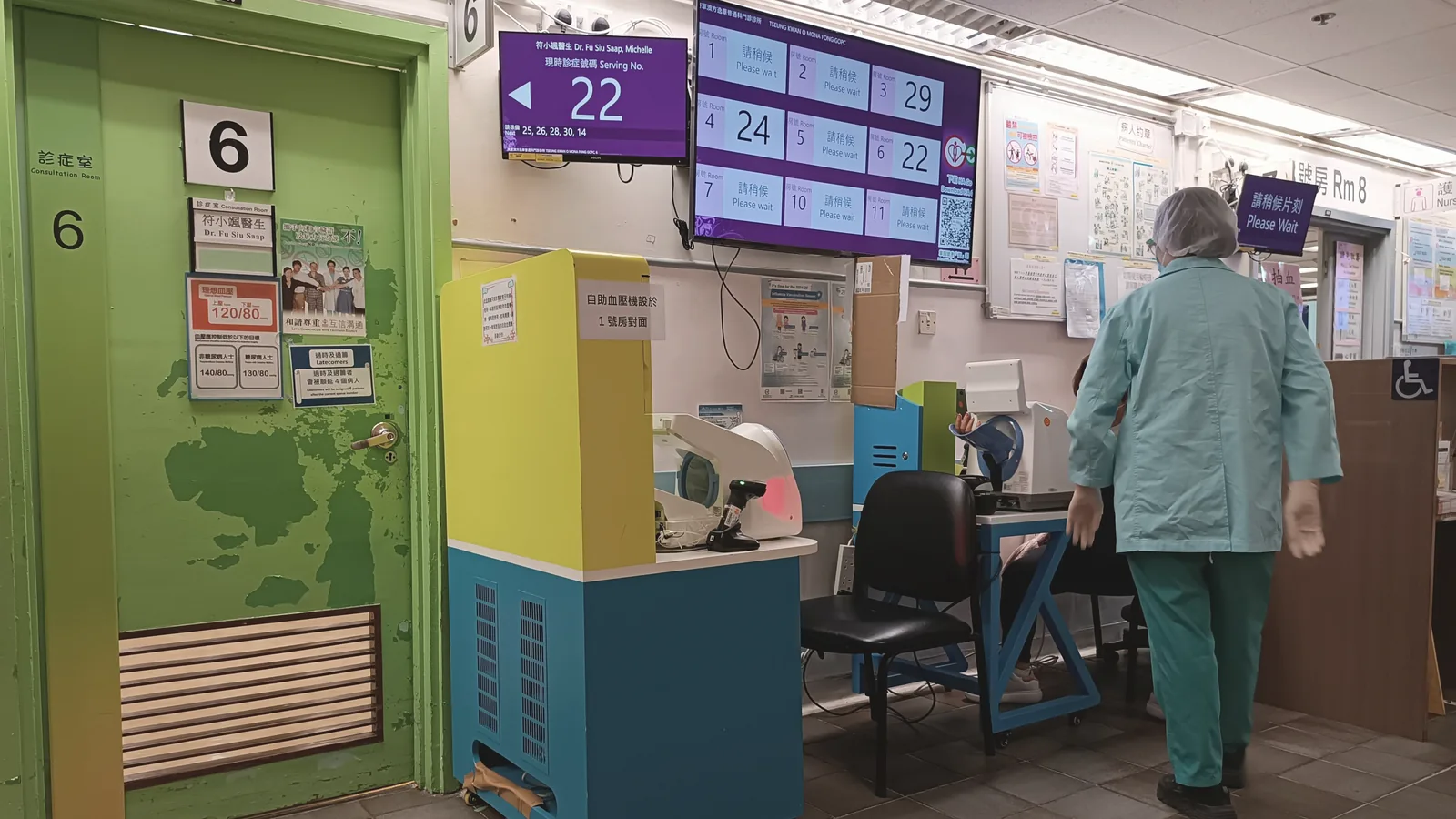
Registration PCs, label and receipt printers, card readers and the doctor's PC in each consultation room; in a pharmaceutical or medical device office, laptops, docking stations, printers and meeting-room equipment. All monitored and patched through our remote management tools.
Separate networks for clinical devices, staff devices, payment terminals and patient Wi-Fi, monitored so a failed switch is found before the morning session.
Joiners and leavers, locum doctors, contractors and field staff such as sales representatives, multi-factor sign-in and mailbox sharing rules, reviewed on a schedule.
Full-time or part-time engineers placed in your office, on-site support across several cities, and one contact for your clinic software, broadband and imaging vendors or your global IT provider.
A down front desk stops registration, dispensing and billing
In a clinic the front desk is the bottleneck. When the registration PC freezes, the receipt printer drops off the network or the link to a cloud clinic management system goes down at 9:05, patients queue at the counter, the nurse cannot print drug labels and the doctor sees an empty appointment list. A general office can wait an hour for a fix; a clinic with a full morning session cannot. The problems are rarely exotic: an expired certificate on the printer, a broadband router that rebooted overnight, a Windows update that started during opening hours, a single PC that is the only one with the dispensing label driver installed.
What we do
Support for clinic front desks, consultation rooms and office desks
Staff reach our helpdesk by email, portal or phone, and our Hong Kong team works in English, Cantonese and Mandarin. We look after PCs, laptops, printers, scanners, card readers, phones and Microsoft 365, whether the desk is a clinic reception or a regional office floor. Essentials covers business hours on weekdays (8×5) with a 1-hour response and 4-hour remote resolution; Business adds a 30-minute response, 2-hour remote resolution and one on-site visit a month; Premium runs 7×24 for clinics with evening and weekend sessions. Full terms are on the SLA page.
What you receive
Asset register of PCs, laptops, printers and network devices (Business and Premium)
Named contact list for your software, broadband and imaging vendors
Shared front-desk logins and leftover locum accounts
Clinics run on shifts. Receptionists share one Windows login to save time, locum doctors are given an account for a fortnight and nobody removes it, and a part-time nurse keeps access to the shared mailbox after leaving. Each of these breaks the link between a named person and what they looked at in a patient record, which is exactly what you will be asked to show after a complaint or a suspected data leak. The fix is less about technology than about a routine: who requests an account, who approves it, and who switches it off on the last day. Regional offices see the same drift with contractors, interns and sales representatives on short contracts, whose accounts outlive the contract.
What we do
Named accounts, multi-factor sign-in and a leaver routine
We replace shared front-desk logins with named accounts and fast user switching, handle joiners and leavers in Microsoft 365, and on the Business plan turn on multi-factor sign-in and conditional access for email and remote access. Locum accounts can be given an end date when they are created. A quarterly access and permission review lists every account with access to email and shared folders so the clinic can confirm who should still have it, and a one-off Microsoft 365 security audit is available as an add-on.
What you receive
Monthly system account report
Quarterly access and permission review
Microsoft 365 security audit fix list ranked by risk (one-off add-on)
Clinical, payment and guest devices on one flat network
A typical clinic network grows piece by piece: the broadband router from the telco, a switch added when the ultrasound machine arrived, a Wi-Fi extender for the back room, and a patient Wi-Fi password printed at reception. The result is a single flat network where the waiting-room tablet, the payment terminal, the imaging workstation and the doctor's laptop can all reach each other. One infected laptop or one compromised smart TV then has a path to the PC that holds patient records. Imaging devices and older medical equipment often cannot run endpoint protection at all, so separating them is the main control available.
What we do
A clinic network split by purpose
We redesign the network into separate segments for clinical devices and imaging, staff PCs, payment terminals and patient Wi-Fi, so a problem in one cannot reach the others. Switches, routers and access points are monitored, firmware is kept current, and changes are made outside clinic hours. For groups with managed Wi-Fi, the same network security policy is copied to each new branch and every site is managed from one cloud panel, so a fault at one site is diagnosed the same way as at another.
What you receive
Network topology diagram of what sits on each segment
Configuration backups of firewalls, switches and access points
Alerts for device and link failures, summarised in the monthly availability report
Large imaging files, many branches and many cities
Ultrasound, X-ray, dental and ophthalmology images are far larger than office documents, so clinics that send studies to a radiologist or open them from another branch feel it first as slow screens and failed uploads, then as an overnight backup that never finishes. Medical groups add a different broadband provider at each branch. Medical device companies stretch the same problem across a country: offices and service sites in many cities, each with a handful of users and no IT person on site. Without someone watching links, storage and backups, and someone who can reach a site when a device fails, a small fault waits for the next visit.
What we do
Backups that are restore-tested, and planning for power and line failures
We back up the clinic server, shared folders and Microsoft 365 mailboxes, with cloud backup of 50 GB per user included on the Business plan, and test restores every quarter. Outages of power, the broadband line or the CMS show up in our availability monitoring, with cause and action recorded. If you want help writing the front desk's own procedure for running a session without the system, that can be agreed in the quote. Projects such as a UPS for the server cabinet or a backup 4G router are quoted separately.
Many vendors, a distant global IT provider and nobody on site
In a clinic, the clinic management system vendor, the broadband provider, the imaging supplier and the telephone company each look after one piece; when the system is slow, each says it is someone else's problem and the clinic manager relays messages during clinic hours. A pharmaceutical company's regional office has the opposite problem. A global IT provider owns the service desk, the device standard and the ticketing tool, but its nearest engineer may be in another country. Tickets wait for someone to walk to a desk, swap a laptop or fix a meeting room, and local staff learn to work around IT instead of through it.
What we do
One point of contact for vendors, or a local partner for your global IT provider
For a clinic we keep the contacts for the clinic management system, broadband, imaging and telephone vendors, decide whether a fault sits in the PC, the network or the application, open the ticket with the right vendor and follow it to closure; the vendor stays responsible for its application. For a pharmaceutical or device company with a global IT provider, we can deliver as that provider's local partner, as we have for pharmaceutical clients in Asia since 2022: resident or part-time engineers who work to its standards, with leave cover and attendance reports from Brocent. Which ticketing tool the engineer works in is agreed in the quote.
What you receive
Vendor contact list and a written split of who owns what
Vendor tickets tracked in our helpdesk until they are closed
For resident engineers: leave cover and a monthly attendance report
Regulators and quality systems both ask for evidence
In Hong Kong the PDPO, the eHealth Ordinance and its Code of Practice, the PCPD's 2022 ICT security guidance and, for licensed facilities, the Private Healthcare Facilities Ordinance expect a clinic to protect records and explain how. In Singapore the Healthcare Services Act, MOH's cybersecurity and data security essentials, the PDPA and the Health Information Act passed in January 2026 push the same way. Pharmaceutical and device companies add their own quality system: some computers sit in a validated (GxP) environment where a change needs approval and a record. Small teams rarely have anyone collecting that evidence, so it gets assembled in a rush.
What we do
Endpoint security, patching and change control for validated systems
Every Windows and Mac device is monitored and patched through our remote management tools, with antivirus status checked; the Business plan adds managed EDR and Premium adds MDR. Disk encryption is checked on laptops that leave the clinic or office. Devices that cannot run an agent, such as imaging workstations controlled by the equipment vendor, are isolated on their own network segment. On computers in a validated (GxP) environment, what is validated and which changes need approval is decided by your quality system; we follow your change control before patching or changing them, and the change records stay in your system.
Essentials HK$195 · Business HK$295 · Premium HK$430
EssentialsRemote support in business hours · HK$195 / S$100 per user
Desk
Business hours, 8×5 (09:00–18:00 local time), unlimited requests
Response
1 hour response / 4 hours remote resolution
Devices
RMM monitoring, patching, antivirus status checks
Identity
Microsoft 365 / Google user management (joiners and leavers)
On-site
On-site visits bought separately as a token package (2 hours minimum per visit)
Reports
Monthly report: tickets, assets, patches
People
Shared service desk
BusinessSecurity tooling, an account manager and on-site visits · HK$295 / S$150 per user
Desk
Business hours, 8×5, unlimited requests
Response
30 minutes response / 2 hours remote resolution
Devices
Essentials, plus managed EDR and cloud backup (50 GB per user)
Identity
Essentials, plus MFA policy and conditional access
On-site
1 visit a month included, 2 hours per visit (does not roll over)
Reports
Essentials, plus quarterly review and asset register
People
Shared service desk, plus account manager
Premium24×7 cover and a named desk agent · HK$430 / S$220 per user
Desk
24×7, unlimited requests
Response
15 minutes response / 1 hour remote resolution
Devices
Business, plus MDR, managed firewall, DMARC and email security
Identity
Business, plus privileged account management
On-site
2 visits a month included, 2 hours per visit (do not roll over)
Reports
Business, plus multi-country head-office summary, compliance mapping (ISO 27001 / DPDP / APPI / GDPR) and vCIO annual roadmap
People
Account manager, plus named service desk agent
Wording is taken from the home-page plan table. Project-level SLAs can be agreed separately. SLA · Price assumptions
IT support for clinics in Hong Kong: what a clinic IT environment looks like and what it has to cover
Most clinics we see in Hong Kong are built around a clinic management system. Some run it on a small server in a cabinet behind reception, others use a cloud CMS through a browser. Around it sit three to fifteen PCs: one or two at registration and dispensing, one in each consultation room, and a back-office PC for accounts. Add label and receipt printers, an identity card reader, a scanner for referral letters, a payment terminal, an IP phone system, patient Wi-Fi and, depending on the specialty, imaging equipment with its own workstation. Many clinics also use Microsoft 365 or another mail service for referrals, lab results and supplier invoices.
Medical clinic IT support therefore has two halves. The first is ordinary office support done to a stricter standard: PCs, printers, accounts, email and patches, with named logins and records of who changed what. The second is the clinical layer, where the clinic does not own the software: the CMS, the imaging software and the eHealth connection. Here the IT provider's job is to keep the PC, network and accounts healthy, to know which vendor owns which fault, and to give that vendor what it needs without the clinic manager acting as a go-between.
Opening hours shape everything. Clinics often run morning, afternoon and evening sessions six days a week, with Sunday or public holiday sessions in some districts. Patches, firmware updates and network changes have to fit the gaps between sessions. A provider that schedules a reboot at 10am on a Saturday has not understood the business. We agree maintenance windows with each clinic during onboarding, when we document the environment and confirm who we escalate to on the clinic's side, so every engineer works to the same timetable.
Medical groups add scale but the same pattern repeats. Each branch has its own broadband line, its own printers and its own quirks, while patient records, accounts and backups should be managed centrally. The work is to make every branch behave the same way: with managed Wi-Fi the network security policy is copied to each new site and all branches sit on one cloud panel, and a fault at one site can be diagnosed the same way as at another. Healthtech companies are different again: an office team on laptops, cloud systems holding health data, and a security review from each hospital or insurer customer. They use the same plans and controls, with more emphasis on cloud accounts and evidence.
Pharmaceutical and medical device offices: resident engineers, global IT providers and validated systems
A pharmaceutical or medical device company's office in Hong Kong or Singapore is usually a regional or country office rather than a clinical site: commercial, medical affairs, regulatory, finance and HR teams on laptops, sales representatives who spend most of the week visiting hospitals and clinics, and meeting rooms booked for calls with head office. Devices, accounts, security tools and the service desk are normally set by a global IT function, often outsourced to a global IT provider. What the office lacks is a person on the ground who can set up a new starter on day one, swap a failed laptop, get a meeting room working before a regional call and bring a device back into line with the global standard.
That is the work our resident engineers do. From 2022 to the end of 2025 we kept three full-time end-user support engineers in a multinational pharmaceutical company's Singapore office, and since 2023 we have placed full-time and part-time engineers in another pharmaceutical company's offices in Hong Kong, Taiwan, South Korea and mainland China. In both cases we deliver as the local partner of the client's global IT provider: the engineer works to that provider's standards and escalation path, while Brocent handles hiring, leave cover and attendance reports. A part-time engineer on set days, such as three days a week in the Hong Kong office, suits a smaller team.
Medical device companies often have the opposite shape: a few people at each site and many sites. Since 2024 we have provided L1 on-site end-user support at more than 30 sites of a medical device company in over 20 cities in mainland China, after first working with the company in 2020 on a one-day-a-week arrangement. For a spread like that, a resident engineer at every site makes no sense. What works is one contract, one ticket queue and engineers who can reach each city when a device fails; the field IT dispatch page explains how dispatch works, and the terms for your own sites can be agreed in the quote.
Some computers in these companies sit inside a validated (GxP) environment, for example a PC attached to a laboratory instrument or a workstation used for quality records. What is validated, what counts as a change and what record each change needs are decided by the client's quality system, not by the IT provider. We work to it: patches, replacements and configuration changes on a validated computer are raised through your change control and wait for approval, and the records stay in your system. Validation itself, and any decision about validation status, stays with your quality team.
How to choose a healthcare IT support provider: questions to ask before you sign
Start with the clinical software. Ask any provider how they would handle a call that the CMS is slow, and listen for whether they separate PC, network and application faults and whether they will contact your software vendor themselves. Ask whether they have worked with your CMS or imaging supplier before, and how they get remote access to a vendor-managed workstation without leaving a permanent open door. A provider that says it will fix the CMS itself is either the software vendor or overpromising.
If you are a pharmaceutical or medical device office that already has a global IT provider, the questions change. Ask whether the provider has worked as the local partner of a global IT provider before, how its engineers follow another company's standards and escalation path, who covers the engineer's leave and how attendance is reported. Ask how it handles a change request on a validated computer, and expect the answer to start with your change control rather than its own maintenance window.
Next, ask about evidence. Hong Kong's PCPD guidance on ICT data security and Singapore's MOH cybersecurity essentials both expect a clinic to show what it does, not just say it. Ask for a sample of the monthly report: does it show patch status per device, backup results, restore tests and account changes? Ask who reviews access each quarter and how leavers are removed. If the answer is that it is all in the engineer's head, you will be assembling evidence yourself after the first incident.
Then ask about hours and visits. A clinic with evening and Saturday sessions needs to know what happens at 7pm on a Friday. Check which plan covers which hours, what the response and remote resolution times are, and how on-site visits are counted. On our Business plan one on-site visit a month is included; on Essentials visits are bought as IT tokens; Premium includes two visits and 7×24 cover. The SLA page and the price assumptions page set out the detail, so you can compare like for like.
Finally, ask about the handover. Who will collect admin passwords from the previous provider, the person who set up the router, and the CMS vendor? How long does onboarding take, and will any of it disrupt a session? Ask for the list of what you will hold at the end: the asset register, the network diagram, the vendor contact list and the admin passwords. If you ever change provider again, those documents are what make the change painless, and a provider should be comfortable handing them over, because the clinic paid for them.
Healthcare and life sciences IT support in Singapore: what changes from Hong Kong
The day-to-day work is the same in both cities: front desk, consultation rooms, network, accounts, patches and backups. What changes is the rule book and the people you report to. In Singapore, healthcare services are licensed under the Healthcare Services Act 2020, which replaced the older private hospitals and medical clinics licensing regime in phases. MOH has issued Healthcare Cybersecurity Essentials (2021), Cyber and Data Security Guidelines for Healthcare Providers (December 2023) and a revised Cybersecurity and Data Security Essentials document in 2026. Parliament passed the Health Information Bill in January 2026, which sets cybersecurity and data security requirements for licensed providers.
For a Singapore clinic, that means the controls on this page need to be mapped to MOH's current essentials, and the evidence kept in a form an MOH inspector or your own adviser can read. We map what we run to MOH's current guidance and keep the evidence: our monthly reports already show which devices are patched and protected, which accounts are active and when backups were last restore-tested, and Premium adds a compliance mapping report. MOH has said it is working with clinic management system vendors to build some of the requirements into their products, so part of the evidence will come from your CMS vendor and sits alongside ours.
Personal data rules differ too. The PDPA 2012 requires reasonable security arrangements, and a data breach that is notifiable must be reported to the PDPC within three calendar days of the assessment that it is notifiable. Our part is to help you find out quickly what happened, which records and devices were involved, and what was done to contain it. Whether and how to notify is a decision for the clinic and its adviser.
Commercially, Singapore clinics use the same helpdesk, the same plans and the same portal as Hong Kong clinics, priced in Singapore dollars from S$100 per user per month. On-site visits are delivered from Singapore by our local team. Groups with branches in both cities receive a report for each site, and on Premium a multi-country head-office summary on top, which is useful when the same doctors or management work in both places. The IT helpdesk for clinics in Singapore follows the same SLA as in Hong Kong for the plan you choose.
Singapore is also where many pharmaceutical and medical device companies run their Asia regional office. For an office that does not itself provide healthcare services, the PDPA and the company's own global IT and quality standards are usually the main rule book; whether any MOH requirement applies is a question for your adviser. Our Singapore pharmaceutical engagement, three resident engineers from 2022 to the end of 2025, was delivered through the client's global IT provider, and the same model is available to offices that need a resident or part-time engineer rather than a per-user plan.
What healthcare IT support costs, and the first 30 days with a new provider
Clinic IT support cost is driven mostly by headcount, the hours you need covered and how many on-site visits you expect. Managed IT plans are priced per user per month, from HK$195 in Hong Kong and S$100 in Singapore on annual terms; the exact prices for each plan and market are on the pricing page and the calculator on our home page. The formula is simple: price per user times headcount, per market, so a clinic with two receptionists, three doctors and a nurse prices six users. The assumptions behind each price, including what counts as a user and how tokens work, are on the price assumptions page.
One-off projects are priced separately: re-cabling a new clinic, replacing a server, moving to a cloud CMS, setting up a second branch, or adding a UPS and backup line. Many clinics use IT tokens for these, so the cost is known before work starts. Licences such as Microsoft 365, endpoint protection and backup storage are listed line by line on the quote, so you can see what you are paying for and what you would keep if you moved.
The first 30 days follow the same order every time. First we inventory devices, accounts, network equipment, vendor contacts and admin passwords, and agree maintenance windows. Next we fix the high-risk gaps found: shared logins, missing patches, backups that have not run, and default passwords on routers and printers. Then your staff start using our helpdesk and we take over vendor follow-up. Onboarding itself is free: 2 remote hours on Essentials, 5 on Business, and 10 plus one on-site visit on Premium. The first monthly report follows at the end of the first month.
Nothing that could disrupt a session is done during clinic hours. Network re-segmentation, server work and firmware updates are scheduled for evenings, Sundays or the gaps between sessions, and the front desk is told in advance. If your current provider is still under contract, whether to overlap with them during the notice period can be agreed in the quote, so the handover is not rushed.
Resident and part-time engineers are priced per engineer rather than per user. The price depends on the working hours and window, the skills needed and the handover period when an engineer changes; the resident engineers page lists those factors, and the quote sets them out line by line.
05
The first 30 days
Inventory and maintenance windows
We list every device, account, vendor contact and admin password, and agree when changes can be made around your clinic sessions.
Close the high-risk gaps
Shared logins, missing patches, failed backups and default router or printer passwords are fixed first, outside opening hours.
Switch on the helpdesk and vendor follow-up
Staff start calling or emailing our helpdesk, and we take over tickets with your CMS, broadband and imaging vendors.
First monthly report
You receive the monthly report on tickets, assets and patches; on Business and Premium the asset register and a quarterly review are added.
06
Signed contracts in this sector
Anonymised, from signed contracts: service, region and term only.
Healthcare and life sciences
A global pharmaceutical company: resident desk support across Asia
Since 2023 we have placed full-time end-user support engineers in the company's offices in Hong Kong, Taiwan, South Korea and mainland China, delivering as the local partner of its global IT provider. In 2026 a new two-year contract was signed for a full-time engineer in Taiwan and a part-time engineer in Hong Kong three days a week.
Client type: pharmaceutical company
Service: full-time and part-time resident engineers (FTE / PTE)
Region: Hong Kong, Taiwan, South Korea, mainland China; briefly two offices in Europe in 2025
Term: since 2023, current contract runs to 2028
Healthcare and life sciences
A multinational pharmaceutical company: resident engineers in Singapore
From 2022 to the end of 2025 we kept three full-time end-user support engineers in the company's Singapore office, delivered through its global IT provider. The contract ran for close to four years.
Client type: pharmaceutical company
Service: full-time resident engineers (3 people)
Region: Singapore
Term: 2022 to 2025
Healthcare and life sciences
A global medical device company: on-site support across mainland China
Since 2024 we have provided L1 end-user on-site support for the company's 30-plus sites in mainland China, spread over more than 20 cities. We first worked with the company in 2020 on a one-day-a-week on-site arrangement.
Client type: medical device company
Service: on-site L1 end-user support (FSE)
Region: mainland China, 30+ sites in 20+ cities
Term: since 2024, current contract runs to 2027
07
Regulation we design the controls around
We implement the controls and keep the evidence; legal interpretation stays with your own adviser.
Cap. 486
Hong Kong: Personal Data (Privacy) Ordinance (Cap. 486) and the PCPD's ICT security guidance
Data Protection Principle 4 requires all practicable steps to protect personal data, and DPP2(3) and DPP4(2) require a clinic or company that uses an IT contractor to bind that contractor by contract. The PCPD's Guidance on Data Security Measures for Information and Communications Technology (August 2022) sets out recommended controls on governance, access, devices, networks and incident handling. We implement the controls that fall to IT and keep the evidence; legal interpretation stays with your adviser.
Hong Kong: Electronic Health Record Sharing System Ordinance (Cap. 625)
Healthcare providers registered with eHealth may access a patient's records only with the patient's sharing consent, and the Code of Practice issued under the Ordinance gives security recommendations for providers. On the PCs your staff use to reach eHealth we apply named accounts, access control, patching and endpoint protection, while eHealth registration, user administration within eHealth and its own settings stay with your clinic. We implement the controls and keep the evidence; how the Ordinance applies to you is for your adviser.
Hong Kong: Private Healthcare Facilities Ordinance (Cap. 633)
Cap. 633 brings private hospitals, day procedure centres, clinics and health services establishments under a licensing regime run by the Department of Health, with codes of practice that licensed facilities must follow, including on records. Some small practice clinics are exempted. Where your facility is licensed, our monthly backup and account reports can support your own records-keeping duties. We implement the controls and keep the evidence; legal interpretation stays with your adviser.
Singapore: Personal Data Protection Act 2012 and the Healthcare Services Act 2020
Section 24 of the PDPA requires reasonable security arrangements for personal data, and a notifiable data breach must be reported to the PDPC within three calendar days of assessing it as notifiable. The Healthcare Services Act 2020 is the licensing framework for healthcare services under MOH. We implement the security controls, help you establish the facts of an incident quickly and keep the evidence; legal interpretation stays with your adviser.
Singapore: MOH cybersecurity and data security essentials, and the Health Information Act
MOH issued Healthcare Cybersecurity Essentials in 2021, Cyber and Data Security Guidelines for Healthcare Providers in December 2023 and a revised Cybersecurity and Data Security Essentials document in 2026. Parliament passed the Health Information Bill in January 2026, setting cybersecurity and data security requirements for licensed providers. We map what we run to MOH's current essentials and keep the evidence; check MOH for the dates that apply to your licence, and leave legal interpretation to your adviser.
Healthcare and life sciences IT support in Hong Kong: questions buyers ask
18 of 18 questions
No question matches. Try another word.
How much does IT support for a clinic cost in Hong Kong?
Managed IT plans are priced per user per month, from HK$195 in Hong Kong on annual terms. The monthly price is the price per user multiplied by your headcount, per clinic location's market. On-site visits are included from the Business plan; on Essentials they are bought as IT tokens. One-off projects such as re-cabling or a server replacement are quoted separately.
Do you support our clinic management system?
We support the PCs, network, printers and accounts the clinic management system runs on, and we contact your software vendor for problems inside the application, with the logs and remote access they need. The vendor stays responsible for the software itself, its updates and its data structure. If you are moving to a cloud CMS, we can plan the network, PCs and data migration with the vendor as a project.
How much does clinic IT support cost in Singapore?
Singapore clinics use the same plans as Hong Kong, priced in Singapore dollars from S$100 per user per month on annual terms. The plan sets the hours covered, response and remote resolution times and included on-site visits. The full price list is on the pricing page and the home page calculator, and the assumptions behind each price are on the price assumptions page.
What does eHealth (Cap. 625) mean for the PCs at my front desk?
Healthcare providers registered with eHealth may access a patient's records only with sharing consent, and the Code of Practice under the Ordinance gives security recommendations. In practice we make sure the PCs used for eHealth have named accounts, current patches, endpoint protection and screen locks. eHealth registration and user administration within eHealth stay with the clinic; ask your adviser how the Ordinance applies to you.
Do clinics in Singapore need to follow MOH's cybersecurity essentials?
MOH has published cybersecurity and data security essentials for healthcare providers, and the Health Information Act passed in January 2026 sets requirements for licensed providers. Which requirements apply to your licence, and from when, is set by MOH; check its current circulars. We map the controls we run to the essentials and keep the evidence so you can answer questions from MOH or your adviser.
Can you support clinics with evening and weekend sessions?
Yes. The Premium plan runs the helpdesk 7×24, with a 15-minute response and 1-hour remote resolution. Essentials and Business cover weekday business hours. Planned work such as patches and network changes is scheduled between sessions or after closing whatever plan you choose. Project-level SLAs can be agreed separately; the standard terms are on the SLA page.
Do you provide an IT helpdesk for clinics in Singapore?
Yes. Staff in Singapore clinics reach the same helpdesk by email, portal or phone, and on-site visits are made by our Singapore team from our office on Chin Swee Road. Groups with clinics in both Hong Kong and Singapore receive a report for each site, and on Premium a multi-country head-office summary as well.
Can you separate patient Wi-Fi from the clinic network?
Yes. We set up separate networks for clinical devices and imaging, staff PCs, payment terminals and patient Wi-Fi, so a device on one cannot reach another. Guest Wi-Fi is included in our managed wireless service, so patients get internet access without touching the clinic network. Where the existing router or switches cannot do this, we quote replacement hardware before any work starts.
What happens to patient data if a laptop or phone is lost?
Laptops we manage have disk encryption checked, and phones enrolled in device management can be locked or wiped remotely. We help you establish quickly which device was lost, what data it held and what was done, which is the information you and your adviser will need to decide whether the loss must be reported under the PDPO or PDPA.
How do you handle imaging workstations we are not allowed to change?
Equipment vendors often control the imaging workstation and do not allow extra software. We put those devices on their own network segment and restrict what can reach them, so they are protected even without an agent. Patches and changes on them are left to the equipment vendor, and we follow up with the vendor when updates are overdue, the same way we handle other third-party issues.
Do you also work with medical groups and healthtech companies?
Yes. Groups with several clinics get the same network policy copied to each branch, central accounts and backups, and a report per site; Premium adds a multi-country head-office summary. Healthtech companies with an office team and cloud systems use the same plans, with more focus on cloud accounts and the security evidence their hospital or insurer customers ask for. Projects such as a server room migration are quoted as IT tokens.
Does Hong Kong's critical infrastructure law apply to my clinic?
The Protection of Critical Infrastructures (Computer Systems) Ordinance (Cap. 653), in force since 1 January 2026, lists healthcare as a sector but applies only to operators that the Commissioner designates. Designation is made by the Commissioner and notified to the operator. If you have received a designation, ask your adviser what it requires; we can implement and document the technical controls.
How do you take over from our current IT provider?
We start with an inventory of devices, accounts, network equipment, vendor contacts and admin passwords, then agree a handover date. Whether to overlap with your current provider during its notice period can be agreed in the quote. Work that could disrupt clinic sessions is scheduled outside opening hours, onboarding hours are free on every plan, and the first monthly report follows at the end of the first month.
What should a clinic do when the power or broadband fails?
Keep printed registration and dispensing forms at the front desk, a list of who to call, and a rule for entering records once systems return; if you want our help writing that procedure, it can be agreed in the quote. A UPS for the server cabinet or a backup line can be added as a project. Our availability monitoring records each outage with its cause and the action taken.
Can you support a pharmaceutical company's regional office in Hong Kong or Singapore?
Yes. Since 2022 we have placed full-time and part-time end-user support engineers in pharmaceutical companies' offices in Hong Kong, Singapore, Taiwan, South Korea and mainland China. A resident engineer handles new starters, laptop swaps, meeting rooms and walk-up requests, while Brocent handles hiring, leave cover and attendance reports. A smaller office can use a part-time engineer on set days, or a per-user managed IT plan from HK$195 per user per month in Hong Kong and S$100 in Singapore.
Can your engineers work inside our global IT provider's processes?
Yes. Our pharmaceutical engagements in Asia are delivered as the local partner of the client's global IT provider. The engineer follows that provider's device standards, escalation path and service desk, so local users see one service rather than two. Which ticketing tool the engineer uses, how the work is reported and how the contract is structured can be agreed in the quote.
Can you work on computers in a GxP validated environment?
Yes, within your rules. What is validated, what counts as a change and what record it needs are set by your quality system. Our engineers raise patches, replacements and configuration changes through your change control and wait for approval before touching a validated computer, and the records stay in your system. We do not decide validation status; that stays with your quality team.
Can you provide on-site IT support across many cities for a medical device company?
Yes. Since 2024 we have provided L1 on-site end-user support at more than 30 sites of a medical device company in over 20 cities in mainland China, under one contract. For sites spread like this we combine helpdesk support with engineers who can reach each site; the arrival terms for your locations can be agreed in the quote, and the field IT dispatch page explains how dispatch works.
15+ years leading Brocent's global IT service delivery from Beijing and Singapore; hands-on in network, hybrid cloud, managed IT and information security and compliance.