Managed IT Support in Kuala Lumpur: Providers, Scope & New-Office Setup (2026)
What a Hong Kong company opening a 40-seat Kuala Lumpur office needs on day one, how to split work between head office and a local partner, Brocent's published Malaysia dispatch and FTE rates with break-even arithmetic, and how to compare providers.
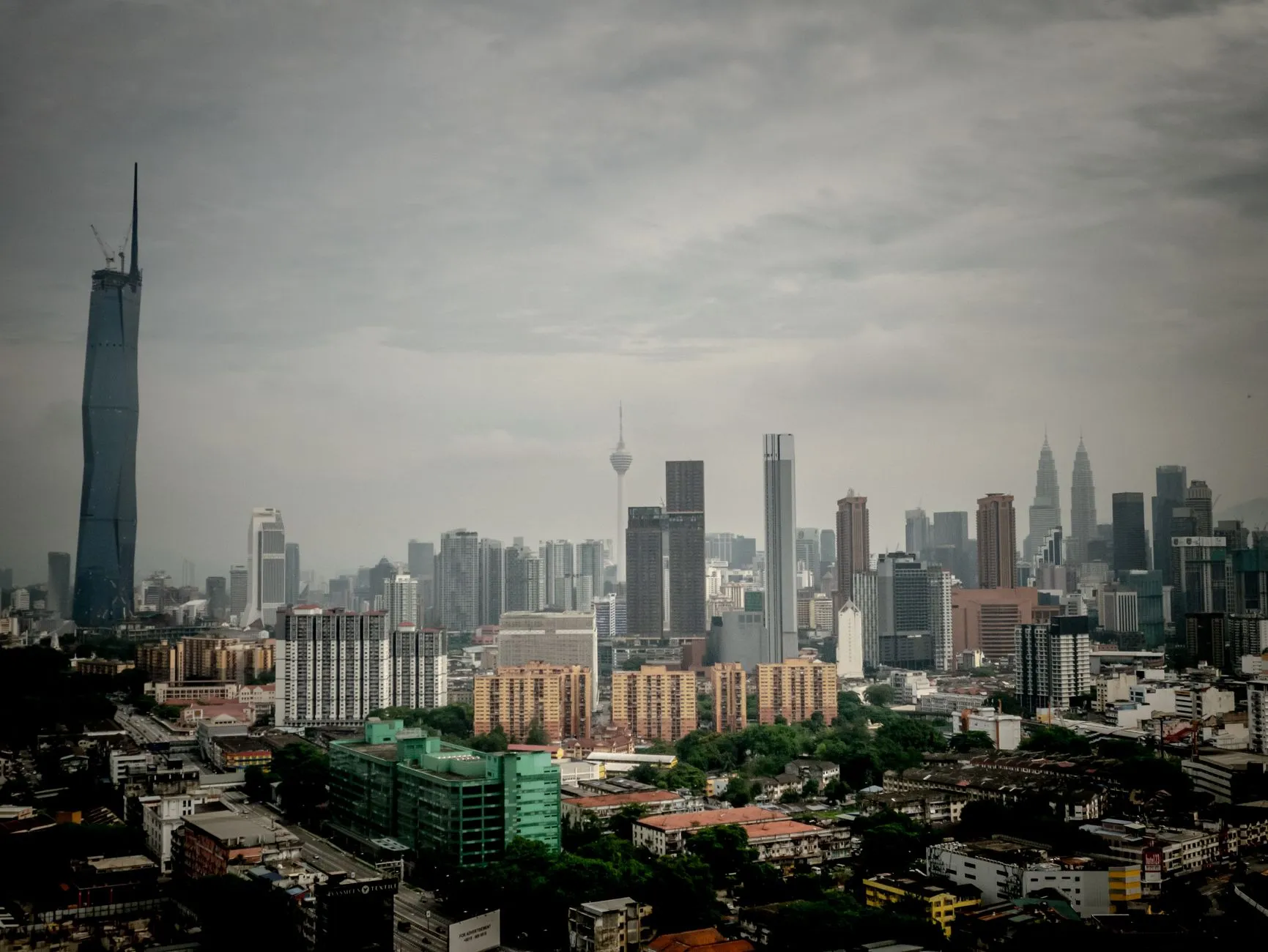
Short answer: A new Kuala Lumpur office needs two things that Hong Kong cannot send by courier: hands on site and someone awake in the same hours. Managed IT support in Kuala Lumpur works best as a split. Your Hong Kong team keeps identity, policy and tooling; a local provider owns Malaysian-hours support, dispatch and physical presence. Brocent's published 2026 H2 reference rate for Malaysia is US$65 for the first onsite hour and US$59 for each additional hour, or US$1,820 a month for a dedicated engineer, and at a 40-seat office the choice between the two is a break-even of about 31 hours of hands-on work a month.
Who is this for, and what does a Kuala Lumpur opening look like from Hong Kong?
This guide is written from the head office's seat. Picture a Hong Kong-headquartered media and marketing group opening a 40-seat production and back-office hub in Kuala Lumpur. The Hong Kong IT team is three people. They run identity, laptops, the Microsoft 365 tenant and the help desk for the Hong Kong office, and they are not going to move. The decision in front of the operations director is not "which cloud" but who does what when something breaks at 9:30 on a Tuesday morning in Kuala Lumpur.
This is an illustrative scenario, not a named client. The numbers below are Brocent's published reference rates, so you can reproduce the arithmetic for your own headcount.
The same questions come up for any Hong Kong or Singapore company opening a regional office:
- What has to be physically done on day one, and by whom?
- Who answers the phone in the Malaysian time zone, in which languages?
- What does it cost to keep an engineer on call, on a schedule or on site every day?
- Which decisions stay at head office, and which are delegated?
If you are weighing providers rather than a setup plan, jump to the section on how to compare managed IT support providers in Kuala Lumpur, further down. If you need a general method for vetting a delivery partner in another country, read how to vet a local IT delivery partner in Asia.
What does a new Kuala Lumpur office need on day one?
Most day-one problems are physical and have lead times. They are the ones you cannot fix remotely, so they should be on the plan before the lease is signed.
- Business internet. Fibre installation depends on the building and the carrier. We do not publish lead times for Malaysian carriers, and you should not trust a number from a provider that does not install the line. Ask the landlord which carriers are already in the building, order the primary line first, and put the committed activation date in writing. Plan a second, diverse line or a failover for anything that cannot stop.
- Wi-Fi and cabling. A 40-seat floor with meeting rooms needs a site survey before access points are mounted, not after complaints start. Surveying first costs less than re-cabling. Brocent's wireless site survey service covers this.
- Devices. Decide whether laptops are shipped from Hong Kong pre-enrolled, or procured locally and enrolled on arrival. Either way, the aim is that a new starter signs in on day one with the policies already applied. Import duties and shipping times are a logistics question for your supplier; confirm them early.
- Meeting rooms, printers and screens. These generate a large share of "IT" tickets in the first month. Standardise one meeting-room design and one printer model rather than letting the fit-out contractor choose each.
- Access control and CCTV. Usually owned by the building or facilities team. Agree who administers it and who has remote access.
- A spare pool. Keep a small stock of laptops, chargers, docks and a switch on site. A dead charger on the first Monday should be a five-minute swap, not a courier from Hong Kong.
The fit-out itself is a project, not a support contract. For Brocent's approach to office builds, see the office IT setup service. The practical point is to agree who supports the office the week after the build finishes, because that handover is where most new-office problems fall through.
Who builds the office, and who supports it the week after?
Two different jobs get mixed up: the build (a time-boxed project with a start and an end date) and the run (ongoing support from the first working day). Providers that are strong at one are not automatically strong at the other.
- If the same company builds and supports, handover is smooth but you depend on one vendor's quality for both.
- If a contractor builds and a different provider supports, you must give the support provider the documentation: network diagram, VLAN and SSID list, device inventory, admin credentials held in a vault, and warranty details. Make delivery of that pack a condition of the contractor's final payment.
- If your Hong Kong team supports remotely from day one with no local presence, make a list of the tasks that need hands (reseating a cable, swapping a switch, replacing a laptop, escorting an ISP technician) and name a person or provider for each.
The test is simple: on the first Monday, if the primary line drops, who goes to the riser room? If the answer is "we will find someone", the plan is not finished.
How should Hong Kong and a local partner split the work?
For an office of this size, the cleanest model is not to hand everything to a local provider or keep everything at head office. Split by what must be local and what should stay consistent.
Keep in Hong Kong (head office):
- Identity, Microsoft 365 tenant and conditional-access policy.
- Endpoint management and security baseline, so a Kuala Lumpur laptop is built and secured exactly like a Hong Kong one.
- Vendor and licence management, budgets and the IT roadmap.
- Escalation owner for security incidents.
Delegate to a local provider (Malaysia hours and presence):
- First-line support in Malaysian working hours, with a named phone number and a defined response commitment.
- Onsite dispatch for hardware faults, installs, moves and ISP coordination.
- Day-to-day physical tasks: onboarding laptops, collecting leavers' devices, meeting-room checks.
- Coordination with the landlord, carrier and building management.
The line between the two is a short written responsibility table. For each task type it should say who detects it, who acts, who approves, and who is told. Without that table a single incident gets handled twice or not at all.
Brocent's APAC IT support solutions describe how a regional model with local delivery in several countries is structured. For this Malaysia case, Brocent's Kuala Lumpur service page states that it operates a Kuala Lumpur service satellite site, supports Klang Valley directly, coordinates Penang, Johor Bahru and Cyberjaya coverage, and publishes a 4-hour onsite SLA for P1 and P2 incidents. That page is in English only.
What does onsite IT support in Malaysia cost, and how do you choose the pattern at 40 seats?
There are three ways to buy onsite hours. The published figures below are from the 2026 H2 standard price book on the dispatch and on-site rates page: US dollars, tax exclusive, Level 1 end-user computing, next-business-day response, 9×5, city centre.
- Malaysia dispatch: US$65 for the first hour, US$59 for each additional hour.
- Malaysia dedicated engineer (entry level, no backfill): US$1,820 a month.
- For comparison, Hong Kong: US$98 first hour, US$78 each additional hour; dedicated engineer US$4,810 a month.
- Singapore: US$85 first hour, US$78 each additional hour; dedicated engineer US$4,160 a month.
The page describes the rates as indicative and fully loaded, falling at higher volumes. Treat them as a reference, not a quote.
Option 1: dispatch (pay per visit)
An engineer visits when you raise a ticket, and you pay after the job. Arithmetic on the published rates:
- A 3-hour visit: US$65 + 2 × US$59 = US$183.
- A 4-hour half-day: US$65 + 3 × US$59 = US$242.
This suits an office that has a few hands-on events a month: a new starter, a failed monitor, an ISP visit.
Option 2: scheduled days
You agree a fixed pattern, for example a half-day every week, and the engineer clears a queue of requests collected in between. Brocent does not publish a separate price list for scheduled days; it is quoted on the pattern. For a 40-seat office in its first year, this is often the middle path: it keeps the cost predictable and catches preventive checks, but does not cover an urgent fault outside the scheduled day, so it needs to be paired with dispatch for emergencies.
Option 3: a dedicated engineer on site
An embedded engineer is priced monthly. At the published Malaysia rate of US$1,820, the break-even against dispatch is:
- Dispatch cost for *n* hours a month = 65 + 59 × (n − 1) = 59n + 6.
- Setting 59n + 6 = 1,820 gives n ≈ 31 hours of hands-on work a month.
If you expect more than about 31 hours a month of real hands-on work, a dedicated engineer is cheaper than dispatch on the published rates. Below that, dispatch or scheduled days is cheaper. Forty seats in a new office will often exceed that in the first three months (installs, onboarding, fixes) and then fall below it once the office settles, so a common pattern is to start with scheduled days plus dispatch and move to a dedicated engineer only if the hours justify it.
A Level 2 dedicated engineer is roughly 21% above the entry rate and Level 3 roughly 44% above it, per the page's footnote. The full-time onsite engineer service describes the engagement models. For the per-visit service, see field IT dispatch. For a broader comparison of cost by country, read onsite IT support cost per engineer across models and countries.
What changes the price?
- Working language. A bilingual engineer (English with Mandarin or Bahasa Melayu) costs more than an English-only one. Decide what language the staff actually need before comparing quotes.
- Notice and SLA tier. The reference rate assumes next-business-day arrival. Faster tiers cost more.
- Hours. Evening and weekend work is billed at a multiple that is not published on the rates page. Ask for it in writing.
- Scope. Network, server or security work needs a more senior engineer than desk support.
Which language, hours and billing currency should you plan for?
Brocent's Malaysia page lists English, Bahasa Melayu and Mandarin support for the Kuala Lumpur team. For a Hong Kong group that may mean staff who prefer Cantonese or Mandarin, a local team that works in English and Bahasa Melayu, and a help desk that must bridge the two. Decide up front:
- Which languages the first-line desk must cover for staff, rather than for the IT team.
- The hours of cover. Malaysia is on UTC+8, the same as Hong Kong, so there is no time-zone gap for coverage during working hours. Out-of-hours cover is a separate question: the Brocent Malaysia page describes a follow-the-sun model with Singapore and Hong Kong picking up escalation and service desk continuity after the Kuala Lumpur day.
- Billing. The Malaysia page states that delivery can be aligned with MYR invoicing and SST-aware local contracting. If your finance team wants to settle in Malaysian ringgit through a local entity, say so before the contract is drafted rather than after.
What do the PDPA basics mean for how you run the office?
Malaysia's Personal Data Protection Act applies to how the local office handles personal data, including staff and customer records. This section is operational and general; it is not legal advice, and your counsel should confirm what applies to you.
From an IT-operations point of view, the practical steps are the ones you would want anyway:
- Know where staff and customer data is stored, and keep an inventory of systems that hold it.
- Control and log administrator access, including that of the support provider.
- Make sure the support provider's access is limited to what the work needs, and that the contract says how they handle and return data.
- Encrypt laptops and enforce screen locks, so a lost device is a hardware loss and not a data incident.
- Keep a written record of who can access what, and review it when people join or leave.
Brocent's Malaysia page says its support operations are designed to align workflows, access control and documentation with Malaysian PDPA expectations. As with any provider claim, ask to see how this is done in practice.
How do you compare managed IT support providers in Kuala Lumpur?
Providers in the market fall into a few types. The comparison below is by type, not by name.
- Run it from Hong Kong with a local freelancer. Lowest monthly cost and the most flexibility. The risks are single-person dependency, no cover for leave or illness, and no contractual response time. It works for a handful of staff, but 40 seats usually outgrows it.
- Hire a local IT person. Good for continuity and culture. You take on recruitment, management, backup cover and a single point of failure. A single hire cannot be both the junior desk-side engineer and the network specialist.
- Managed local support under one APAC contract. A provider with its own people in Kuala Lumpur, a defined service desk and a response commitment, contracted once for several countries. Higher unit cost than a freelancer, but a named SLA, spares, escalation and one invoice.
Questions to ask any provider:
- Do you have your own engineers in Kuala Lumpur, or do you subcontract? Where is the nearest one to our building?
- What is the written response commitment for a severe incident, and is it on site or by phone?
- Which languages does the first-line desk work in, and in which hours?
- How do you handle spares, and who holds the stock?
- What happens when your engineer is on leave?
- Can the same contract cover another city (Penang, Johor Bahru) or another country later?
For the vetting method, see how to vet a local IT delivery partner. For a view of reactive cover in Malaysia and Taiwan without fixed days, read on-call onsite IT support in Taiwan and Malaysia. For a Malaysia-wide overview of the market, see managed IT services in Malaysia for SMEs and enterprises.
Where does a managed plan fit?
Everything above is hands and hours. A managed IT plan covers the other half: help desk, monitoring, patching, security baseline and reporting. For a Hong Kong-run group, the Hong Kong team is often the right owner of the plan, with the Kuala Lumpur office added as a site. The live price below is for the Hong Kong market and is read from Brocent's pricing data, so it does not go out of date on this page.
| Plan | Hong Kong |
|---|---|
| Startup 1–5 employees | HK$855.14/user/mo |
| Established 5–300 employees | HK$1,247.40/user/mo |
| Growth 10–500 employees | HK$1,561.21/user/mo |
| Enterprise 25+ employees | Custom |
Malaysia does not have a published per-user rate on the pricing page; Kuala Lumpur coverage is scoped at quotation. Brocent's managed services page describes what the plan includes, and the pricing hub shows every other price category, including token packs and dispatch rates.
Frequently asked questions
How long does business internet take to install in Kuala Lumpur?
It depends on the building and the carrier, and we do not publish a figure. Ask the landlord which carriers already serve the building, order the primary line before you finish the fit-out, and get the committed activation date in writing. Plan a failover line for any function that cannot stop.
Can our Hong Kong IT team run the Kuala Lumpur office remotely?
Remotely for identity, policy, patching and most help-desk work, yes. Not for anything that needs hands: replacing a switch, escorting an ISP technician, swapping a failed laptop. You need a named local person or provider for those tasks, and a small spare pool on site.
What does an onsite visit cost in Malaysia?
On Brocent's 2026 H2 published reference rates, US$65 for the first hour and US$59 for each additional hour (Level 1, next business day, tax exclusive). A 3-hour visit is US$183 and a 4-hour half-day US$242. These are reference rates, not a quote.
Do we need someone on site full time at 40 seats?
Not necessarily. On the published rates a dedicated Malaysian engineer at US$1,820 a month breaks even against dispatch at about 31 hours of hands-on work a month. Many offices start with scheduled days plus dispatch and move to a dedicated engineer only if the hours justify it.
Can we be billed in Malaysian ringgit?
Brocent's Malaysia page states that delivery can be aligned with MYR invoicing and SST-aware local contracting. Confirm the contracting entity and currency before the contract is drafted.
Does PDPA change how we handle staff data?
It applies to how the Malaysian office handles personal data. The operational basics are an inventory of systems holding data, controlled and logged admin access, encrypted laptops, and a contract that sets out how the provider handles data. This is not legal advice; ask your counsel what applies.
Can the same provider cover Penang or Johor Bahru later?
Brocent's Malaysia page says Klang Valley is the priority coverage area and that Penang, Johor Bahru and Cyberjaya coverage is coordinated under the same Malaysia delivery model. Ask for the response commitment for each city in writing, because it may differ from the Klang Valley one.
Next steps
If you are planning a Kuala Lumpur office, start with the physical list: carrier, cabling, Wi-Fi survey, devices and a spare pool. Then agree the split between your head-office team and a local provider, and choose the onsite pattern by the hours you expect. To see the Malaysia rates in full, open the dispatch and on-site rates page; to scope a plan for your headcount, talk to a Brocent consultant.
Share:
Ready to take action?
Turn these insights into a roadmap for your business.
Book a 15-minute no-obligation consultation with our APAC IT experts. We'll review your current setup and provide a tailored IT roadmap within 24 hours.
Related services
Free Checklist
10 Critical Checks Before Expanding IT to Greater China
PIPL compliance, network segmentation, bilingual helpdesk setup, and more — everything your IT team needs before Day 1 in China.
Request the checklist →📬 Monthly Asia IT Insights
China compliance updates, cybersecurity alerts, and IT tips for APAC teams — once a month.
No spam. Unsubscribe anytime.
Related Articles

Mar 30, 2026
Managed IT Services Malaysia 2026: The Ultimate Guide for SMEs and Enterprises
Oct 05, 2026
On-Call Onsite IT Support in Asia: Taipei and Kuala Lumpur Rates, SLAs and Setup

Sep 23, 2026
Eleven Questions Before You Subcontract: Vetting a Local IT Delivery Partner in Asia