What Drives Data Center Costs in China: 2026 Guide
No public China IDC price list exists. This guide breaks down the real cost drivers - regional power, land/construction, redundancy tier, and licensing overhead - and contrasts them with Brocent's own published managed IT and cloud pricing.
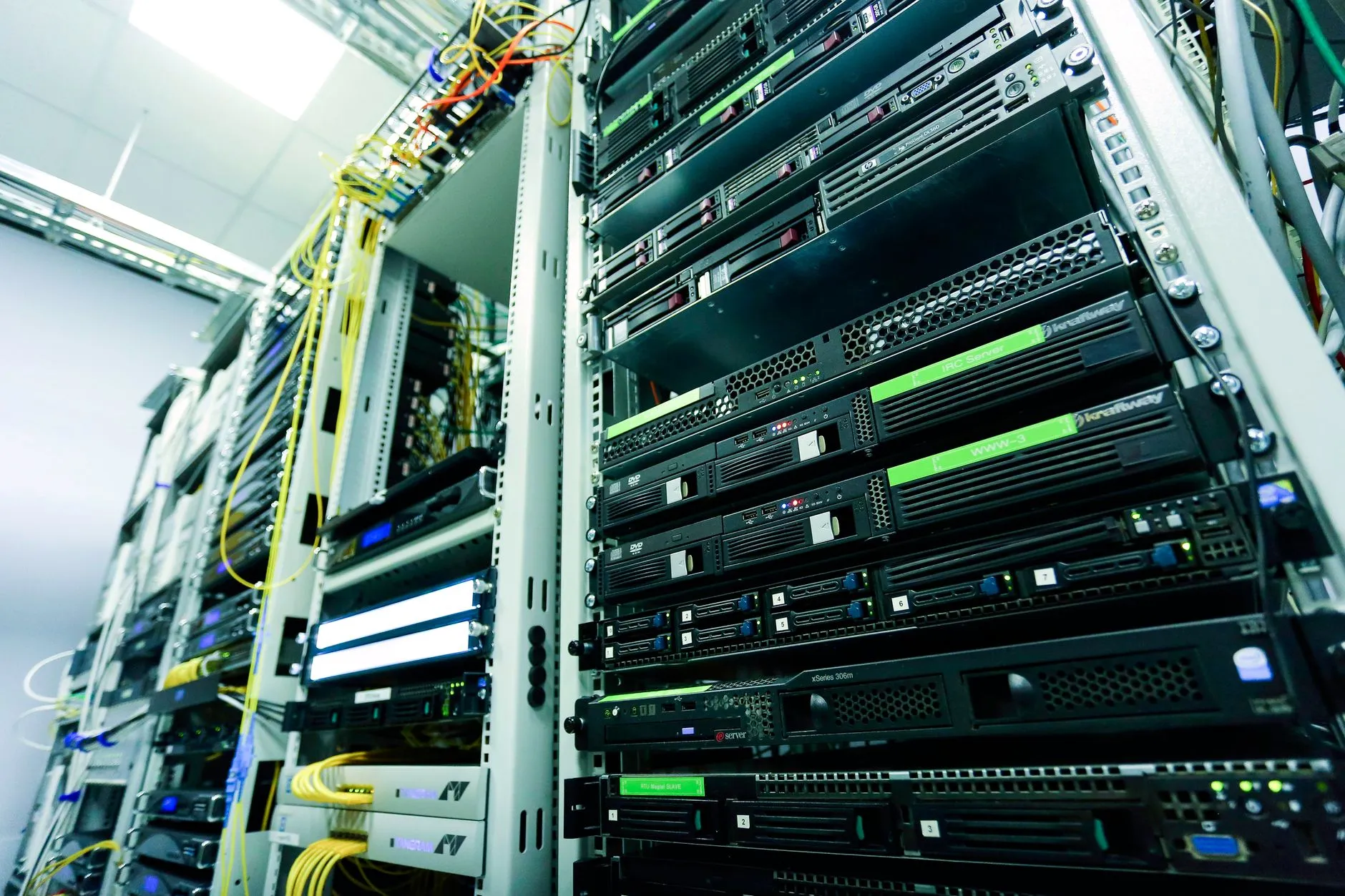
The short answer: There is no public price list for China data center or colocation capacity — unlike Hong Kong or Singapore, where brokerage reports quote per-kW asking rents, mainland China's IDC and cloud market is negotiated wholesale, deal by deal. What you can budget around are the real cost drivers: regional power tariffs, land and construction cost in Tier-1 cities, redundancy tier, and a licensing and compliance overhead layer (IDC/ICP filing, MLPS, PIPL) that rarely appears on the headline quote. Brocent doesn't sell data center capacity, but our own managed IT and cloud services pricing is published — a useful, real-numbers contrast to an otherwise opaque market.
Ask a colocation broker in Singapore what a rack costs and you'll get a number within a phone call — public industry reports from CBRE and Cushman & Wakefield quote asking rents by the kW. Ask the same question about a facility in Shanghai, Beijing or the Greater Bay Area, and the honest answer is: it depends, and nobody publishes it. That isn't evasiveness on the provider's side — it reflects how the mainland China market actually works. Capacity is contracted directly between operator and customer, pricing is negotiated per deal based on committed load, term length and location, and there is no equivalent of a JLL or CBRE quarterly China colocation-rate report that a finance team can drop into a budget model.
That gap creates a real planning problem for foreign companies budgeting China hosting, colocation or cloud spend. This guide breaks down what genuinely drives cost in the China market — region, power, construction, redundancy tier, and a compliance layer that is easy to underestimate — and contrasts that opaque wholesale market with the one part of your China IT stack where real numbers are published: Brocent's own managed cloud and IT services pricing.
Why Isn't There a Public Price List for China Data Centers?
In markets like Singapore or Hong Kong, colocation is a mature, broker-intermediated asset class — commercial real estate firms track vacancy, power availability and asking rents the same way they track office rents, and publish the results because enough transactions happen at arm's length to make a benchmark meaningful. Mainland China's IDC (Internet Data Center) market doesn't work that way. Capacity is largely contracted directly between a licensed operator — a state carrier, a specialist colocation group, or a hyperscale cloud provider's licensed local operator — and the end customer, with pricing shaped by the specific deal: committed power draw, contract term, region, and how much of the compliance and licensing burden the operator absorbs versus passes through.
There is also a structural reason very little gets published: foreign investment in China's telecoms-adjacent infrastructure, including data centers, sits inside the Value-Added Telecommunications Services (VATS) licensing regime, historically capped at minority foreign ownership before a set of 2024-era pilot-zone relaxations in Beijing, Shanghai, Hainan and Shenzhen. That licensing structure means the operators actually holding mainland capacity are overwhelmingly domestic — state carriers, groups like GDS, VNET and Chindata, and the hyperscalers' licensed local partners — and none of them have a commercial incentive to publish a public rate card the way a competitive, broker-driven market would. The practical result: if a vendor quotes you a specific per-kW or per-rack number for China without a signed term sheet behind it, treat it as a soft opening offer, not a market rate.
None of this means China data center costs are unknowable — it means they need to be reasoned about from drivers, not looked up from a published table.
Contract term length is itself a cost lever inside that negotiation, and it's one foreign finance teams often don't think to ask about. A three-year committed term with a defined minimum power draw will generally price more favorably than a short, flexible arrangement, because the operator is trading price for revenue certainty — the same logic that applies to a long-lease office deal. The practical implication is that "what does it cost" is really two questions: what does it cost at the term and commitment level you actually need, and what would it cost if you were willing to commit further — and a good operator conversation should surface both, rather than anchoring on a single headline figure.
What Actually Drives Data Center Costs in China, Region by Region?
Four factors do most of the work in shaping what any given China hosting or colocation deal will cost, and they interact rather than stacking neatly.
Regional power tariffs. Industrial electricity pricing is set provincially in China and varies meaningfully by region — the western and northern compute hubs built under the "东数西算" (Eastern Data, Western Computing) national initiative, such as Guizhou, Inner Mongolia, Ningxia and Gansu, generally carry materially lower industrial power costs than Tier-1 demand centers like Shanghai, Beijing or the Greater Bay Area, partly because of local generation capacity and provincial pricing policy. That is genuinely useful for power-hungry, latency-tolerant workloads — batch analytics, model training, backup and archival compute — but it is close to irrelevant for a foreign company's actual China office IT footprint, which needs low-latency proximity to Beijing, Shanghai, Guangzhou or Shenzhen, not the cheapest kilowatt-hour in Gansu.
Land and construction cost in Tier-1 cities. A data center is a capital-intensive building before it is anything else — power infrastructure, cooling plant, fire suppression, physical security and the shell itself. Land and construction cost in Shanghai, Beijing or Shenzhen runs well above what the same specification costs in a western compute hub, and that capital cost gets amortized into whatever the operator eventually charges, whether that shows up as a headline rate or gets bundled into a "committed term" pricing structure.
Redundancy tier. Uptime Institute-style tier classifications (roughly, Tier II through Tier IV in common industry usage) drive real cost differences through redundant power paths, backup generation, UPS capacity and concurrent-maintainability design. A Tier IV-equivalent facility with full redundancy and no single point of failure costs meaningfully more to build and operate than a Tier II facility — and the tier you actually need depends on your application's tolerance for downtime, not on defaulting to the highest number on the spec sheet.
Connectivity and carrier-neutrality. Facilities with multiple carrier options and direct peering to major cloud regions typically command a premium over single-carrier sites, because connectivity quality and diversity is itself a cost input, not just a technical nice-to-have — a slow or single-homed connection has a real business cost even if it never shows up on the colocation invoice.
Sustainability and energy-efficiency requirements. Newer facilities, particularly in power-constrained Tier-1 markets, increasingly build to stricter PUE (Power Usage Effectiveness) targets and, in some regions, face policy pressure or incentives tied to renewable energy sourcing — mirroring a trend already visible in Singapore's DC-CFA framework. A facility built to a lower, more efficient PUE target typically carries a higher upfront construction cost in exchange for a lower ongoing power draw per unit of IT load, which changes the cost trade-off depending on whether you're optimizing for the lowest headline rate or the lowest total cost over a multi-year term.
The practical takeaway: two China data center deals with similar sticker-level framing can differ substantially in real cost once region, tier and connectivity are accounted for, which is exactly why a single published number would be close to meaningless even if one existed.
The Hidden Cost: Licensing and Compliance Overhead
The line item most foreign companies underestimate when budgeting China hosting isn't power or construction — it's the licensing and compliance layer that sits on top of the infrastructure itself. Operating a data center or hosting environment in mainland China touches at least three separate regulatory tracks, and each carries real cost whether or not it appears as a discrete line on an invoice.
IDC and ICP filing is the base requirement for operating any hosted internet service in China — a licensed operator must hold the underlying IDC license, and any public-facing service typically needs an ICP filing or license tied to it, which is one reason foreign companies buy hosting through a licensed local operator rather than attempting to self-operate. MLPS (等保, the Multi-Level Protection Scheme) classification, filing and periodic third-party assessment is a mandatory, recurring compliance-operations cost for information systems above a threshold risk level — not a one-time project fee, and not something a generalist IT budget line typically accounts for. PIPL adds its own layer for any system processing personal information: consent mechanics, proportionate technical and organizational controls, and — for data leaving mainland China — cross-border transfer rules that can require a formal security assessment. We cover the compliance side of this in detail in our MLPS and PIPL compliance checklist for foreign companies in China; the point for a cost conversation is simpler: budget compliance as a recurring operational cost tied to your hosting environment, not a one-off item you price once and forget.
This is also where the gap between a "clean" cloud or colocation quote and your actual all-in cost tends to open up. A quote that only covers power, space and connectivity, with MLPS assessment, ICP filing coordination and PIPL-aligned technical controls left as "your responsibility," looks cheaper on paper than a quote that bundles compliance support in — until the assessment deadline arrives and someone has to scope, execute and pay for it anyway.
Colocation vs. Public Cloud vs. Managed Cloud: How the Cost Structures Differ
The three common ways foreign companies host in China carry genuinely different cost shapes, and the right comparison isn't "which is cheapest" but "which cost structure matches how predictable you need your spend to be."
- Colocation (self-managed in a licensed facility) — you contract directly with an IDC operator for power, space and connectivity, then run and secure your own servers and network stack inside it; costs are driven by the region/tier/connectivity factors above, plus your own headcount cost to operate, patch and secure the environment, and you carry MLPS/PIPL compliance responsibility directly unless you contract it out separately.
- Public cloud (Alicloud, Tencent Cloud, or a foreign-brand cloud via its licensed mainland operator, e.g. Azure China via 21Vianet, AWS China via Sinnet/NWCD) — consumption-based pricing with genuinely published, transparent rate cards for compute, storage and bandwidth, which removes the "opaque quote" problem entirely at the infrastructure layer; the real cost that remains opaque is the operational one — architecture, security configuration, patching, monitoring and the compliance work of running that cloud environment in a way that actually satisfies MLPS and PIPL, which the cloud provider's rate card does not include.
- Managed cloud via an MSP (Brocent's model) — you use the same published-rate-card public cloud underneath, and pay a managed services provider a transparent, published fee to architect, secure, monitor and operate it, including the MLPS/PIPL-aligned technical controls, through managed IT and cloud services and managed IT security services; the pitch here isn't that this is cheaper than doing it yourself — it's that both halves of the bill (the cloud provider's consumption charges and the MSP's management fee) are actual published numbers, rather than one opaque colocation quote covering infrastructure and an unpriced compliance obligation bundled in behind it.
Colocation tends to make sense when you have a genuine reason to run bare-metal infrastructure yourself — a specific hardware requirement, an existing capital investment, or a workload that doesn't fit a cloud consumption model well. For most foreign-invested offices whose China footprint is standard business IT — file, mail, ERP, collaboration, line-of-business apps — public cloud, managed by a partner who owns the compliance layer, tends to produce a more predictable total cost than negotiating a bespoke colocation deal from scratch.
It's also worth being explicit that these three options aren't mutually exclusive over time. A manufacturing site with existing on-premises equipment might genuinely need colocation or a hybrid footprint for specific line-of-business systems, while running everything else — email, collaboration, HR systems — on managed public cloud. The question worth asking isn't "which one model fits our whole China footprint" so much as "which workloads actually need which cost structure," which is a conversation worth having before signing anything, not after.
What Brocent Publishes vs. What a Data Center Operator Quotes You
This is the honest contrast at the center of this guide. A data center operator's colocation quote for mainland China is, by the nature of that market, a negotiated number tied to a specific deal — there is no rate card you can look up in advance, and what you're quoted depends on your committed load, term and region in ways that make apples-to-apples comparison difficult even between two quotes from the same operator six months apart.
Brocent doesn't sell data center capacity, so we're not offering ourselves as the "transparent" alternative to an opaque product — we're a different layer of the same stack. But the part of your China IT cost that we do own is published in full on our pricing page, with real numbers rather than "contact sales": managed IT and cloud services plans start from $45 per user per month, ad-hoc on-site or remote support is billed from $59 for the first hour, ongoing infrastructure monitoring (servers, storage, network, cloud workloads) runs from $35 per month per system, and a dedicated infrastructure or cloud engineer is available from $624 per month. Those are the actual rates, not a directional example — you can check them yourself before ever getting on a call.
The practical way to use this: treat colocation or IDC pricing as something you negotiate deal-by-deal with an operator, factoring in the region/tier/compliance drivers above, and treat the management layer on top of your cloud or hosting environment — architecture, security, monitoring, compliance execution — as something you can actually price in advance, because at least one part of the stack publishes real numbers.
Frequently Asked Questions
Why can't I find published data center pricing for China the way I can for Hong Kong or Singapore?
Because those are broker-intermediated, arm's-length markets where enough transactions happen openly for firms like CBRE or Cushman & Wakefield to publish meaningful benchmarks. Mainland China's IDC capacity is licensed under the VATS regime and contracted directly between a small number of domestic-licensed operators and their customers, deal by deal, so there is no equivalent public rate card — any number quoted to you without a signed term sheet behind it should be treated as a starting offer, not a market price.
Is it actually cheaper to host in western China (Guizhou, Inner Mongolia) than in Shanghai or Beijing?
For raw compute power cost, generally yes — the "东数西算" western hubs were built partly because industrial power is materially cheaper there. But that's a genuinely different decision from where to host your office IT environment: latency to your actual users and offices in Shanghai, Beijing, Guangzhou or Shenzhen usually matters more than shaving power cost on a workload that isn't latency-sensitive, so the cheaper region is right for batch and archival workloads, not for your day-to-day business systems.
What's the single biggest cost foreign companies underestimate when budgeting China hosting?
Compliance overhead — specifically MLPS classification, filing and the recurring (typically annual, for higher-graded systems) third-party assessment, plus PIPL-aligned technical controls for anything touching personal information. It's easy to price power, space and connectivity and forget that compliance is a recurring operational line item, not a one-time setup cost, until an assessment deadline actually arrives.
Should we choose colocation, public cloud, or managed cloud for a new China office?
For most foreign-invested offices running standard business IT — file, mail, ERP, collaboration — public cloud managed by a partner who owns the security and compliance layer usually produces the most predictable total cost, because both the cloud consumption rate and the management fee are published numbers. Colocation makes more sense when you have a specific reason to run your own hardware — a particular technical requirement or an existing capital investment — rather than as a default starting point.
Does Brocent operate its own data centers in China?
No — Brocent is a managed IT and cloud services provider, not a data center or colocation operator. We help clients architect, secure, deploy and operate IT and cloud environments — including ones hosted in China through licensed public cloud providers — and our own services pricing for that work is published on our pricing page, unlike the negotiated, deal-specific pricing you'll get from an IDC or colocation operator.
How does redundancy tier affect what I should expect to pay?
Higher redundancy tiers (roughly Tier III and above in common industry terms) require duplicated power paths, backup generation and concurrent-maintainability design, all of which cost more to build and run than a lower-tier facility — but the tier you actually need should be set by your application's tolerance for downtime, not by defaulting to the highest tier on the spec sheet. A internal file server for a 20-person office rarely justifies the same redundancy tier as a customer-facing transaction system.
Budgeting China Data Center and Hosting Costs the Right Way
There is no shortcut to a published China colocation rate card, because the market genuinely doesn't work that way — and treating a single quoted number as "the" market price, rather than one negotiated data point, is the single most common budgeting mistake we see. Reason from the real drivers instead: region and power tariff, land and construction cost, redundancy tier, connectivity, and a compliance overhead layer that's easy to underprice. And for the part of your China IT spend that doesn't need to stay opaque — architecting, securing and operating whatever hosting environment you land on — our pricing is public, and we're happy to walk through how it applies to your specific footprint. Get in touch and we'll help you build a realistic China hosting cost model instead of guessing from a single vendor quote, or look at our related guide to deploying IT infrastructure for a new China office if you're still earlier in the planning process.
Share:
Ready to take action?
Turn these insights into a roadmap for your business.
Book a 15-minute no-obligation consultation with our APAC IT experts. We'll review your current setup and provide a tailored IT roadmap within 24 hours.
Free Checklist
10 Critical Checks Before Expanding IT to Greater China
PIPL compliance, network segmentation, bilingual helpdesk setup, and more — everything your IT team needs before Day 1 in China.
Request the checklist →📬 Monthly Asia IT Insights
China compliance updates, cybersecurity alerts, and IT tips for APAC teams — once a month.
No spam. Unsubscribe anytime.