IT Support in the New Territories: An Industrial Site's Reality Check
What actually changes when your Hong Kong site is an industrial building in Tai Po or Yuen Long rather than a Central office - travel time, landlord-controlled risers, carrier choice and a comms room that was never designed as IT infrastructure.
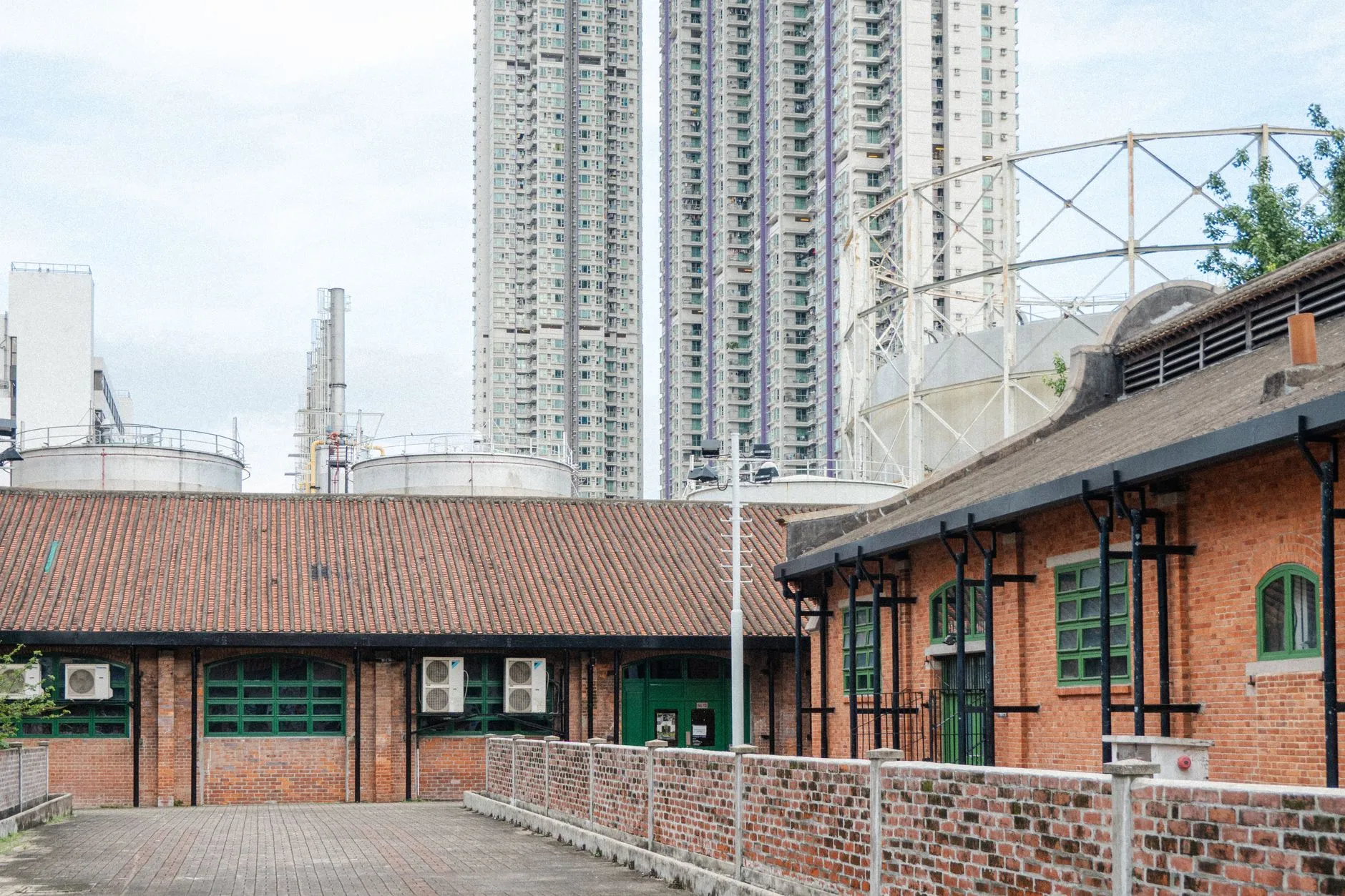
The short answer: IT support in the New Territories isn't worse than in Central — it's different, and the differences are mostly about the building rather than the vendor. Travel time, landlord-controlled risers, limited in-building fibre paths and a comms room that was never designed as IT infrastructure all change what an honest onsite response commitment looks like.
An operations lead at a light-manufacturing site in a New Territories industrial estate goes out to tender for managed IT support, collects three quotes, and finds something odd: the response windows are longer than a colleague at a Central office was quoted, and the setup costs are higher. The instinct is to assume someone is padding the numbers because the site is out of the way. Sometimes that is exactly what's happening. More often, the vendor who quoted the longer window is the only one who actually looked at the site — and the vendor who quoted the same four-hour onsite response they quote everyone in Hong Kong simply hasn't checked what the journey to a Yuen Long or Tai Po industrial building at 4pm on a weekday really involves.
This guide is written for that operations or facilities lead: a 120-160-person assembly or light-manufacturing operation occupying one or two floors of a multi-storey industrial building in Tai Po, Yuen Long, Fanling, Tsuen Wan or Kwai Chung. It is an illustrative composite, not a named client — but the operational pattern is one Brocent has run repeatedly. Brocent has been supporting manufacturing and industrial sites since it was founded in Beijing in 2007, has had a Hong Kong office since 2016, and has been headquartered in Singapore since 2021; the plant-floor IT problems it handles across mainland China production sites translate almost directly to a Hong Kong industrial building, with one large exception — in Hong Kong, the landlord owns far more of the problem.
Light Manufacturing and Assembly in New Territories Industrial Estates
The New Territories is where Hong Kong still physically makes and moves things. Multi-storey industrial buildings across Tai Po, Yuen Long, Fanling, Tsuen Wan, Kwai Chung and Tuen Mun house light assembly, electronics finishing, packaging, food processing, printing, precision components, and the local operations of manufacturers whose volume production sits across the border in the Greater Bay Area. A typical occupier isn't a single-tenant factory campus. It is a company renting one or two floors of a building shared with a dozen unrelated businesses, in a structure that may date from the 1970s or 1980s, originally designed around goods lifts, floor loading and truck access rather than around structured cabling and comms rooms.
That distinction matters more than it sounds. A Central or Kowloon office tenant occupies a purpose-built commercial tower where the landlord's base build already assumes multiple telecom carriers, diverse fibre entry, dedicated riser capacity for tenant cabling, and a managed building services regime. An NT industrial tenant occupies a building where every one of those assumptions has to be checked rather than presumed — and where the answer is frequently "one carrier, one riser, and you'll need written landlord approval to run anything new."
The Scenario: 140 Staff, Two Floors, and a Server Room That Is Really a Store Cupboard
The composite site: about 140 people, split roughly between an office area — sales, procurement, finance, quality, engineering — and an assembly and packing floor. One IT generalist handles everything: laptops, the ERP client, the label printers, the Wi-Fi that keeps dropping near the packing benches, the CCTV recorder nobody else understands, and the occasional after-hours call when a production batch has to ship and a terminal won't authenticate.
The "server room" is a converted store cupboard on the office floor. Inside: a wall-mounted or half-populated floor rack holding a file server, a small NAS, the firewall and switching, the phone system, the CCTV NVR, and a UPS somebody sized correctly six years and four devices ago. There is no dedicated cooling — the room is served by a split-type air conditioner mounted on the wall, which is on the same circuit as the office lighting, and which nobody has serviced in a while. The door is normally propped open in summer, because otherwise the room gets hot. Cabling to the assembly floor was run by a contractor during a fit-out, extended twice since by whoever was available, and is not documented anywhere.
None of this is negligence. It is what happens when a site grows steadily and IT is never the thing that forces a capital decision. It is also, almost exactly, the environment Brocent walks into when it is asked to take over support at an industrial site — in Hong Kong or across the border.
Real Problem One: Onsite Response Is a Travel-Time Question Before It Is an SLA Question
The single biggest difference between supporting an NT industrial site and supporting a Central office is that the onsite half of the SLA is dominated by geography. An engineer dispatched from a Kowloon or Hong Kong Island base to a Yuen Long or Tai Po industrial estate faces a genuinely longer journey than one crossing a few streets in Central — and the last leg is the part vendors underestimate. Rail gets an engineer to a district; it does not get them to an industrial building, which is typically a further taxi or bus ride from the station, through an estate road network that is built for trucks. Add a goods-lift wait, a visitor-registration process at the building's security desk, and the fact that the goods lift may be occupied by an incoming delivery for another tenant for the next twenty minutes, and the difference between "arrived in the district" and "standing in front of the rack" can be substantial.
This has a direct commercial consequence. A provider quoting a single Hong Kong-wide onsite response time is either quoting the number that works for their nearest clients and hoping distance never bites, or has priced a buffer into every contract to cover the worst case. Neither is honest. The right answer is a response window that is written specifically for that site, against a real journey somebody has actually made.
Real Problem Two: The Landlord Controls the Riser, and That Decides Your Cabling
In an older multi-storey industrial building, the vertical riser — the shaft carrying cabling between floors — is landlord-controlled, frequently congested with decades of accumulated tenant cabling, and often subject to a formal application process before anything new goes in. A tenant who wants to link two floors with their own fibre, add a second carrier's circuit, or run a clean structured-cabling backbone between the office floor and the assembly floor does not simply schedule a contractor. They apply, wait, and sometimes learn that the available riser capacity is committed or that the building management requires the work to go through a nominated contractor at a nominated cost.
The practical effect is on lead time and design. A cabling change that takes a week in a modern commercial tower can take considerably longer in an industrial building once landlord approval is in the loop — and the design that finally gets approved is often not the design that was first drawn. Any IT provider who plans an infrastructure change at such a site without first asking who controls the riser and what the approval process is has planned a schedule they cannot keep.
Real Problem Three: In-Building Fibre Paths and Carrier Choice Are Genuinely Limited
Hong Kong as a market has excellent connectivity, but that is a statement about the city, not about a specific building. The question that matters for a given industrial site is how many carriers have actually built fibre into that building, and whether their entry paths are genuinely diverse or simply two circuits following the same duct into the same entry point. In older NT industrial stock, the honest answer is often narrower than a tenant expects: fewer carriers present, longer lead times to bring in a new circuit if the preferred one isn't already there, and "diversity" that turns out to be logical rather than physical.
For a site running an ERP client, a cloud-hosted line-of-business system, or increasingly anything in Microsoft 365, this is the difference between a resilience design that works and one that reads well on paper. A genuine second path may mean a different carrier with a physically separate entry, or it may mean accepting that in-building diversity isn't available and putting a 4G/5G failover in place instead — a legitimate answer, but one that has to be a decision rather than a discovery made during an outage.
Real Problem Four: One Flat Network Doing Two Very Different Jobs
The office side of the site behaves like any other business network: laptops, email, file access, video calls, ERP and finance systems, a printer that everyone complains about. The assembly and packing floor behaves nothing like it — label printers, handheld scanners, weighing and inspection equipment, machine controllers, floor terminals, and possibly a CCTV system carrying continuous video. These two environments have different traffic profiles, different tolerance for interruption, and very different security exposure. Floor equipment often runs embedded software that cannot be patched on a normal cycle and sometimes cannot be patched at all.
At most sites of this size, both live on one flat network with a single subnet, because that is what the original fit-out produced and nothing has forced a change. The consequences are predictable: a broadcast storm or a misbehaving device on the floor degrades the office side; an unpatchable floor terminal sits on the same segment as finance workstations; and Wi-Fi designed for a carpeted office is asked to cover a space full of metal racking, moving trolleys and machinery, where coverage that tested fine in an empty room fails once the racking is loaded. Segmenting the two environments — and designing the floor's wireless coverage for what is physically in the space rather than for the floor plan — is usually the highest-value network change such a site can make.
Real Problem Five: The Comms Rack Was Never Designed as IT Infrastructure
The converted store cupboard deserves its own section, because it causes a disproportionate share of incidents. Three things are typically wrong with it. Power: the rack is on a general small-power circuit shared with office equipment, the UPS was sized for a smaller load years ago and its batteries are past their service life, and there is no protected circuit or generator backing. Cooling: a split-type air conditioner is a comfort-cooling appliance, not a room-cooling design; it is not sized for continuous heat load, it has no redundancy, and when it fails on a hot Saturday nobody knows until Monday. Physical environment: an industrial site generates dust and vibration, the room doubles as storage, and the door gets propped open.
The failure mode this produces is a summer thermal shutdown or a UPS that dies mid-brownout, taking down the file server, the phone system, the firewall and the CCTV recorder simultaneously — during a production run. It reads as an IT failure. It is a building services failure that IT owns by default because nobody else does.
What Usually Forces the Issue
Sites like this rarely commission a review proactively. Something specific pushes it onto the agenda. Most often it's an outage whose duration was determined by travel and access rather than by the fix itself — a switch failure at 3pm that ended production for the day because nobody could be onsite in time. Sometimes it's an audit or a customer requirement: an overseas buyer's supplier questionnaire asks about network segmentation, backup testing and access control, and the honest answers are uncomfortable. Sometimes it's a lease event — a renewal, an expansion onto another floor, or a relocation — that finally makes the building's infrastructure a live question. And sometimes it's simply that the one IT generalist resigns, and the company discovers how much undocumented knowledge just walked out.
Brocent's Perspective: A Vendor Who Quotes One Hong Kong-Wide Response Time Hasn't Checked
The honest position is this: IT support in the New Territories is not inherently worse, slower or more expensive than in Central. What is true is that the commitments have to be written against the real site. A provider who offers an identical onsite response window for a Central tower, a Kowloon East office and a Yuen Long industrial building is not offering consistency — they are offering a number they haven't tested at two of the three locations.
Brocent's view, built on running IT for manufacturing and industrial sites since 2007 and operating in Hong Kong since 2016, is that the useful conversation with an industrial site starts with the building, not with the service catalogue. What does the journey actually take at the times of day incidents actually happen? Who approves riser work, and how long does approval take? Which carriers are physically in the building? What is the comms room's real power and cooling situation? A provider who can answer those four questions about a specific site before quoting is a provider whose numbers mean something. One who can't is quoting a template.
The corollary is that the same rigour cuts the other way too. Once travel is understood, most of it can be engineered out. The majority of tickets at a site like this never required anyone to physically attend — they required remote access that works, monitoring that catches the problem before the floor does, and spares that are already onsite rather than in a van somewhere on Tolo Highway.
What Proper New Territories Coverage Actually Looks Like
Four things distinguish a support arrangement that will hold up at an NT industrial site from one that will quietly disappoint.
A documented onsite window written against the real journey. Not a marketing SLA, but a stated response time for that address, with the dispatch origin named, the realistic travel and building-access time acknowledged, and a defined escalation if the window is missed. A longer, honest window that is consistently met is worth considerably more than a shorter one that is routinely breached — particularly when the operations lead has to tell a production supervisor when help will actually arrive.
A building-level check before anything is committed. Before signing, someone should have physically walked the riser access, confirmed which carriers are in the building and by what path, photographed and measured the comms room, tested the goods-lift and visitor-access process, and mapped the existing cabling well enough to know what is actually there. This is unglamorous work and it is where most of the surprises live. Brocent's IT infrastructure deployment work at industrial sites starts here for exactly that reason.
Remote-first triage so most tickets never need the journey. A properly instrumented site — monitored switches, UPS and environmental alerting in the comms room, remote access to endpoints and floor terminals where technically possible — converts a large share of would-be site visits into remote fixes. A 24/7 help desk matters more at an industrial site than at an office one precisely because the travel penalty on the alternative is higher, and because production shifts don't always align with office hours.
A comms room that is actually powered and cooled for its load. Right-sized UPS with a battery replacement schedule, a proper protected circuit, cooling sized for continuous heat load rather than human comfort, environmental monitoring that alerts on temperature before hardware shuts down, and the room used as a comms room rather than as overflow storage. This is often the cheapest large risk reduction available at such a site.
Where a site's ticket volume and physical-work load genuinely justify it, a scheduled resident presence — full-time or part-time onsite IT staff — removes the travel question entirely for routine work. That is a real option rather than a default: it earns its place when the site generates a steady stream of hands-on work, not merely because it is far away.
Does a Site Like This Still Need Its Own On-Premises Server?
Less than it used to, but not never. File services, email and most collaboration have a straightforward path to Microsoft 365 or equivalent, and moving them removes the single most damaging consequence of a comms room thermal event. What tends to stay onsite is anything the assembly floor depends on in real time: an ERP or MES component with a local database, machine-controller or line-side systems, the CCTV recorder, and sometimes a print or license server. Those have latency and availability requirements that don't tolerate a WAN dependency, particularly in a building whose connectivity diversity is limited.
The realistic target for most sites of this profile is a much smaller on-premises footprint — a couple of workloads that genuinely have to be local, properly backed up offsite, on a rack that is properly powered and cooled — rather than either a full cloud migration or the status quo.
Covering an NT Site and a Kowloon or Island Office Under One Contract
Many companies in this position have a second location: a showroom, a sales office, or the finance function in Kowloon or on Hong Kong Island. Splitting these between two providers is usually a false economy, because the two sites share user accounts, security policy, backup scope and licensing, and every incident that touches both becomes a coordination problem. A single provider covering both should still hold two different onsite commitments — the response window for the NT site and the one for the Kowloon office are not the same number and shouldn't pretend to be — under one contract, one security baseline and one reporting line. That is the arrangement that avoids both the split-vendor coordination tax and the fiction of a single city-wide SLA.
A Central or Kowloon-Based MSP Quoting One Hong Kong-Wide SLA vs a Local NT Break-Fix Contractor vs One Provider With a Surveyed, District-Specific Onsite Window
- A Central or Kowloon-based MSP quoting one Hong Kong-wide SLA — Usually strong on process, tooling and security, and genuinely good at the office half of the site. The weakness is the onsite commitment: a single city-wide response number that was never tested against this address, which tends to be met comfortably for their Central clients and missed at the NT site, with the operations lead absorbing the difference.
- A local NT break-fix contractor — Genuinely fast to attend and often well known in the building, which is worth real money when something physical breaks. The weaknesses are structural: no 24/7 coverage or formal escalation, little or no monitoring, security and backup handled reactively, documentation that lives in one person's head, and no capacity to design segmentation, cabling or a migration — reactive by construction rather than by choice.
- One provider with a surveyed, district-specific onsite window (Brocent's model) — A response commitment written for that specific address after someone has walked the building, combined with the monitoring, helpdesk, security baseline and documentation of a full managed service, plus onsite spares and — where volume justifies it — a scheduled or resident onsite presence. The honest tradeoff is that the quoted onsite window may look longer on paper than a city-wide marketing SLA. It is a number that is meant to be met.
Frequently Asked Questions
Is IT support genuinely slower in the New Territories, or is that just a vendor excuse?
Both, depending on the vendor. The travel and building-access difference is real: an engineer reaching a Yuen Long or Tai Po industrial building faces a longer journey, an estate road network, a goods lift and a visitor-registration process that a Central office simply doesn't impose. What isn't legitimate is using that as cover for a vague commitment. A provider should be able to tell you where they dispatch from, roughly how long that journey takes at the times incidents actually occur, and what they do when the window is at risk. A shrug about "the New Territories" without those specifics is an excuse; a documented window with a named dispatch origin is not.
What onsite response time should an NT industrial site expect in a contract?
Expect a window written specifically for your address rather than a city-wide figure, and treat the specificity as more important than the number. A good contract states the dispatch origin, distinguishes response from resolution, defines business hours versus after-hours and shift coverage, sets out what happens when the window is missed, and pairs the onsite commitment with a much tighter remote-response commitment — because most incidents should be triaged remotely long before anyone travels. Be more suspicious of a provider offering the same aggressive onsite number everywhere in Hong Kong than of one offering a longer window they can explain.
Why do older industrial buildings complicate internet and cabling?
Three reasons stack up. The vertical riser is landlord-controlled and frequently congested, so adding cabling between floors is an approval process rather than a scheduling exercise. Carrier presence is building-specific: fewer carriers may have built fibre into that particular building, and installing a new circuit can carry a long lead time. And genuine physical path diversity is often unavailable, so what looks like two independent circuits may share an entry point. None of these are unsolvable, but all of them need to be established before a design is committed, not discovered mid-project.
Does a site like this need its own on-premises server at all any more?
Usually a much smaller one than it has. File, email and collaboration workloads generally belong in Microsoft 365 or equivalent, which also removes them from the risk of a comms room thermal event. What genuinely stays onsite is what the assembly floor depends on in real time — a local ERP or MES component, machine-side systems, the CCTV recorder, sometimes a print or license server. The goal is a small, deliberately chosen on-premises footprint that is properly backed up offsite, not a binary choice between full cloud and the status quo.
Can one provider cover an NT site and a Kowloon or Hong Kong Island office under one contract?
Yes, and it is usually the better arrangement, because both sites share identity, security policy, backup scope and licensing — and split vendors turn every cross-site incident into a coordination problem. The important detail is that one contract should still carry two different onsite commitments. The response window for an industrial site in Tai Po and the one for a Kowloon East office are not the same number, and a provider willing to write them differently is demonstrating that they have thought about the actual journey to each.
What should be checked about the comms room before signing anything?
Power first: what circuit the rack is on, whether it is shared with general office power, the UPS's actual capacity against the current load, and the age of its batteries. Then cooling: whether the room has a dedicated unit sized for continuous heat load or a comfort split unit with no redundancy, and whether anything alerts on temperature. Then the physical room: dust, vibration, whether it doubles as storage, whether the door can stay closed, and physical access control. Then the cabling: whether any documentation exists, where the backbone to the assembly floor runs, and what condition it is in. A provider who inspects and photographs all four before quoting is a provider whose quote is based on your site.
Getting a Number That Is Written for Your Building
A New Territories industrial site is not a harder IT environment than a Central office — it is a different one, with more of the risk sitting in the building than in the technology. The providers worth shortlisting are the ones who ask about the riser, the carriers, the goods lift and the comms room's cooling before they quote, and who then commit to an onsite window they have actually tested for your address.
If your site is running on a support arrangement that was written for a generic Hong Kong office, the practical next step is a survey rather than a tender: establish what the building really allows, what the comms room really needs, and what response time is really achievable — then buy against that. Brocent has supported Hong Kong industrial and manufacturing sites since opening its Hong Kong office in 2016, and that conversation always starts with the building rather than the service catalogue. If you'd like the survey conversation rather than a template quote, get in touch.
Share:
Ready to take action?
Turn these insights into a roadmap for your business.
Book a 15-minute no-obligation consultation with our APAC IT experts. We'll review your current setup and provide a tailored IT roadmap within 24 hours.
Free Checklist
10 Critical Checks Before Expanding IT to Greater China
PIPL compliance, network segmentation, bilingual helpdesk setup, and more — everything your IT team needs before Day 1 in China.
Request the checklist →📬 Monthly Asia IT Insights
China compliance updates, cybersecurity alerts, and IT tips for APAC teams — once a month.
No spam. Unsubscribe anytime.