European Luxury Fashion House (Japan) — Boutique POS, Store Wi-Fi & After-Hours Field Engineering
Refreshed Fortinet and Meraki networks across 28 Japan boutiques, enforced PCI-DSS/APPI/J-SOX POS controls, cleared department-store nyukan shinsei and sagyo todoke permits, and activated nationwide NBD dispatch with bilingual JP/EN photo reports.
28
Boutiques Nationwide
0
Trading-Hour Disruptions
NBD
Tokyo/Osaka/Regional SLA
JP/EN
Bilingual Photo Closeout
EXECUTIVE PROJECT SUMMARY
A Paris-headquartered European luxury fashion house operating 28 flagship boutiques and prestige department-store concessions across Tokyo, Osaka, Nagoya, Fukuoka, and Sapporo engaged Brocent to modernise its store network and retail field IT operations. Working strictly inside overnight maintenance windows under Japanese department-store nyukan shinsei and sagyo todoke permit regimes, Brocent coordinated NTT and KDDI store circuits, refreshed Fortinet and Cisco Meraki infrastructure, isolated POS terminals and fiscal/receipt printers for PCI-DSS, Japan APPI, and J-SOX compliance, and established nationwide next-business-day dispatch with bilingual JP/EN closeout photo reports.

IT Service Delivery Director, vCIO
Cross-Border Managed IT · Trading Floor SLA · Japan & APAC Retail Networks
JAPAN LUXURY RETAIL IT · CIRCUIT, PCI-DSS & PERMIT EXECUTION MATRIX
Boutique engineering controls verified across all 28 Japan locations
Department-Store Permits
WAN & Carrier Failover
POS & Receipt Printer VLANs
APPI / J-SOX Closeout
| Boutique Workstream | Legacy Store Condition | Target Japan Retail Standard | Closeout Verification Proof |
|---|---|---|---|
| Department-Store Permits | Last-minute vendor rejections at loading docks | T-10 day nyukan shinsei & sagyo todoke clearance + floor protection | Stamped building-management permit copy + entry/exit timestamp |
| WAN & Carrier Failover | Single NTT line; manual tether when fibre dropped | Dual NTT / KDDI circuits + Fortinet SD-WAN auto-failover (<5s) | Live primary-unplug failover test + carrier circuit ID label photo |
| POS & Receipt Printer VLANs | Shared flat subnet with staff Wi-Fi and back-office PCs | Isolated PCI-DSS POS VLAN + Meraki 802.1X clienteling Wi-Fi | Switch port-security dump + test payment & receipt print verification |
| APPI / J-SOX Closeout | Verbal Japanese sign-off; no photos or serial tracking | Bilingual JP/EN closeout report within 12h + serial asset log | Before/after cabinet photos, serial table & store manager signature |
IT MANAGER EVALUATION & AUDIT BENCHMARKS
Japan Luxury Retail Engineering Guardrails & Compliance Controls
DEPARTMENT-STORE PERMIT DISCIPLINE
Zero Entry Rejections Across 28 Sites
Japanese prestige department stores will turn away an engineer at 21:00 for a single mismatched kanji character on a nyukan shinsei or missing sagyo todoke method statement. Brocent maintains a pre-verified building-rules playbook for every major Japan retail landlord.
POS & RECEIPT PRINTER ISOLATION
Strict PCI-DSS VLAN & Physical Port Lock
Luxury boutiques run high-value card transactions and VIP clienteling apps side by side. We lock POS terminals and fiscal/receipt printers to dedicated MAC-authenticated switch ports and disable unused RJ45 jacks to pass annual PCI-DSS and J-SOX checks.
DUAL NTT / KDDI CARRIER RESILIENCE
Sub-5-Second Automatic Failover During Peak Sales
A 10-minute payment outage on a Saturday afternoon in Ginza costs significant revenue and brand trust. Pairing primary NTT and secondary KDDI links on Fortinet SD-WAN keeps POS authorisations and tax-free reporting online automatically.
BILINGUAL JP/EN HQ VISIBILITY
Standardised Photo Reports & Asset Serial Logs
Paris HQ never has to decipher raw Japanese email threads. Every ticket and project visit closes with a clean bilingual JP/EN report showing cabling hygiene, LED link status, replaced serial numbers, and Japan APPI custody confirmation.
01 · PROJECT CONTEXT & CHALLENGES
What the client started with and needed to achieve
RETAIL FOOTPRINT
28 Boutiques · Tokyo, Osaka, Nagoya, Fukuoka & Sapporo
Estate comprises 6 street-level flagships in Ginza, Omotesando, and Shinsaibashi alongside 22 concessions inside Tier-1 Japanese luxury department stores, totaling 110+ POS terminals, mobile clienteling iPads, and thermal receipt printers.
REGULATORY & AUDIT SCOPE
Japan APPI · J-SOX · PCI-DSS v4.0 Store Segmentation
Boutique payment terminals, tax-free passport scanners, and receipt printers process cardholder and VIP clienteling data requiring strict VLAN isolation under PCI-DSS, personal data safeguards under Japan APPI, and verifiable J-SOX IT general controls.
LOCAL ACCESS CONSTRAINTS
Mandatory Department-Store After-Hours Permit Regimes
Tier-1 Japanese department stores enforce zero-tolerance entry protocols: every overnight technician requires pre-approved nyukan shinsei (building entry application) and sagyo todoke (work notification) filings 5–10 business days in advance, plus floor-protection mats and zero dust.
HQ REPORTING GAP
European NOC Needed Bilingual JP/EN Proof Within 12 Hours
Paris HQ infrastructure leads could not verify local Japanese contractor work or troubleshoot NTT/KDDI circuit handoffs without translated rack photography, port maps, and structured bilingual sign-off sheets.
KEY CHALLENGES & TRIGGERS
- Strict Japanese luxury department store after-hours rules requiring advance nyukan shinsei and sagyo todoke permits
- Aging single-carrier store links and flat VLANs exposing boutique POS terminals and receipt printers to PCI-DSS and APPI audit gaps
- European HQ lacked bilingual JP/EN field engineers able to coordinate NTT/KDDI circuits and deliver next-business-day swaps nationwide
02 · DELIVERY WORKFLOW & ARCHITECTURE
Layered reference topology — select any zone or stage
Ten business days prior to each boutique window, Brocent Japan's bilingual coordinators file building-specific nyukan shinsei and sagyo todoke forms, submit engineer ID copies and insurance certificates, and coordinate NTT FLET'S/Arcstar or KDDI fibre demarc testing with local carrier engineers.
FIELD EXECUTION SNAPSHOTS
Three-stage visual delivery walkthrough
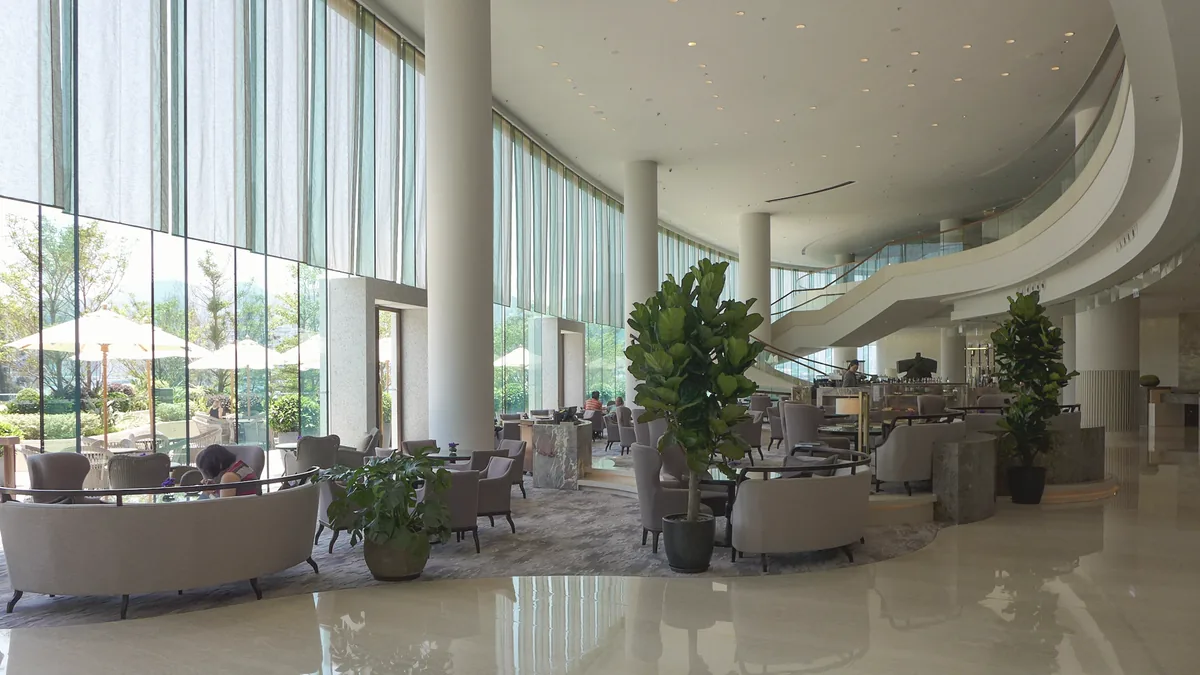
Department-store permit clearance & NTT/KDDI circuit audit
Surveyed 28 flagship and department-store concessions across Tokyo, Osaka, Nagoya, Fukuoka, and Sapporo, filing nyukan shinsei and sagyo todoke permits and auditing NTT/KDDI store circuits.
03 · IMPLEMENTATION NARRATIVE
How our engineers executed and verified this engagement
Nationwide Site Surveys, Carrier Demarc Audits & Permit Playbooks (Weeks 1–3)
Brocent Japan dispatched bilingual field engineers to survey all 28 boutiques across Tokyo, Osaka, Nagoya, Fukuoka, and Sapporo during off-peak morning hours. Each survey documented back-of-house cabinet dimensions, power outlets, NTT and KDDI optical network unit (ONU) serials, and ceiling AP mounting clearances compliant with luxury store aesthetics. In parallel, our Tokyo operations desk catalogued the exact nyukan shinsei and sagyo todoke lead times, escort rules, and service-elevator booking policies for every department-store landlord so zero overnight cutovers risked entry refusal.
Off-Site Staging, Fortinet/Meraki Pre-Config & Flagship Pilot Cutovers (Weeks 4–5)
To minimise time inside active boutiques, all 28 Fortinet FortiGate firewalls, Cisco Meraki switches, and MR-series access points were unboxed, updated to HQ-approved firmware, and pre-configured with Paris NOC templates at our Tokyo staging bench. We executed pilot overnight cutovers at the Ginza and Shinsaibashi flagships first—validating dual NTT/KDDI SD-WAN failover, isolated PCI-DSS POS VLANs, tax-free receipt printer queues, and seamless Meraki Wi-Fi roaming for clienteling iPads across multi-floor sales areas.
Nationwide Overnight Rollout Across 26 Remaining Concessions (Weeks 6–8)
Using the validated pilot runbook, regional engineering crews rolled out 6 to 8 boutiques per week across Greater Tokyo, Kansai, Chubu, Kyushu, and Hokkaido during strict 21:00–05:00 windows. Each cutover included live voice/chat verification with the Paris NOC, end-to-end test swipes on fixed and mobile POS terminals, fiscal/receipt printer output validation, and APPI/J-SOX compliant decommissioning of retired routers. Every morning before 09:00 JST, European HQ received a bilingual JP/EN photographic closeout report confirming 100% readiness ahead of store opening.
Tokyo/Osaka Spare Depot & Nationwide NBD Field Support Transition (Weeks 9–10)
Following full refresh sign-off, Brocent established a dedicated pre-configured buffer stock of Fortinet firewalls, Meraki APs, and POS thermal receipt printers split between Tokyo and Osaka depots. All 28 boutiques transitioned into a predictable ongoing NBD field engineering SLA covering hardware swaps, NTT/KDDI carrier fault isolation, seasonal pop-up store Wi-Fi kits, and quarterly J-SOX asset-register reconciliations—giving European HQ a single bilingual partner across all of Japan.
04 · PRACTICAL RISKS & MITIGATION
4 issues that typically go wrong—and how we prevented them
Department-Store Entry Refusal During Overnight Cutover
Maintained a T-10 day permit checklist for nyukan shinsei and sagyo todoke approvals with verified technician rosters and building-management confirmation 48 hours prior.
POS Terminal or Receipt Printer Failure at 10:00 Store Opening
Executed live test authorisations, tax-free receipt prints, and NTT/KDDI failover pulls with Paris NOC before closing each overnight window, with pre-staged rollback cabling.
Boutique Wi-Fi Dead Zones Behind Marble or Metal Fixtures
Performed RF heat-mapping during site surveys and fine-tuned Meraki AP transmit power and 5GHz/6GHz channel plans for uninterrupted mobile clienteling.
Audit Gaps Under Japan APPI, J-SOX & PCI-DSS
Enforced strict POS VLAN segmentation, disabled unused switch ports, and delivered bilingual JP/EN serial-bound closeout records for every change.
05 · RESPONSIBILITY, DELIVERABLES & SPECS
Clear split between Brocent and client IT
BROCENT JAPAN HANDLES
- Department-store nyukan shinsei & sagyo todoke permit filings and overnight site execution
- NTT/KDDI store circuit coordination, Fortinet/Meraki staging, mounting & structured patching
- Boutique POS terminal, fiscal/receipt printer & Meraki Wi-Fi physical validation with HQ NOC
- Tokyo/Osaka spare-parts custody, nationwide NBD dispatch & bilingual JP/EN photo closeout packs
CLIENT EUROPEAN HQ IT RETAINS
- Global Fortinet/Meraki configuration templates, firewall policies & PCI-DSS network design
- POS software licensing, payment gateway merchant credentials & clienteling app administration
- Annual PCI-DSS QSA assessment coordination & J-SOX internal audit governance
- Approval of store rollout calendar, pop-up store schedules & spare hardware replenishment
DOCUMENTS & AUDIT RECORDS HANDED OVER
ENVIRONMENT & CONTRACT SUMMARY
- Location / Facility
- Tokyo (Ginza / Omotesando), Osaka (Shinsaibashi / Umeda) & Regional Japan
- Scenario
- Boutique Network & Field IT
- Timeframe
- 10-Week Refresh + Ongoing NBD Support
- Delivery Model
- After-Hours Field Engineering + NBD Dispatch
- Contracting Entity
- Brocent Hong Kong / Singapore HQ (HKD / SGD / USD; Mainland China delivered locally via BROCENT Group affiliates)
06 · MEASURED RESULTS & OUTCOMES
Before vs. after operational impact
“Refreshing 28 luxury boutiques across Japan without a single missed store opening or department-store permit rejection is no small feat. Brocent's Tokyo and Osaka engineers spoke fluently with both our Paris NOC and local Japanese landlords, and their bilingual photo closeout reports made our J-SOX and PCI-DSS reviews effortless.”
INCLUDED IN SCOPE
PLANNING A SIMILAR PROJECT?
Japan Luxury Retail Field IT · Tokyo, Osaka & Nationwide
Share your target cities, headcount, and timeline for a scoped SLA and transparent rate card.
EXECUTIVE BRIEF · 2-PAGE A4 PDF
Unlock the 2-page Executive Brief PDF
Read the complete interactive case study on this page, or enter your business details below to immediately unlock the formatted 2-page A4 PDF for offline boardroom sharing.
Your PDF is ready to download
Click below to save the A4 PDF to your device.
European Luxury Fashion House (Japan) — Boutique POS, Store Wi-Fi & After-Hours Field Engineering
07 · FREQUENTLY ASKED QUESTIONS
Key technical & commercial questions before starting
How does Brocent manage strict Japanese department-store after-hours permits?
Our bilingual Japan operations desk handles all building-specific nyukan shinsei (entry applications) and sagyo todoke (work notifications) 5–10 business days ahead, submitting engineer IDs, insurance certificates, and method statements so technicians are never turned away at the loading dock.
Can Brocent coordinate directly with NTT and KDDI on behalf of our overseas HQ?
Yes. Our Japanese-speaking engineers manage NTT and KDDI circuit surveys, demarc handoffs, ONU testing, and fault isolation in Japanese, then translate technical status and circuit IDs into clear English updates for your global NOC.
How do you ensure boutique POS terminals and receipt printers remain PCI-DSS, APPI, and J-SOX compliant?
We isolate POS terminals, card readers, and fiscal/receipt printers on dedicated PCI-DSS VLANs with port security enabled, disable unused wall/switch ports, and deliver serial-bound change logs and bilingual photo evidence aligned with Japan APPI and J-SOX controls.
What coverage do you offer outside Tokyo and Osaka for regional boutiques?
We provide nationwide Japan NBD field dispatch covering Tokyo, Osaka, Nagoya, Fukuoka, Sapporo, and secondary luxury outlet hubs, backed by pre-staged Fortinet, Meraki, and POS printer buffer stock in our Tokyo and Osaka depots.
What is included in your bilingual JP/EN closeout photo reports?
Every overnight cutover or NBD break-fix visit closes within 12 hours with a structured JP/EN PDF containing before/after cabinet photos, patched port maps, serial numbers of installed/removed gear, WAN failover and receipt-printer test results, and store manager sign-off.