Rolling Out 2,000+ UniFi Network Gateways Across Australia for a UK Retail ISV: A Warehouse-and-Field Deployment Case Study
A deployment success story: how Brocent's warehouse-staging and planned field-dispatch model rolled out 2,000+ Ubiquiti UniFi network gateways across Australia for a UK-headquartered retail ISV — with weekly stock refill, pre-staging, installation, connectivity testing, swaps and old-device recycling.
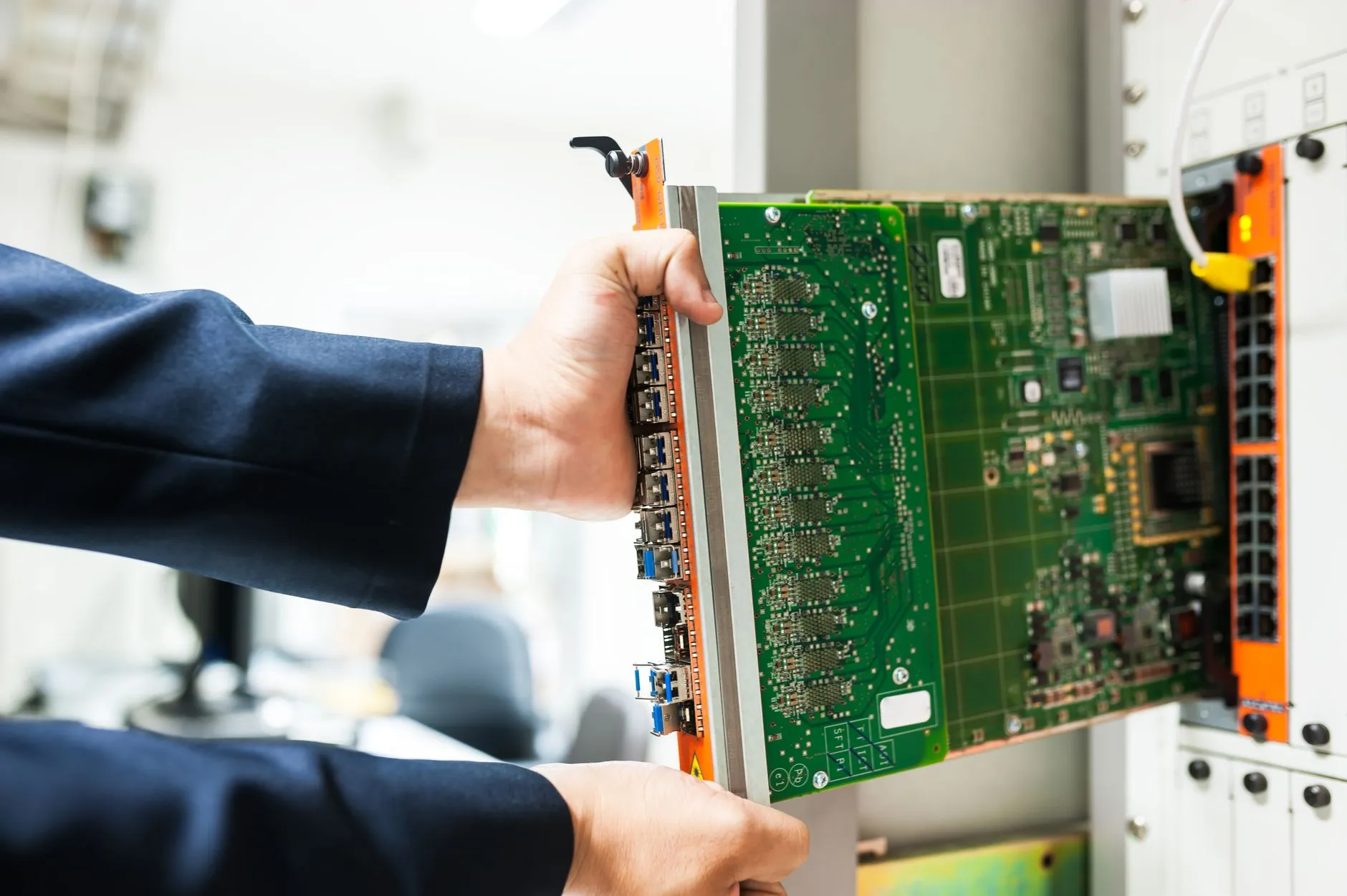
In short: A UK-headquartered retail ISV needed to put 2,000+ Ubiquiti UniFi network gateways into stores across Australia and keep the estate refreshed. Brocent runs the whole physical layer — weekly stock refill and parts management, warehouse staging (power-on and base configuration), and city-by-city field engineers who install, configure, test, swap and recycle old devices — so the ISV ships software, not logistics.
Who is the customer, and what were they trying to achieve?
The customer is a UK-headquartered independent software vendor (ISV) that provides in-store technology to retailers. Their platform depends on a reliable, standardised network gateway in every location — the device that connects each store's tills, payment terminals, back-office systems and cloud services. As their Australian retail footprint grew past two thousand sites, a software company suddenly faced a very physical problem: how do you get the right gateway, correctly configured, installed and tested in two thousand stores spread across an entire continent — and then keep that estate current as hardware is refreshed?
Writing great retail software is their business. Warehousing devices, staging firmware, booking installers in Perth and Cairns, and recycling the units they replace is not. Rather than build an Australian logistics-and-field operation from scratch, they partnered with Brocent to own the entire physical rollout and ongoing refresh — turning a continent-scale hardware programme into a managed service.
Why is a nationwide retail gateway rollout so hard?
Deploying one gateway is trivial. Deploying two thousand, consistently, across Australia's geography, while stores keep trading, is a different discipline entirely.
- Scale with consistency: Every one of 2,000+ sites needs an identically configured device. A small inconsistency multiplied across thousands of stores becomes a support nightmare for the ISV.
- Geographic spread: Australian retail runs from dense metro precincts to remote regional towns. Getting a qualified engineer to each site, in a planned window, is a logistics problem before it is a technical one.
- Live-store constraints: Installs and swaps have to happen without disrupting trade — often to a tight per-store appointment that must not overrun.
- Continuous refresh, not a one-off: New stock arrives on a rolling basis and the estate is refreshed over time, so this is an ongoing programme of staging and dispatch, not a single project with an end date.
- Old-device disposal: Every swap creates a redundant unit that must be removed, tracked and responsibly recycled — an obligation that is easy to underestimate at scale.
What hardware is being deployed?
The rollout standardises on Ubiquiti's UniFi gateway family — the Cloud Gateway and Dream Machine line that provides routing, firewall and IDS/IPS for each store, scaling from compact entry-level Cloud Gateways for smaller sites up to Dream Machine and enterprise-class gateways for larger or higher-throughput locations. Standardising on one well-understood product family keeps staging repeatable and support simple. Brocent publishes the current UniFi gateway and firewall line-up, with indicative specifications and public list pricing, on its hardware pricing page; volume and project pricing for programmes like this is handled through Brocent procurement, and installation, licensing and site survey are scoped separately.
Standardisation is not just a purchasing convenience — it is what makes the whole rollout repeatable. When every store receives a device from the same family, the staging script is identical, the base configuration is templated, the field engineer's install steps are the same everywhere, and spares are interchangeable across the estate. A tiered line-up matters too: a small boutique and a flagship store have very different throughput needs, so being able to place an entry Cloud Gateway in one and a higher-capacity Dream Machine in another — while keeping the same management approach across both — lets the ISV right-size each site without fragmenting the operation. The more uniform the hardware decision, the more of the rollout can be industrialised rather than improvised.
How does the delivery model work?
The programme runs as two tightly coupled halves — a warehouse operation that prepares devices, and a field operation that installs them — coordinated so that engineers always arrive with a device that is ready to work.
1. Weekly stock refill and parts management
New gateways arrive on a weekly cadence. Brocent receives, inspects and books them into stock through its Warehouse as a Service operation, keeping a rolling buffer sized to the rollout's pace so there is always staged stock ready to dispatch. Managing this as a continuous replenishment — rather than a series of ad-hoc shipments — is what lets the field schedule run predictably week after week.
2. Staging — every device arrives ready to install
Before anything leaves the warehouse, each gateway is staged: powered on, checked, and given its base configuration so it is ready for the specific store it is destined for. Staging catches dead-on-arrival units in the warehouse instead of in a live store, and it means the on-site visit is a fast, predictable install rather than a from-scratch build. This is the same pre-configuration discipline Brocent applies across large IT infrastructure deployments.
3. City-by-city field engineers
For each planned batch of stores, Brocent assigns qualified engineers city by city through its field engineer dispatch network. Engineers attend each site to a planned schedule and carry the staged device with them, so the store's appointment window is used for installation and testing, not troubleshooting a blank box.
What happens at each store?
Every site follows the same repeatable on-site workflow, which is what keeps quality consistent across thousands of locations:
- Physical installation: The engineer mounts and cables the staged gateway into the store's network, following a standard build so every site looks and behaves the same.
- Configuration and activation: The device's store-specific settings are applied and confirmed, bringing it onto the ISV's platform correctly the first time.
- Connectivity testing: The engineer validates that the gateway is up, reachable and passing traffic — tills, payment and back-office connectivity are confirmed before they leave, not reported as a fault afterwards.
- Swapping out the old device: Where the visit is a refresh, the legacy unit is cleanly swapped for the new gateway with minimal disruption to trading.
- Recycling and reverse logistics: The replaced device is removed, tracked back through the warehouse and responsibly recycled or retired, closing the loop and keeping the store free of redundant hardware.
What does the weekly rhythm look like in practice?
A rollout of this size is won or lost on cadence. Instead of one heroic push, the programme runs as a steady weekly loop that the ISV can plan around and forecast against:
- Inbound and replenishment: Each week's delivery of new gateways is received, inspected and booked into stock, topping up a rolling buffer sized to the planned install volume so the field schedule is never waiting on hardware.
- Batch staging: The devices for the upcoming scheduled sites are staged together — powered on, verified and given their base configuration — so a whole batch is dispatch-ready as a unit.
- Scheduling by city: Planned sites are grouped by city and region, and qualified engineers are assigned to attend each cluster within its appointment windows, keeping travel efficient and coverage predictable.
- On-site execution: Engineers work through their assigned stores — install, configure, test, swap and collect the old unit — to the same standard build at every site.
- Return, recycle and report: Replaced devices flow back through the warehouse for tracked recycling, and completed sites are reported so the ISV always has a clear, current picture of rollout progress.
Because each stage feeds the next on a weekly beat, the programme is resilient to the inevitable surprises — a store that reschedules, a delayed delivery, a site that needs a second visit — without derailing the overall pace. The ISV sees steady, forecastable progress instead of a stop-start scramble.
Ship-to-store DIY versus a staged-and-dispatched rollout
Many rollouts start by simply couriering devices to each store and hoping staff can plug them in. At two thousand sites, the difference between that and a managed model is stark.
- Ship-to-store, self-install: Cheapest on paper, but store staff are not network engineers. Misconfigurations, failed installs, dead-on-arrival units discovered by a busy shop, and no plan for the old device — every one becomes a support ticket back to the ISV.
- Multiple local installers, no central staging: Better hands on site, but without warehouse staging each engineer builds from scratch, consistency drifts between contractors, and there is no single owner of stock or old-device disposal.
- Staged-and-dispatched (the Brocent model): Devices are pre-configured and verified in the warehouse, qualified engineers install to a standard build and test before leaving, and old units are recycled through one accountable partner. Consistent, predictable, and the ISV carries none of the logistics.
What does the ISV gain?
- A software company stays a software company: Brocent absorbs warehousing, staging, installation, testing, swaps and recycling, so the ISV's team spends its time on its platform, not on Australian logistics.
- Consistency at scale: Central staging and a standard on-site build mean site number 2,000 is configured exactly like site number one — which is what keeps ongoing support manageable.
- A predictable, repeatable cadence: Weekly refill and planned city-by-city dispatch turn an intimidating continent-wide programme into a steady, forecastable operation.
- One accountable partner: Stock, staging, field work and reverse logistics sit with a single provider on one plan — no gap between a shipping vendor and an install vendor.
- Responsible end-of-life: Every replaced device is tracked and recycled, so the refresh programme meets its disposal obligations by default rather than as an afterthought.
The result is that a UK software vendor can promise its Australian retail clients a reliable, uniformly deployed in-store network — and rely on Brocent to make that promise real, store by store, week after week.
Frequently asked questions
Can you deploy hardware you did not supply?
Yes. Brocent can stage and deploy customer-supplied devices, or procure the hardware — for example the UniFi gateway family shown on the pricing page — at volume and project pricing. Either way, the warehouse-staging and field-dispatch model is the same.
Why stage devices in a warehouse instead of configuring them on site?
Because staging catches faulty units before they reach a live store and turns each site visit into a fast, predictable install rather than a from-scratch build. Across thousands of sites, that consistency is the difference between a smooth rollout and a flood of support tickets.
How do you keep 2,000+ sites configured identically?
By standardising on one gateway family, applying a repeatable base configuration during warehouse staging, and having field engineers install to a standard build with connectivity testing before they leave. Consistency is engineered upstream, not left to each site.
What happens to the old devices?
They are swapped out cleanly, removed from the store, tracked back through the warehouse via reverse logistics, and responsibly recycled or retired — so the estate refresh meets its disposal obligations and stores are not left holding redundant hardware.
Is this a one-off project or an ongoing service?
Ongoing. Stock is refilled weekly and the estate is refreshed continuously, so staging and dispatch run as a steady managed service rather than a single project — the model scales up or down with the ISV's rollout pace.
Could the same model run outside Australia?
Yes. The building blocks — a stocking-and-staging warehouse plus a mapped field-engineer network — are the same ones Brocent uses across Greater China, Singapore and beyond. To discuss a rollout in your markets, reach the team via the contact page.
Share:
Ready to take action?
Turn these insights into a roadmap for your business.
Book a 15-minute no-obligation consultation with our APAC IT experts. We'll review your current setup and provide a tailored IT roadmap within 24 hours.
Explore all servicesFree Checklist
10 Critical Checks Before Expanding IT to Greater China
PIPL compliance, network segmentation, bilingual helpdesk setup, and more — everything your IT team needs before Day 1 in China.
Request the checklist →📬 Monthly Asia IT Insights
China compliance updates, cybersecurity alerts, and IT tips for APAC teams — once a month.
No spam. Unsubscribe anytime.
Related Articles

Apr 27, 2026
Designing a High-ROI, Cost-Effective UniFi Network Architecture Across Hong Kong, Mainland China, Singapore, and Japan

Jul 20, 2026
Wi-Fi Site Survey Services in Asia: Ekahau Surveys, 6 GHz Coverage & Costs (2026 Guide)
Apr 30, 2026
Scaling Global IT Operations: How We Delivered Multi-Regional Support Across 28+ Countries for a Global Customer (Manufacturing Company)