Embedded, Scheduled or Dispatched: Choosing an Onsite IT Pattern for a Hong Kong Office of 40
A decision guide for the regional IT manager responsible for a 30-60 person Hong Kong office with no local IT person. The three onsite patterns Hong Kong buyers actually ask for, what each is genuinely good at, the break-even band computed from Brocent's published Hong Kong dispatch and dedicated-engineer rates, the four variables that move the answer, and why the hands layer belongs inside a managed plan rather than beside it.
Published
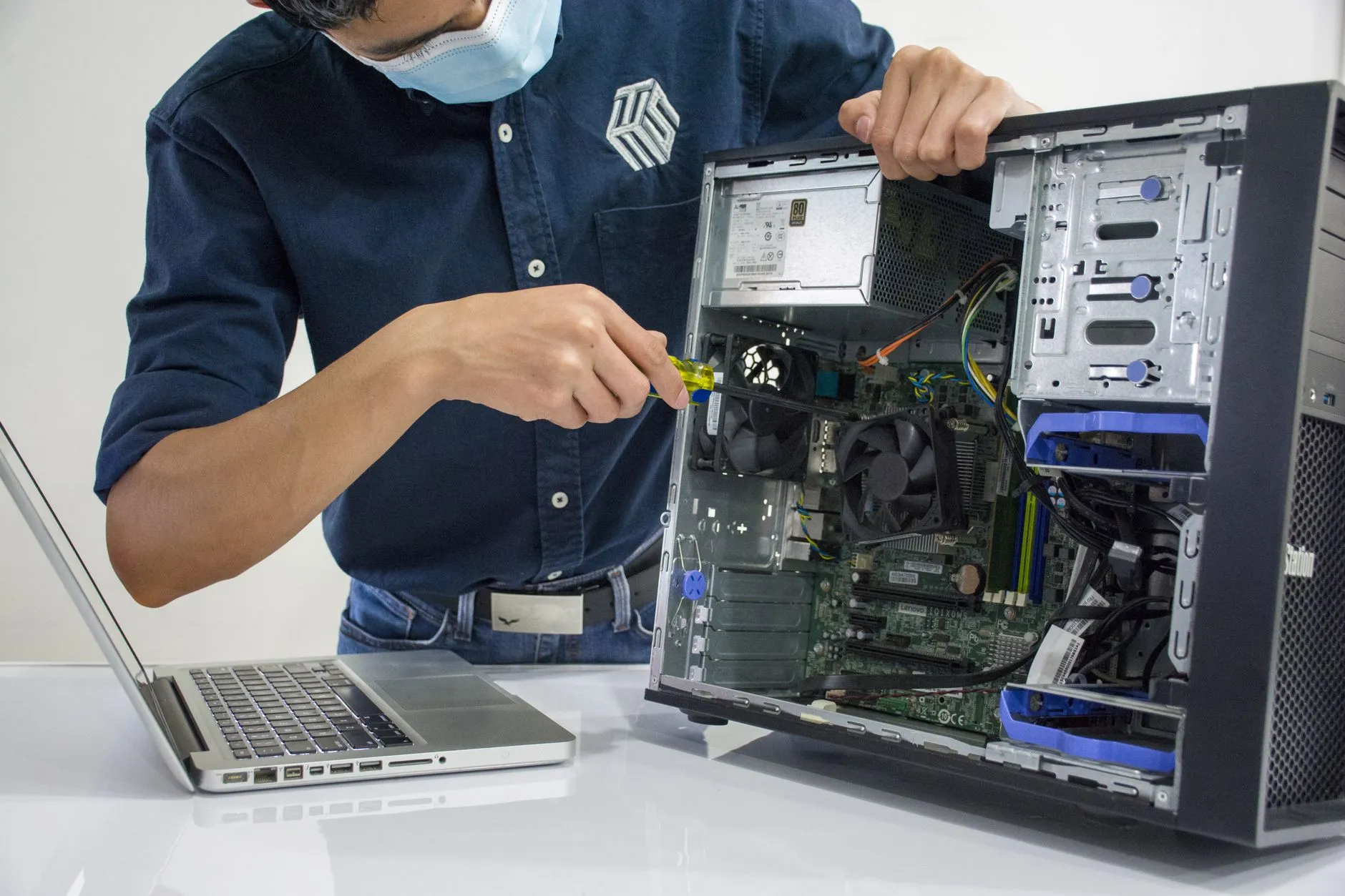
The short answer: the choice between an embedded engineer, scheduled part-time cover and per-visit dispatch is not a question about service quality. It is a question about how many hours of physical hands your site genuinely needs each month. Below roughly 49 to 62 hours, dispatch usually wins in Hong Kong. Above it, an embedded engineer does. The scheduled half-day sits between them and is bought for rhythm, not price.
The office that has no IT person and was never supposed to need one
A particular kind of Hong Kong office keeps arriving at this question. It belongs to a manufacturer whose plant and headquarters are somewhere else — the Pearl River Delta, Taiwan, Japan, Europe — and the Hong Kong site is the commercial end of the business. Sales sit here. Finance sits here. There is a showroom, a sample room, a meeting floor that regional customers fly in to use, and a small logistics desk that talks to freight forwarders all day.
Nobody planned for this office to have IT. The ERP is run by headquarters. Email is a tenant somebody else administers. The laptops were bought centrally and shipped in. On paper the Hong Kong office is a branch of a well-run IT function, and on paper it needs nothing.
In practice, forty people generate a steady trickle of work that has to be done by a person standing in the room. A laptop will not boot. The meeting-room display has stopped talking to the room PC and there is a customer presentation at two. A new starter's docking station needs setting up at a desk. The label printer in the logistics corner has been replaced and the driver does not match. Somebody's screen is black and the cable behind the riser has come loose. None of these are hard. All of them are physical.
The regional IT manager who owns this office is often two or three time zones away and speaks the wrong language for the warehouse and the reception desk. They can see the tickets. They cannot reach the desk. And so the office improvises: the finance manager becomes the accidental IT person, the office manager keeps a drawer of spare cables, and a friend of the general manager comes in on weekends. That arrangement holds for a long time and then stops holding, usually on the day something breaks during a customer visit.
When the office finally asks for help, it asks in one of three shapes — and Hong Kong buyers tend to name them in their own vocabulary rather than ours.
Three shapes, in the words buyers actually use
Embedded (駐場). One engineer, assigned to this site, on site every business day. A person with a desk, a pass, a lanyard and a known face. The office stops raising tickets for small things because it can simply ask.
Scheduled part-time (每週固定半天). An engineer who comes on a fixed rhythm — one half-day a week, two half-days a week, every Tuesday and Thursday morning. The office learns to batch. Non-urgent things wait for the visit; urgent things still go through the remote desk and, if they genuinely need hands, get an extra visit.
Per-visit dispatch (按上門工時). No standing commitment at all. Remote support handles what it can, and when something needs hands, an engineer is dispatched and the visit is billed by the hour.
These three are not a quality ladder. They are three different answers to one question: how much of your support demand is physical, and how predictable is it? A site with genuinely low, spiky physical demand is worse off with an embedded engineer, not better — it pays for presence it cannot consume. A site with two or three hours of physical work every day is worse off with dispatch, because it pays a first-hour premium over and over for work that should have been continuous.
What each shape is genuinely good at
An embedded engineer's real product is not hours. It is presence and institutional memory. After three months the person knows which meeting room has the flaky HDMI run, which user always loses their password before a board meeting, where the spare docks are kept, and which of the twelve devices in the sample room are actually still in use. That knowledge does not exist in any ticket system and cannot be transferred by a handover note. Presence also changes behaviour: people ask for small things to be fixed properly instead of working around them for six months.
Scheduled part-time sells rhythm and a cost ceiling. The office knows an engineer will be there on Tuesday, so the imaging of three new laptops, the meeting-room check, the patch-panel tidy and the printer driver all go on Tuesday's list. The spend is knowable in advance, which is often the actual reason a finance director chooses it. The weakness is obvious and worth saying plainly: Wednesday's problem waits until the following Tuesday unless you pay for an extra visit.
Per-visit dispatch sells elasticity and a service level. Nothing is committed, and the response is governed by the tier you buy rather than by whether anyone happens to be in the building. On Brocent's published dispatch and on-site rates, the SLA tiers run from normal business hours — two hours to a P1 first response, next-business-day on-site arrival — through extended hours at one hour and same-day arrival, up to a 24×7 emergency tier at a fifteen-minute P1 first response and a four-hour on-site arrival. An embedded engineer, by contrast, has no SLA at all outside their own working hours. This surprises buyers, and it should be said early: a person in the building is not a service level. They are a person, and they go home at six and take leave in August.
Embedded engineer vs scheduled part-time vs per-visit dispatch
- Embedded engineer — what it is for: continuous physical demand, a site where the absence of hands costs real money within the hour, and environments where institutional memory matters more than ticket throughput. What it costs: a monthly fee regardless of consumption. What it does badly: elasticity, out-of-hours cover, and leave. One person is one person.
- Scheduled part-time — what it is for: moderate, batchable physical demand and a finance function that values a predictable line over a minimised one. What it costs: a knowable monthly figure, computed from the visit pattern. What it does badly: anything urgent between visits, which either waits or is charged as an extra dispatch.
- Per-visit dispatch — what it is for: low or unpredictable physical demand, satellite sites, and offices whose real support load is overwhelmingly remote. What it costs: nothing until you use it, then a first-hour minimum plus additional hours. What it does badly: high, steady volume — the first-hour premium is charged every single time, and nobody on site accumulates any knowledge of the place.
The arithmetic, using published Hong Kong figures
Most providers will not put numbers on this. Brocent publishes both halves, which means the comparison can actually be done rather than asserted.
Read from the live dispatch and on-site rates page on 22 September 2026, Hong Kong on-site dispatch is listed at US$98 for the first hour and US$78 for each additional hour. The basis line matters as much as the figure: that is a Level 1 end-user-computing rate, next-business-day, standard 9×5, indicative for the 2026 H2 standard price book, quoted in US dollars, tax exclusive, city centre, and it falls at higher volumes. It is described as fully loaded — covering cost of living, bilingual engineers, training, FX and tax handling, credit-term financing and 24×7 coordination. Change any part of that basis and the number changes: a more senior engineer, a tighter SLA or an evening call-out are all separate adjustments.
A dedicated full-time on-site engineer in Hong Kong is published on the same page at US$4,810 per month, entry level, fully loaded, invoiced monthly in advance. That figure scales by skill tier — roughly plus 21% at Level 2 and plus 44% at Level 3 against entry — and multi-engineer or multi-country programmes price lower.
One qualification on that monthly figure is load-bearing and the page states it explicitly: the published rate is no backfill. It buys one engineer's working days. It does not, at that price, buy cover for their annual leave or sick days. Next-business-day backfill is available as an addition. If you are comparing a monthly figure against a per-hour figure, this is the single most common place the comparison goes wrong, and it is worth a separate conversation before signing anything.
Now put them on one axis. Because dispatch charges a higher first hour, there is no single crossover point — there is a band, and where you sit inside it depends on how your hours arrive.
- At the optimistic end, imagine every hour of on-site work arrives as part of a longer visit, so almost all of it bills at the marginal rate of US$78. US$4,810 ÷ US$78 ≈ 62 hours a month.
- At the pessimistic end, imagine every hour arrives as its own separate call-out, each paying the US$98 first hour. US$4,810 ÷ US$98 ≈ 49 visits a month.
So the honest answer for a Hong Kong site is that an embedded engineer starts to overtake dispatch somewhere around 49 to 62 hours of physical work a month — roughly twelve to fifteen hours a week, or two and a half to three hours every business day. Below that band, dispatch is usually cheaper. Above it, a placement usually is. You can redo this arithmetic yourself with your own ticket data; that is the point of publishing the inputs.
The scheduled half-day slots into the same arithmetic cleanly. A four-hour visit bills at US$98 plus three additional hours at US$78, which is US$332. One such visit a week is about 4.33 visits a month, or roughly US$1,440 a month. Two half-days a week is about US$2,875 a month. Both sit well below the US$4,810 embedded line, which is precisely why the pattern exists: it buys rhythm and a predictable invoice without buying a full placement.
Two practical notes on how these are billed, both from the same published page. Dispatch visits are invoiced after the job on standard 30-day credit terms and itemised by ticket, so the finance team can see what each visit was for. Placements are invoiced monthly in advance. Local tax invoicing — a Hong Kong entity invoice, a mainland fapiao, Singapore GST — is handled the same way as it is for prepaid tokens.
One warning about comparing figures across sources. Rate tables are only comparable when their basis lines match. A benchmark quoted at Level 2 with a same-business-day four-hour SLA will not produce the same Hong Kong number as a Level 1 next-business-day rate, and neither is wrong — they are pricing different things. Whenever you see an on-site rate, read the skill level, the SLA and the coverage window before you compare it to anything.
The four things that actually move the answer
The arithmetic gives you a band. Four things decide where inside it your site really sits, and none of them are on a price list.
How predictable the demand is. Forty desks producing a steady two hours of physical work a day is a completely different purchase from forty desks producing nothing for three weeks and then twenty hours in the week of an office move or an audit. Averages hide this. Look at the distribution, not the mean. Spiky demand is dispatch's home ground, because you pay for spikes only when they happen.
How physical the work really is. Pull six months of tickets and sort them into three piles: fixed remotely, needed hands, and needed hands *urgently*. Most offices are surprised by how small the third pile is. If the middle pile is large but almost none of it is urgent, you are looking at a scheduled-part-time office, not an embedded one. That single sort is the most useful hour you can spend before asking for a quote.
Language. A Hong Kong site where the warehouse and reception operate in Cantonese, the ticket system and vendor escalations run in English, and headquarters reviews in Mandarin is asking for a specific person, not a generic one. A hard language requirement narrows the candidate pool, which moves both the rate and the earliest start date. It is worth being precise about which language does which job rather than writing "bilingual" into a scope of work and hoping.
Whether anyone on site can be the engineer's hands. This is the most underrated variable in the whole decision. If there is a competent office manager willing to reseat a cable, read a serial number off the back of a switch or walk a laptop to a courier, a remote-first model stretches a long way and the dispatch count falls sharply. If there is genuinely nobody — and in a sales-and-showroom office there often is not — the physical pile is larger than the ticket system suggests, because people stop raising tickets for things they know nobody will come and fix.
What most Hong Kong offices of this size actually land on
Very few forty-person offices end up buying one pure shape. The pattern that keeps recurring is a layered one, and it is worth describing because buyers rarely arrive asking for it.
The bottom layer is remote. A managed per-user plan covers the service desk, patching, endpoint security, identity, backup and the monitoring that stops a good share of the physical visits from ever being needed. This layer is the reason the physical pile is small enough to reason about in the first place.
On top of it sits the hands layer, sized to the honest answer from the ticket sort. For most offices in this profile that is a scheduled visit — one or two half-days a week — with per-visit dispatch on top for anything that cannot wait for the next scheduled slot. A minority with genuinely continuous demand, typically once a site passes eighty or a hundred desks or takes on a workshop, a studio or a data floor, crosses into a placement.
The important thing is that the layers are chosen independently. Buying an embedded engineer does not remove the need for a remote layer, and this is the mistake that costs the most. One person cannot patch every endpoint, watch every alert, run the backup verification, hold a 24×7 escalation path and still be free to walk to a desk when the sales director's laptop dies. Presence and platform are different products, and an office that buys only presence discovers the gap in the first week the engineer takes leave.
Where the hands layer belongs: inside the plan, not beside it
Every pattern in this article is the *hands* layer. It is the part of IT support that has to happen in the room. It sits on top of something, and what it sits on is the plan.
That is the structural point worth carrying away. The question is not "embedded, scheduled or dispatch" in isolation — it is "what does our remote layer cover, and what physical shape do we bolt onto it". Answer them in that order and the second question gets much easier, because a good remote layer shrinks the physical pile before you have to price it.
Brocent has run this pattern in Hong Kong since opening the office here in 2016, as part of a business founded in Beijing in 2007 and headquartered in Singapore since 2021. The three shapes are documented in detail on full-time on-site IT support and field IT dispatch, with the rates on the pricing pages. If you want to skip straight to sizing, the sort described above — six months of tickets into three piles — is the fastest way to get a useful answer, and we are happy to do it with you.
Frequently asked questions
What does an on-site engineer cost in Hong Kong?
Two published figures answer this. Per-visit dispatch in Hong Kong is listed at US$98 for the first hour and US$78 for each additional hour, on a Level 1 end-user-computing, next-business-day, 9×5 basis — indicative 2026 H2 rates, US dollars, tax exclusive, city centre, falling at higher volumes. A dedicated full-time on-site engineer is listed from US$4,810 a month at entry level, with roughly plus 21% at Level 2 and plus 44% at Level 3. Both are on the dispatch and on-site rates page and both were read on 22 September 2026.
What is the minimum we can buy?
There is no monthly minimum on dispatch — you can buy a single visit. If the demand is recurring but still modest, a prepaid token pack is usually cheaper than paying the dispatch rate every time; packs start at twenty tokens, one token is one hour, and they carry twelve-month validity. If the demand is continuous, a placement is the right unit.
Can we start with dispatch and move to an embedded engineer later?
Yes, and it is the sequence we recommend when the answer is genuinely unclear. Six months of itemised dispatch invoices is the best sizing data you will ever get, because it is a record of what your site actually consumed rather than what anybody estimated. If those invoices show you crossing the band described above, the placement case makes itself.
Who covers the engineer when they are on leave?
Not the published monthly rate — it is explicitly a no-backfill figure. Next-business-day backfill is available as an addition, and it should be priced and agreed before you sign rather than discovered in the first August. If continuity of cover is the actual requirement, say so at quoting time; it changes the shape of what you are buying.
Does an embedded engineer replace the helpdesk?
No, and treating them as a replacement is the most expensive mistake in this decision. One person cannot simultaneously be the service desk, the patching function, the monitoring function, the 24×7 escalation path and a pair of hands on the floor. The embedded engineer is a layer on top of a managed IT plan, not a substitute for one.
How quickly can someone be on site?
That depends on the SLA tier you buy, not on the pattern. Published dispatch tiers run from next-business-day arrival under normal business hours, to same-day under extended hours, to a four-hour on-site arrival on the 24×7 emergency tier. An embedded engineer is on site during their own working hours and not outside them, which is why sites with genuine out-of-hours exposure buy a dispatch tier alongside the placement rather than instead of it.
What happens out of hours?
Dispatch handles it through the tier you have bought. Evening, weekend and public-holiday work carries higher loading than business-hours work — that is true on both the dispatch rates and the prepaid token billing rules — so if a meaningful share of your physical demand is outside 9×5, price it explicitly rather than assuming the daytime rate applies.
Do we still need a managed IT plan if we have someone in the office?
Yes. The plan is the engine: service desk, patching, endpoint security, identity, backup, monitoring, documentation and the escalation path. The person in the office is the hands. Offices that buy only the hands end up rebuilding the engine by accident, one tool and one gap at a time, and it costs more than the plan would have. If you want to size both layers together, talk to us with your ticket data rather than your headcount.
Share:
Ready to take action?
Turn these insights into a roadmap for your business.
Book a 15-minute no-obligation consultation with our APAC IT experts. We'll review your current setup and provide a tailored IT roadmap within 24 hours.
Free Checklist
10 Critical Checks Before Expanding IT to Greater China
PIPL compliance, network segmentation, bilingual helpdesk setup, and more — everything your IT team needs before Day 1 in China.
Request the checklist →📬 Monthly Asia IT Insights
China compliance updates, cybersecurity alerts, and IT tips for APAC teams — once a month.
No spam. Unsubscribe anytime.