IT Office Relocation Hong Kong: A Telecom Company's Move
How a Hong Kong telecom and media operator relocates its office without any gap in live NOC and network monitoring, via a parallel-run relocation sequence.
Published
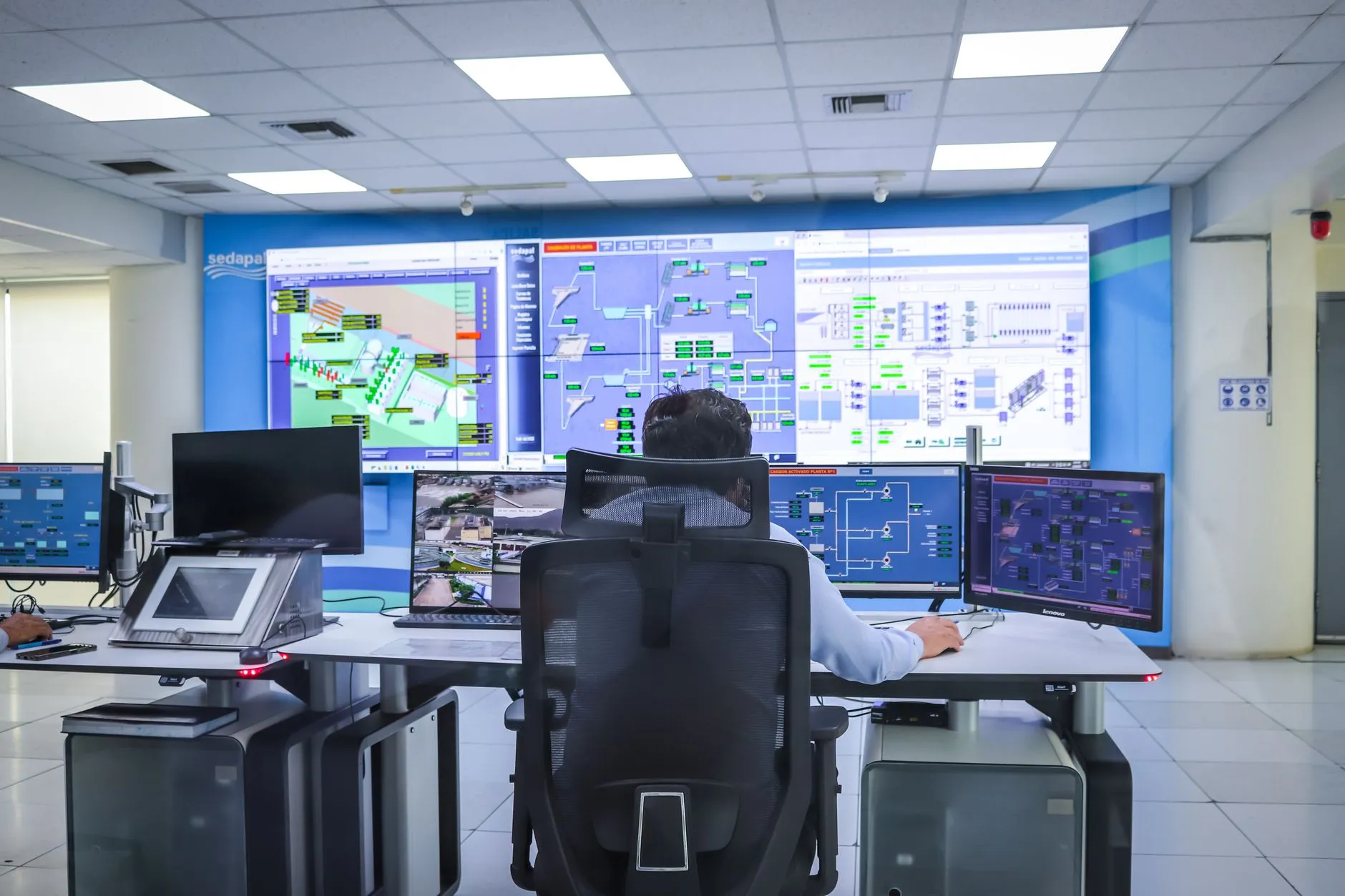
The short answer: An always-on telecom or media company can't relocate its office the way a normal business does — a weekend "big bang" cutover assumes the network monitoring desk can go dark for a night, and for a company running a live NOC or customer-facing dashboards, it can't. The fix is a parallel-run relocation: building and testing the new site's network and security in parallel with the old one, cutting over in a staged sequence with a fallback window, timed against real ISP and cross-connect lead times rather than the office lease date alone.
If your company runs a network operations centre, customer-facing monitoring dashboards, or any other always-on system and your lease is forcing an office move, the standard office-relocation playbook doesn't actually fit your situation — most relocation guidance assumes a business can tolerate a quiet weekend with everything switched off, and for a telecom, ISP, or media/broadcast operator, that assumption is the whole problem. This guide walks through what makes relocating a live NOC different from relocating a normal office floor, and how a properly sequenced move keeps monitoring running throughout.
The Industry: Hong Kong Telecom, ISP and Media Operators Running an Always-On Desk
Hong Kong is home to a genuine cluster of telecom operators, internet service providers, and media/broadcast businesses that all share one operational trait regardless of their specific product: something in the business has to stay on, watched, and responsive around the clock. That might be a network operations centre monitoring circuit health and customer traffic, a broadcast monitoring desk watching signal quality, or a customer-facing status dashboard clients check directly. Brocent's own client history includes exactly this kind of operator — a regional telecom and media business spanning Hong Kong, Shenzhen, and Singapore, supported with a managed service desk alongside NOC augmentation — and that pattern of "the office is also where the always-on system lives" is a recurring, real feature of this segment, not an edge case.
The Scenario: A Growing Company, an Office That No Longer Fits
Picture a roughly 55-person Hong Kong telecom and media operator that has outgrown its current office. The lease is coming up, the current space genuinely can't fit the headcount, and the company needs to move to a larger site — a routine business event for a growing company. The complication is that this isn't just desks and a kitchen being relocated: the office also houses the NOC, the monitoring workstations, the network equipment supporting customer-facing dashboards, and the operations team responsible for keeping it all running. The ops team leading the move has typically never run a relocation before, and has no in-house playbook for how to move a live monitoring operation without simply unplugging it and hoping the new site is ready before anyone notices.
What a Generic Office-Mover's Plan Misses
Most office relocation guidance — including from movers who are perfectly competent at physical logistics — treats every desk the same way: pack it up on a Friday, move it over the weekend, unpack it Monday morning. Applied to a NOC or monitoring desk, that plan has three specific problems. First, it treats the always-on system like any other desk, when in practice it's the one part of the office that genuinely cannot go dark without a business consequence — a monitoring gap during a cutover window is exactly when an actual network issue is most likely to go undetected. Second, it assumes a single blackout weekend is acceptable, when for a company whose customers actively watch a status dashboard or depend on circuit uptime, even a planned outage window needs to be minimized, communicated, and ideally avoided rather than simply scheduled. Third, and most commonly underestimated, it doesn't account for how long ISP circuit orders and colocation/data-centre cross-connects actually take to provision at a new site — lead times that are frequently measured in weeks, and that don't automatically align with when the office lease says the move needs to happen.
Brocent's Perspective: Continuity First, Logistics Second
The way Brocent approaches a relocation like this starts from a different premise than a standard office move: for an always-on business, physical relocation is fundamentally a live-service continuity project that happens to also involve moving furniture, not a logistics task that happens to involve some sensitive equipment. That reordering of priorities changes the sequencing entirely. Rather than asking "how fast can we move everything," the right question is "how do we build and prove the new site works before we depend on it," which means the new site's network, security baseline, and monitoring capability get built and tested in parallel with the existing office continuing to run — not after the old office is already packed up. Speed of the physical move matters less than getting the sequencing right, because a fast move that causes an undetected monitoring gap costs the business far more than a slower, properly staged one.
What a Properly Sequenced Relocation Actually Covers
A parallel-run relocation for a company in this position covers several concrete elements working together. Structured cabling and network design at the new site get built out in parallel with the existing office, so the new space is a genuinely tested environment before anyone depends on it, not a rushed weekend build. ISP circuit and colocation cross-connect ordering happens against the real provisioning lead time, worked backward from the lease deadline rather than assumed to happen instantly once the move date arrives — this is frequently the single biggest scheduling risk in the entire project. A staged cutover moves specific systems and traffic to the new site in sequence, with a defined fallback window that lets the team roll back to the old site's connection if something doesn't behave as expected, rather than a single irreversible switch-flip. And the security baseline — firewall rules, access controls, monitoring agents — gets carried over and re-verified at the new site rather than rebuilt from scratch under time pressure, which is where relocations most commonly introduce accidental security gaps.
Sequencing the Move Against the Real Lease Timeline
One of the most common mistakes in a relocation like this is treating the lease end date as the trigger for when planning starts, rather than the deadline everything else needs to be worked backward from. ISP circuit provisioning, structured cabling, and cross-connect ordering routinely take four to eight weeks or more depending on the carrier and building, which means a company that starts planning once the lease notice period begins is often already behind. A properly sequenced project works backward from the lease end date: circuit orders go in first, cabling and network build happen next once ISP timelines are confirmed, parallel testing follows once the new site's network is live, and the staged cutover only happens once the new site has been proven to actually work under real traffic — not just on paper.
What Happens If the New Site Isn't Ready Before the Old Lease Ends
This is worth planning for explicitly rather than treating as a worst case that won't happen. If ISP provisioning slips or the new site's fit-out runs behind schedule, the parallel-run approach gives a company genuine options that a big-bang plan doesn't — the old site's monitoring and network operations can keep running on the existing lease (with landlord agreement, if a short extension or holdover period is negotiable) while the new site finishes coming online, rather than forcing a hard cutover on a date that isn't actually ready. This is one of the concrete advantages of building the new site in parallel rather than sequentially: the old office isn't dismantled until the new one has already been proven to work, which means a schedule slip becomes a delay rather than an outage.
Keeping Customer-Facing Systems Visibly Stable Through the Move
For a telecom or media operator, customers and partners may be watching uptime or status dashboards directly, which makes the relocation partly a communications exercise as well as a technical one. A staged cutover with defined fallback windows makes it possible to schedule any unavoidable brief transitions during genuinely low-traffic periods and to communicate them proactively rather than have customers discover a gap on their own. Where the architecture allows it, running the new site's monitoring in shadow mode — receiving the same data feeds as the production system without yet being the system of record — lets the team validate that the new site behaves identically before customer-facing traffic is ever pointed at it, which is a meaningfully different risk profile than cutting over and finding out afterward.
What an Undetected Monitoring Gap Actually Costs
It's worth being specific about why the sequencing matters this much, because "just be careful during the move" understates the real exposure. For a telecom or ISP, a monitoring gap during a cutover window means a genuine circuit fault or customer-impacting issue could go undetected for hours instead of minutes — directly undermining any uptime SLA the company has committed to its own customers. For a media or broadcast operator, the same gap can mean a signal or feed issue reaching air or reaching a client feed before anyone on the ops side notices. And for any company in this segment, an undetected gap during a well-publicised office move is exactly the kind of incident a customer or partner is likely to ask pointed questions about afterward — "were you actually watching the network while you were moving?" is not a question most operators want to answer honestly with "not entirely." None of this is hypothetical caution; it's the direct, predictable consequence of applying a standard desk-and-chairs relocation plan to a system that was never supposed to go dark.
Vetting a Relocation Partner: What to Actually Ask
Not every IT provider that offers "office relocation" has actually managed a parallel-run move for a live NOC or monitoring operation, so it's worth asking specific questions before committing. Ask for a concrete example of a previous relocation involving always-on infrastructure, not just general office IT moves — the sequencing challenges are genuinely different. Ask how the provider handles ISP and cross-connect ordering specifically: do they manage carrier coordination directly, or does that responsibility sit with the client's own ops team layered on top of everything else they're already doing? Ask what the provider's fallback plan actually looks like if the new site isn't ready on schedule — a vague "we'll figure it out" is a meaningfully worse answer than a specific, pre-agreed fallback window built into the project plan from day one. And ask how security baseline continuity is handled specifically, rather than assumed to happen automatically as part of "the move."
A Realistic Project Timeline
For a company of this size, a properly sequenced relocation commonly breaks down into recognisable phases rather than a single undifferentiated "moving project." An initial assessment phase maps the current site's network, security baseline, and monitoring architecture in detail, typically taking one to two weeks. ISP circuit and cross-connect orders go in as early as this phase allows, since they're usually the longest lead-time item. Parallel build-out of the new site's cabling, network, and security follows once ISP timelines are confirmed, running alongside the existing office's normal operation. A testing and validation phase — including shadow-mode monitoring where the architecture supports it — proves the new site behaves correctly before anyone depends on it. The staged cutover itself, with its defined fallback window, is typically the shortest phase of the whole project, precisely because everything leading up to it was designed to make that final step low-risk rather than high-drama.
Bridge to Services: What Brocent Brings to a Relocation Like This
None of this is a project a lean ops team should have to design from scratch while also running day-to-day operations. Brocent's IT relocation services are built specifically around sequencing a move like this — parallel-run network and security build-out, staged cutover planning, and coordination against real ISP and cross-connect lead times — backed by a 24/7 helpdesk that keeps supporting both the outgoing and incoming site through the transition, managed IT security services that carry the existing security baseline forward rather than rebuilding it under pressure, and managed IT and cloud services that keep the rest of the business running normally while the network team's attention is on the move itself.
Frequently Asked Questions
Can an always-on telecom or media company relocate its office without any monitoring downtime?
In most cases, yes, when the move is sequenced as a parallel-run relocation rather than a single blackout cutover — the new site's network and monitoring capability are built, tested, and in some cases run in shadow mode before the old site is decommissioned, which means there's no window where nothing is being watched.
How far in advance should ISP and circuit orders be placed against a lease deadline?
As early as possible, and treated as the schedule's critical path rather than an afterthought — circuit provisioning and cross-connect ordering commonly take four to eight weeks or longer depending on the carrier and building, so orders need to go in well before the lease's notice period closes, worked backward from the actual move date rather than started once the lease pressure is already being felt.
What's different about relocating a NOC versus a normal office floor?
A normal office floor can tolerate a weekend of downtime with no real business consequence. A NOC or monitoring desk generally can't — an unmonitored gap during a cutover window is exactly when an actual network issue is most likely to go undetected, which is why the sequencing (parallel build, staged cutover, fallback window) matters far more than it does for a standard desk-and-chairs move.
Does the security baseline need to be rebuilt at the new site?
It shouldn't be rebuilt from scratch — firewall rules, access controls, and monitoring agents should be carried over and re-verified at the new site as part of the parallel build, rather than reconstructed under time pressure once the move is already underway, which is when relocations most commonly introduce accidental security gaps.
How long does a relocation like this typically take?
It varies with circuit and cross-connect lead times more than with the physical move itself — a properly sequenced project for a company this size commonly runs six to twelve weeks from initial planning to completed cutover, with ISP and colocation provisioning usually the longest single dependency in that timeline.
What happens if the new site isn't ready before the old lease ends?
A parallel-run approach gives a company real options here that a big-bang plan doesn't — because the old site isn't dismantled until the new one is proven to work, a provisioning delay becomes a scheduling conversation (potentially a short lease extension or holdover) rather than a forced outage on a date that isn't actually ready.
Do we need to notify customers or partners about the move at all if there's no planned downtime?
Even with a well-executed parallel-run relocation, it's worth communicating proactively rather than assuming silence is the safer option — a brief, planned transition window (even a low-risk one) that customers hear about in advance reads very differently from the same window discovered after the fact. Most operators in this segment find a short advance notice, framed around the fact that monitoring continuity was specifically engineered into the plan, actually reinforces confidence rather than raising concern.
Can this same approach work for a smaller company without a formal NOC, just a monitoring dashboard and a handful of always-on services?
Yes — the underlying principle scales down as readily as it scales up. Any company with even one system that genuinely can't tolerate an unplanned gap benefits from the same core discipline: build and test the new site in parallel, sequence circuit and cross-connect orders against real lead times, and cut over in stages with a fallback rather than a single irreversible switch. The formality of the project plan can flex with company size, but the sequencing logic itself doesn't change.
Big-Bang Weekend Cutover vs Self-Managed Phased Move vs Brocent-Managed Parallel-Run Relocation
- Big-Bang Weekend Cutover — Fastest on paper and cheapest to plan, but assumes the business can tolerate a full blackout window, which is exactly the assumption an always-on NOC or monitoring desk can't safely make.
- Self-Managed Phased Move (No Relocation Partner) — Better than a single cutover, but without dedicated relocation expertise, ISP lead times and cross-connect ordering are frequently underestimated, and the internal ops team is trying to plan a specialised project on top of its normal day job.
- Brocent-Managed Parallel-Run Relocation — New site network and security built and tested in parallel with the existing office, staged cutover with a defined fallback window, and circuit/cross-connect ordering sequenced against the real lease timeline from the start.
Why This Matters More as the Business Grows
The stakes of getting relocation sequencing right generally increase with company size and customer base, not decrease — a 55-person operator moving today is, in most cases, on a trajectory toward more customers, more circuits, and more contractual uptime commitments over time, which makes this relocation a useful template for how the company handles infrastructure-sensitive change going forward, not a one-off event to survive and forget. Getting the sequencing, documentation, and fallback planning right on this move also means the next infrastructure change — a data-centre migration, a new circuit provider, a disaster-recovery site build — has a proven internal playbook to build on, rather than starting from zero again.
A Relocation That Keeps the Business Running While It Moves
An always-on telecom or media operator doesn't get to treat an office move as just a logistics problem — the network monitoring, customer-facing dashboards, and NOC operations that make the business what it is have to keep running through the transition, not pause for a weekend and hope nothing happens. Brocent's IT relocation services are built around exactly this kind of parallel-run sequencing, backed by a 24/7 helpdesk, managed IT security services, and managed IT and cloud services that keep the rest of the business supported throughout. If a lease deadline is forcing a move and your operation can't afford a blackout window, get in touch to talk through how a properly sequenced relocation would work for your site.
Share:
Ready to take action?
Turn these insights into a roadmap for your business.
Book a 15-minute no-obligation consultation with our APAC IT experts. We'll review your current setup and provide a tailored IT roadmap within 24 hours.
Free Checklist
10 Critical Checks Before Expanding IT to Greater China
PIPL compliance, network segmentation, bilingual helpdesk setup, and more — everything your IT team needs before Day 1 in China.
Request the checklist →📬 Monthly Asia IT Insights
China compliance updates, cybersecurity alerts, and IT tips for APAC teams — once a month.
No spam. Unsubscribe anytime.