How to Use Grok for Real-Time Brand and Competitor Monitoring on X
A practical guide to using Grok for real-time brand and competitor monitoring on X — the X API and xAI API options that actually work, and the governance a technical how-to usually skips.
Published
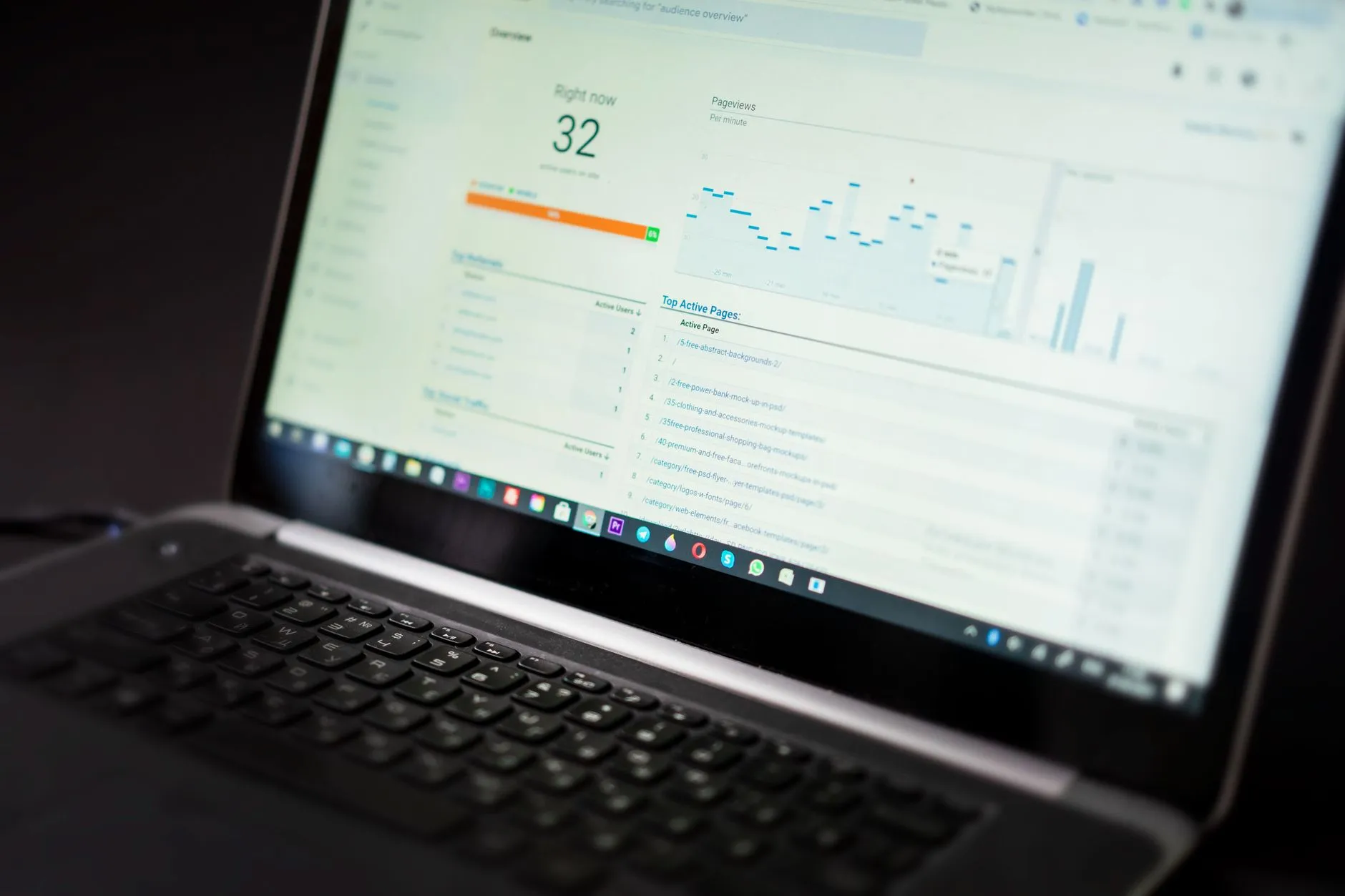
The short answer: Grok's genuine differentiator is native access to real-time content on X, which makes it a reasonable engine for brand and competitor monitoring — but a production monitoring pipeline still needs the X API to actually pull mentions at scale, the xAI API to process them, and a human in the loop before anything gets treated as a real signal or a public response.
Most "AI social monitoring" advice defaults to generic tools built for aggregating mentions across every platform at once. Grok is a different case worth treating separately, because it was built by xAI with a specific, genuine advantage baked in: it has access to current X content in a way that general-purpose chat models, trained on a fixed snapshot of the internet, structurally don't. That makes it a credible option specifically for X-centric brand and competitor tracking, though it isn't a drop-in replacement for dedicated social listening platforms that cover Facebook, Instagram, LinkedIn, and review sites too. This guide covers what a real Grok-based monitoring setup looks like, the X API access it actually depends on, the limitations worth knowing before you rely on it for anything customer-facing, and the credential and data-governance work a purely technical walkthrough tends to skip.
What Does "Using Grok for Brand and Competitor Monitoring" Actually Mean?
This splits into two genuinely different use patterns worth separating early. The first is ad hoc use inside the X app itself, available to X Premium and Premium+ subscribers, where a staff member simply asks Grok a question about recent activity or sentiment around a brand or competitor and reads the response — useful for a quick pulse check, not something that scales into a repeatable monitoring process. The second, and this guide's focus, is a built monitoring pipeline: a developer or IT partner connects the X API to pull mentions, hashtags, or competitor handles on a schedule, and separately calls the xAI API (Grok's developer-facing API, distinct from the consumer chat product) to process that pulled content for sentiment, categorization, or summarization. The two draw on genuinely different products with different access tiers, pricing, and terms, so confirm current documentation for exactly what your specific X and xAI account tiers include before assuming either path is available at the scope you're planning.
What Grok Can Actually Do for Brand and Competitor Monitoring Today
Once a monitoring pipeline is pulling relevant content, Grok's practical strengths map onto real work. It can summarize a volume of mentions into a digest a marketing or comms team can actually read, rather than a raw feed nobody has time to scroll. It can flag sentiment shifts — a sudden spike in negative mentions, or an unusual volume around a specific topic — as a signal worth a closer human look, not a verdict on its own. It can track competitor activity and messaging referenced on X, useful for competitive intelligence work that would otherwise mean someone manually scanning competitor accounts. And because of its X integration, it can meaningfully reference recent, current posts rather than being limited to a training cutoff, which is the actual reason it's worth considering for this specific use case over a general-purpose model. What it can't do reliably is judge sarcasm, cultural context, or coded language with full accuracy — sentiment classification on social media text is a genuinely hard problem for any model, human included — and it has no native visibility into platforms outside X, so a monitoring program that also needs Facebook, Instagram, or review-site coverage needs separate tools feeding into the same dashboard.
Building the Monitoring Pipeline: What Are the Real Options?
Three Ways to Approach This: A Direct Comparison
- Ad Hoc Queries in the X App — The lowest-effort starting point: an X Premium or Premium+ subscriber asks Grok directly about a brand, hashtag, or competitor and reads the response in the app. No integration work required, but it doesn't produce a repeatable audit trail, doesn't scale past occasional spot-checks, and depends on a person remembering to ask.
- X API + xAI API Pipeline You Build — The real production path: a developer sets up the X API (v2) to pull mentions, keyword matches, or specific account activity on a schedule or via a filtered stream, then sends that content to the xAI API for sentiment scoring, categorization, or summarization, landing results in a dashboard or alert channel. This is the most flexible option and the one that actually scales, at the cost of X API access tiers and rate limits that have changed significantly over the past several years — check current X API pricing and tier limits before committing to a volume assumption.
- A Third-Party Social Listening Tool With Grok or X API Integration — Some established social monitoring platforms now offer X-specific modules or Grok-powered summarization as a feature rather than a from-scratch build. This trades some customization for a faster setup and often broader cross-platform coverage beyond X alone, worth evaluating against a custom build if your monitoring needs extend past X from day one.
A Realistic Monitoring Workflow: What This Looks Like Day to Day
A scheduled job or a filtered stream pulls new mentions of your brand name, product names, and a defined list of competitor handles or keywords from the X API throughout the day. Each batch goes to the xAI API with a prompt asking it to categorize the mention (customer complaint, praise, competitor comparison, irrelevant noise), assign a rough sentiment score, and flag anything unusual in volume or tone. Categorized results land in a dashboard or a Slack/Teams channel a marketing or comms team actually checks, with genuinely urgent flags — a viral complaint, a potential PR issue, a competitor's product announcement — surfaced separately from routine volume. A team member reviews flagged items and decides whether a response is warranted; nothing gets posted publicly without a human writing or approving it, since an AI-drafted public reply to a sensitive mention carries real brand risk if it misreads tone or context.
Setting Up the X API and xAI API Access This Actually Needs
This is the step most guides skip, and it's where cost and access-tier decisions actually get made. Pulling mentions at meaningful volume requires an X API developer account with a paid access tier — the free tier's limits are narrow enough that they rarely support real monitoring at scale, and X's API pricing and tier structure has changed more than once, so confirm current tiers, rate limits, and cost before sizing a monitoring program around an assumed volume. The xAI API requires its own separate developer account and API key, with its own pricing based on usage. Both credentials should be scoped to only what the monitoring workflow needs — a read-focused X API scope for pulling mentions rather than posting access, unless you specifically intend to build an approved-response workflow — and treated as production credentials from day one, not something a single team member sets up on a personal account and forgets to hand off.
What Grok Won't Do Automatically — and Why That's a Feature, Not a Limitation
It's worth being direct about the boundaries, because the most common real-world failure with social monitoring tools isn't the AI misclassifying a mention — it's a team assuming flagged sentiment is a final verdict rather than a starting point for human judgment. Grok will not post replies, engage with mentions, or take any public action on your brand's behalf unless a workflow is specifically built to allow that, and doing so without human review is a real reputational risk worth avoiding by default. It doesn't monitor anything outside X natively — Facebook, Instagram, LinkedIn, and review platforms need their own data sources feeding the same pipeline if full cross-platform coverage matters to your team. And its real-time X access, while genuinely useful, doesn't make it infallible on fast-moving stories — a viral moment can be misread or under-contextualized by any model, including Grok, in the first hour it's unfolding, which is exactly when a human's judgment matters most.
Getting This Right: API Keys, Data Governance, and Where a Managed IT Partner Matters
Everything above is achievable with a competent developer and a reasonable API budget — but "achievable" and "reliably running" are different bars, and this is the part a purely marketing-focused how-to skips. API key and credential handling: your xAI API key and X API bearer tokens are both standing access to systems that can pull data and, if scoped that way, post on your brand's behalf — they belong in a proper secrets manager, never hardcoded into a script, and should be rotated on a schedule with access logged and scoped to read-only unless a posting workflow is explicitly approved. Data governance: understand what content — post text, usernames, engagement data — actually flows to xAI's API for processing, and check xAI's current commercial API terms for data use and retention, which differ from the consumer X Premium product's terms. Where a managed IT partner genuinely matters: a monitoring pipeline that quietly stops working — an expired API token, a rate limit silently hit, a dashboard nobody's watching — defeats the entire point of real-time monitoring, so this isn't a project to stand up once and walk away from. A partner adds real value at three points — designing the API credential architecture with least-privilege scopes through an AI integration support engagement, providing the ongoing managed IT support that keeps the pipeline, dashboards, and integrations actually running and monitored day to day, and reviewing the overall setup as part of a broader managed IT cloud services engagement so the monitoring infrastructure gets the same operational discipline as the rest of your stack rather than living as an unmanaged side project. Brocent has run managed IT engagements across Asia since our founding in Beijing in 2007, with a Singapore headquarters and a Hong Kong office open since 2016 supporting exactly this kind of ongoing integration and infrastructure work.
Frequently Asked Questions
Does Grok actually have real-time access to what's happening on X?
Yes, this is Grok's genuine, documented differentiator versus general-purpose chat models built on a fixed training cutoff — it can reference current X content. The exact scope of that access can vary by product tier and changes over time, so check current xAI documentation for specifics relevant to your account before assuming a particular level of freshness.
Can Grok monitor Facebook, Instagram, or LinkedIn as well as X?
Not natively — Grok's real-time strength is specific to X. A monitoring program that needs coverage across multiple platforms requires separate data sources or a third-party social listening tool feeding those platforms into the same dashboard alongside your X-based Grok pipeline.
How much does X API access cost for a monitoring pipeline?
It depends on your required volume and the current tier structure, which has changed more than once in recent years — the free tier's limits are narrow, and meaningful monitoring volume typically requires a paid developer tier. Check X's current API pricing page before sizing a program around an assumed cost.
Can Grok automatically reply to social media mentions on our behalf?
Technically a workflow can be built to do that, but this isn't the recommended default — an AI-drafted public reply to a sensitive or fast-moving mention carries real brand risk if tone or context is misjudged. Keeping a human in the loop before anything posts publicly is the safer standard, at least until a workflow has a solid track record.
What's the difference between using Grok in the X app versus the xAI API?
Using Grok inside X (available to Premium and Premium+ subscribers) is a manual, ad hoc tool for quick questions. The xAI API is a separate developer product with its own account, pricing, and access, built for automated pipelines that process content at scale — the two aren't interchangeable for a production monitoring setup.
Is it safe to send competitor and customer mention data through Grok's API?
It can be, with the same governance any external API integration needs: scoped credentials, a clear understanding of xAI's current commercial data-use terms for the API product specifically, and a decision about which categories of mention data (if any) shouldn't be routed through the pipeline by default.
How is this different from a dedicated social listening tool like Brandwatch or Sprout Social?
Dedicated social listening platforms typically cover more platforms out of the box and come with built-in dashboards, but a Grok-based pipeline can be more cost-effective and flexible for a team that's primarily focused on X activity and comfortable with a custom build. Some listening platforms have also started integrating Grok or the X API directly, so the choice isn't always mutually exclusive — check what's currently available before assuming you need to build entirely from scratch.
Choosing the Right Approach for Your Business
For most SMEs, the sensible starting point is narrow: a defined list of brand and competitor keywords, a read-only X API integration, and a daily or twice-daily digest a human actually reviews rather than a real-time alert stream nobody has bandwidth to act on immediately. That gives you a genuine sense of whether Grok's categorization and sentiment quality hold up on your actual mention volume before expanding scope or budget. The technical build is achievable without a large team, but the operational side — keeping API credentials valid, the pipeline running, and the dashboard actually monitored — is where ongoing support matters, and it's exactly where Brocent's managed IT support and managed IT cloud services fit in. If you'd like help scoping a Grok-based monitoring setup that fits your actual coverage needs rather than a generic template, get in touch.
Share:
Ready to take action?
Turn these insights into a roadmap for your business.
Book a 15-minute no-obligation consultation with our APAC IT experts. We'll review your current setup and provide a tailored IT roadmap within 24 hours.
Free Checklist
10 Critical Checks Before Expanding IT to Greater China
PIPL compliance, network segmentation, bilingual helpdesk setup, and more — everything your IT team needs before Day 1 in China.
Request the checklist →📬 Monthly Asia IT Insights
China compliance updates, cybersecurity alerts, and IT tips for APAC teams — once a month.
No spam. Unsubscribe anytime.