How to Use Claude to Draft IT Asset Disposal Compliance Documentation
A practical guide to using Claude to draft IT asset disposal compliance documentation — per-device disposal records with the NIST 800-88 fields an audit asks for, a chain-of-custody narrative, and the gaps to close before an auditor finds them.
Published
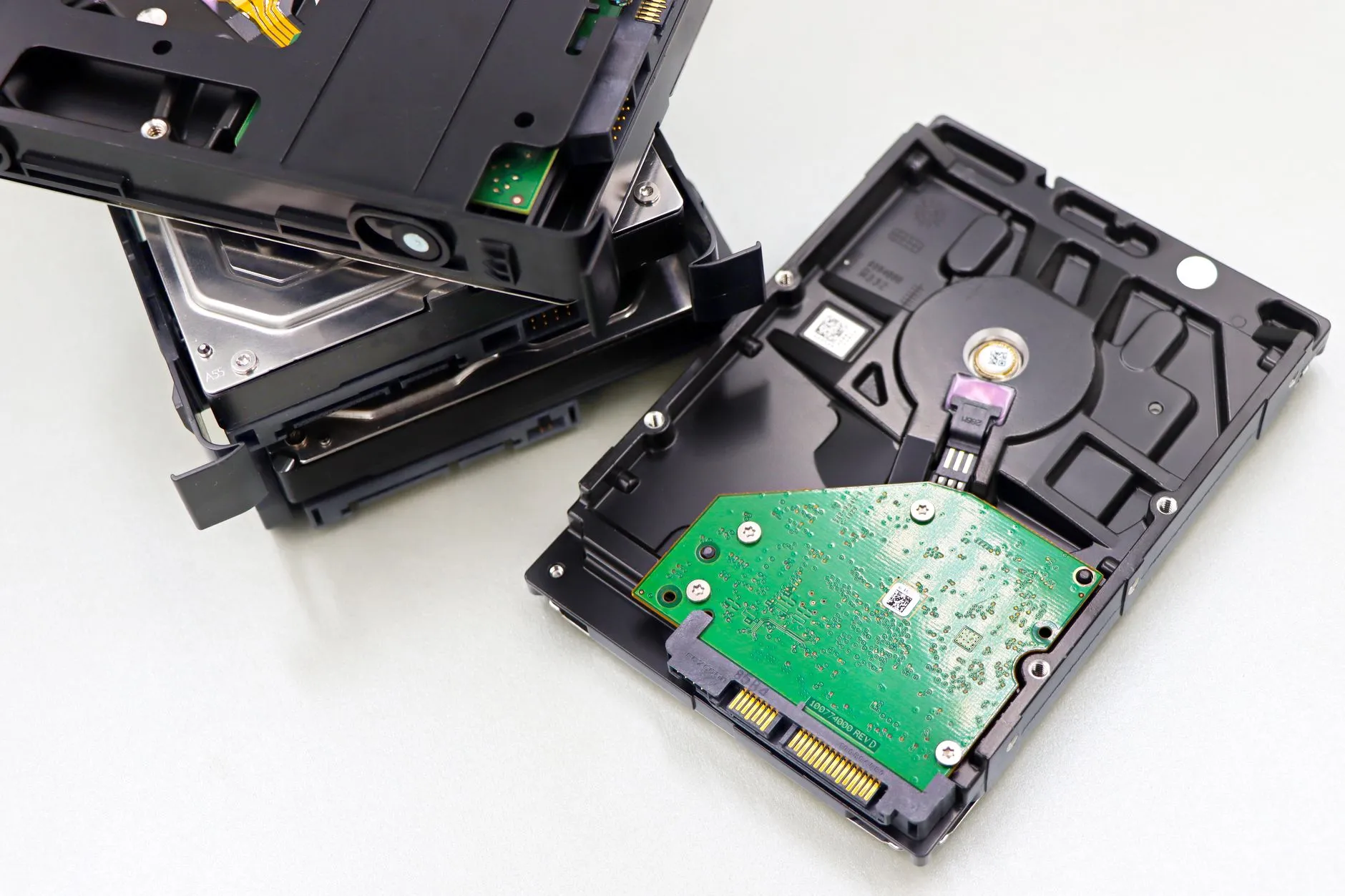
The short answer: "We wiped it and recycled it" is not a record — an auditor, an insurer or a regulator asks which device, wiped how, verified by whom, and where it went afterwards. Claude is genuinely good at turning a messy retirement spreadsheet into per-device disposal records and a chain-of-custody narrative with the fields those questions need. What it cannot do is make any of it true: it formats and structures evidence, it does not verify that a drive was actually sanitised.
A professional services firm in Hong Kong runs a hardware refresh: 140 laptops, nine servers, a retired NAS and two boxes of old phones from a team that moved to a mobile-device-management rollout three years ago.
The mechanics go fine. The kit is collected, the laptops are wiped, a recycler takes the pile away, and someone updates the asset spreadsheet with a column marked "disposed" and a date. The refresh is closed out. Everyone moves on.
Fourteen months later the firm is completing an ISO 27001 surveillance audit, and the auditor picks three asset tags at random from the previous inventory. For each one, the question is the same and entirely reasonable: what was on it, how was the data destroyed, who verified that, and what happened to the physical device afterwards. The spreadsheet says "disposed, 14 Mar". The recycler issued one weight-based receipt for the whole collection.
There is no finding of actual data loss, because nothing was lost. There is a finding about records, because the firm cannot demonstrate what it did. That is the failure mode this article is about, and it is the common one.
Why "We Wiped It and Recycled It" Isn't a Record Anyone Can Defend
The people who ask are more numerous than most IT teams expect. An ISO 27001 auditor will sample asset disposal as part of asset management. A cyber-insurance questionnaire asks how end-of-life media is handled and, at claim time, may ask you to prove it. A client's vendor-security review asks the same. A privacy regulator investigating an incident asks what happened to the devices that held the affected personal data. Each wants device-level specifics, not a policy document.
What they are testing is a chain: this specific device existed, it held this class of data, it was sanitised by this method, that was verified, it left your custody on this date, and it reached this endpoint. Break any link and the rest of the chain stops being evidence. A weight-based recycling receipt, which is what most recyclers issue by default, does not link to a serial number at all.
The specifics are also less exotic than people assume. NIST Special Publication 800-88 Revision 1, the guideline most disposal programmes reference, describes three sanitisation categories — Clear, Purge and Destroy — and includes a sample certificate of sanitisation listing the fields that make a record defensible: make and model, serial number, media type, the sanitisation method applied, the tool and version used, how it was verified, and who performed and who verified the work. The field list is not the hard part. Getting it captured for 140 devices, during a busy refresh, by people whose actual job is the refresh, is the hard part.
What Claude Can Actually Structure From a Retirement Spreadsheet
Claude reads uploaded files — spreadsheets, CSVs, PDFs — and is well suited to this particular job because the work is document reasoning rather than calculation: taking inconsistent, human-written records and restructuring them into a consistent form while flagging what is missing. Supported file types and sizes change over time and by plan, so check current documentation rather than assuming.
Be precise about what this does and does not achieve. It is a documentation exercise. Claude can take what your team recorded and turn it into records an auditor can follow, and it can tell you loudly where the underlying record is incomplete. It cannot confirm that drive S/N 5QM1J8VT was actually purged, and no amount of formatting makes an undocumented wipe a verified one. Used honestly, that second property — the loud flagging of gaps — is worth more than the formatting.
A per-device disposal record with the fields an audit actually asks for
The useful instruction is to give Claude the target field list and have it map your spreadsheet onto it, one row per device, rather than asking it to "tidy up" the sheet.
A workable field set, drawn from the NIST sample certificate and what audit and insurance questions actually ask: asset tag, make and model, serial number, media type and capacity, the data classification the device held, the sanitisation method and the standard it maps to, the tool and version used, the verification method and result, the person who performed the work, the person who verified it, the date, and the final disposition — reused internally, remarketed, recycled, or physically destroyed.
Then insist on an explicit "not recorded" value wherever your source is silent, never a blank. The resulting list of gaps is the real output of the first pass. It typically shows the same handful of patterns: serial numbers missing for the phones, no named verifier on anything, and a block of devices where the wipe method is recorded as "wiped".
A chain-of-custody narrative from decommission to final disposal
The second thing worth generating is prose, not a table: a short factual account of how a batch moved from the desk it was on to its final endpoint. Collected on this date by this person, held in this locked room, tagged and inventoried, collected by this vendor under this reference, processed on this date, certificates issued against these serials.
This matters because auditors and insurers read narratives faster than they read spreadsheets, and because writing the narrative exposes the breaks. The sentence you cannot write is the control you do not have — most often the fortnight between "collected from users" and "picked up by the recycler", when the devices sat in a room whose access nobody logged.
A Practical Workflow — From a Messy Retirement Log to Audit-Ready Records
1. Decide the record format before the refresh starts, not after. Take the NIST sample certificate fields as a starting point, add whatever your own regulator, insurer or largest client asks for, and publish that as the capture template. Everything downstream is cheaper if the target is known on day one.
2. Export what you actually have. The retirement rows from your asset system — Lansweeper, Snipe-IT, a ServiceNow CMDB, an Intune export, or the spreadsheet that is genuinely the system of record — plus any wipe-tool logs and vendor paperwork you can find.
3. Ask for a mapping, plus a gap report, in the same pass. Give the field list, ask for one row per device, and require "not recorded" wherever the source is silent. Then ask directly which fields are missing for which devices. Read the gap report first; it tells you what the rest of the exercise is actually about.
4. Close the gaps at source while the trail is still warm. Serial numbers from the wipe-tool logs, a named verifier from whoever ran the wipes, vendor references from the collection paperwork. Do this within weeks of the refresh, not during the audit — the person who wiped those laptops remembers in March and does not remember the following year.
5. Generate the chain-of-custody narrative per batch. One short account per collection, naming dates, custodians, storage and vendor references. Read it as an auditor would and mark every sentence you cannot support with a document.
6. Reconcile against the vendor's own certificates. Your records and the ITAD vendor's certificates have to agree, serial by serial. Mismatches are normal — a device that never reached the vendor, a serial on their certificate that is not on your list — and each one is worth resolving now rather than being discovered by someone else later.
AI-Structured Disposal Records vs an ITAD Vendor's Certificates vs an Internal Spreadsheet Only
- AI-structured records. Turns what your team captured into consistent, per-device documentation quickly, and — the genuinely valuable part — produces an explicit list of what is missing while there is still time to fix it. It proves nothing on its own, adds no independent verification, and will happily format an incomplete record into something that looks complete if you do not force it to mark gaps. Correct use: organising and stress-testing your own evidence, and catching gaps early.
- A certified ITAD vendor's per-device certificates. The strongest single piece of evidence, because it comes from an independent party with a method, a tool and a standard behind it — per-device destruction certificates with serial numbers, plus recycling and ESG certificates for the physical endpoint. It covers only the period after the vendor took custody, which leaves the internal half of the chain to you. Correct use: the authoritative record of destruction, to be reconciled against your own internal trail.
- An internal spreadsheet only. Cheap, and better than nothing if it is genuinely complete and consistently maintained. In practice it is rarely either, because it is maintained by people whose priority is the refresh, and it carries no independent verification — it is your own assertion about your own devices. Correct use: the live working record during a refresh, feeding the documentation above, not the final evidence.
Where a Document Isn't Proof
Formatting is not verification. A clean certificate generated from a row that said "wiped" is a clean certificate about an unverified wipe. The document has improved; the evidence has not. This is the single most important thing to keep straight, because well-formatted output is persuasive to everyone including the person who generated it.
Serial numbers are the load-bearing field, and the one most often wrong. They are long, transcribed by hand, and full of characters that are easy to confuse. A record whose serial does not match the vendor certificate is worse than no record, because it looks like evidence and fails under exactly the scrutiny it was meant to survive. Reconcile them against a machine-generated source rather than a typed one.
Getting This Right — Chain-of-Custody Integrity, Data Sensitivity, and When to Bring in IT
Do not paste what you are trying to protect into a chat window. A disposal record needs serial numbers, methods and dates. It does not need the data that was on the device, and it should not need customer names, employee identifiers or case references. Where devices are described by the data they held, use a classification — "client files, confidential" — rather than the content itself, and check your own policy on business-tier versus consumer-tier AI accounts before uploading an asset inventory at all.
Separate what you know from what you are asserting. The most useful discipline is to keep "recorded at the time" and "reconstructed afterwards" visibly distinct in the record. An auditor will respect a documented gap far more than a reconstruction presented as contemporaneous fact, and presenting the second as the first is the kind of finding that escalates.
Bring IT in before the devices move, not when the audit lands. Which devices held regulated or client data, whether a drive can be purged in place or has to be destroyed, what to do with devices that will not power on, how encryption at rest changes the argument, and who is competent to verify a wipe are engineering questions with compliance consequences. They are also much cheaper to answer before the recycler's van arrives.
Working out where an assistant genuinely helps in a compliance process — and where its output must never be mistaken for evidence — is AI+ Support work. The destruction itself, including NIST 800-88 sanitisation, documented chain-of-custody collection, per-device certificates and a final disposal report suitable for ISO 27001 and insurance purposes, is IT asset disposal services, run by the same IT support team that decommissions the kit. For the live inventory side of the same asset lifecycle, see our write-up on reconciling hardware inventory with DeepSeek; for the audit-evidence pattern in another regime, see preparing MLPS audit evidence.
Frequently Asked Questions
Does this replace a certified ITAD vendor's own certificates?
No, and it should not try to. A vendor's per-device destruction certificate is evidence from an independent party with a documented method and tool behind it; your own structured records are your account of your own devices. They do different jobs, and the value comes from having both and reconciling them serial by serial. If anything, good internal records make the vendor certificates more useful, because they let you prove the half of the chain that happened before the vendor took custody.
What fields does a real audit expect?
Start from the sample certificate of sanitisation in NIST SP 800-88 Rev. 1 — make and model, serial number, media type, sanitisation method, tool and version, verification method and result, the people who performed and verified the work, and the date — then add the final disposition and the data classification the device held. Beyond that, ask the people who will actually ask you: your certification auditor, your cyber-insurance broker and your largest client's vendor-security questionnaire. Their lists overlap heavily and are the ones that matter.
Can this help with e-waste and environmental compliance too?
Partly, and it is worth keeping the two streams distinct in your records. Data destruction and environmental disposal answer to different rules and usually produce different paperwork — a destruction certificate against serial numbers, and a recycling or ESG certificate against the physical material. The same structured approach works for both, and a device-level record makes it far easier to show that a given asset was both sanitised and responsibly recycled, rather than having a weight receipt on one side and a wipe log on the other.
How long should disposal records be retained?
Longer than the project, and by a policy rather than by habit. The practical inputs are your certification scheme's own requirements, your insurer's expectations, the retention period for the class of data the devices held, and the limitation periods that apply where you operate — which is why the honest answer is to set this with your compliance or legal advisor rather than from an article. What matters operationally is that a defined period exists, the records live with your asset-management records rather than in a project folder, and someone can actually retrieve them years later.
We already encrypt every laptop. Does that change what we need to document?
It strengthens your position but does not remove the documentation requirement. Full-disk encryption with a properly destroyed key is a recognised part of sanitisation practice, and in some regimes it materially changes the analysis. But you still have to be able to show which device was encrypted, that the key was destroyed, and how you verified it — which is the same record-keeping problem in a different shape. Treat encryption as a strong control that still needs evidence, not as a substitute for having any.
Share:
Ready to take action?
Turn these insights into a roadmap for your business.
Book a 15-minute no-obligation consultation with our APAC IT experts. We'll review your current setup and provide a tailored IT roadmap within 24 hours.
Free Checklist
10 Critical Checks Before Expanding IT to Greater China
PIPL compliance, network segmentation, bilingual helpdesk setup, and more — everything your IT team needs before Day 1 in China.
Request the checklist →📬 Monthly Asia IT Insights
China compliance updates, cybersecurity alerts, and IT tips for APAC teams — once a month.
No spam. Unsubscribe anytime.