Down During the Trade Show: A Hong Kong Distributor's WordPress Lead Engine
A composite Hong Kong scenario: a B2B industrial distributor whose WordPress catalogue and quote form carry the entire inbound pipeline, going down on day two of a trade show at four times a normal Tuesday's traffic. Why deferring updates was rational, what autoscaling actually changes, the real Autonomous tiers and overage arithmetic, and the three ways to run a site like this.
Short answer: A WordPress site that carries your sales pipeline is production infrastructure, not a marketing asset. The useful question is not which host is cheapest but who is accountable when it is down at 9pm on a Tuesday — and whether patching, backup and monitoring have an owner, a cadence and a tested restore.
The site went down on the second morning of the trade show.
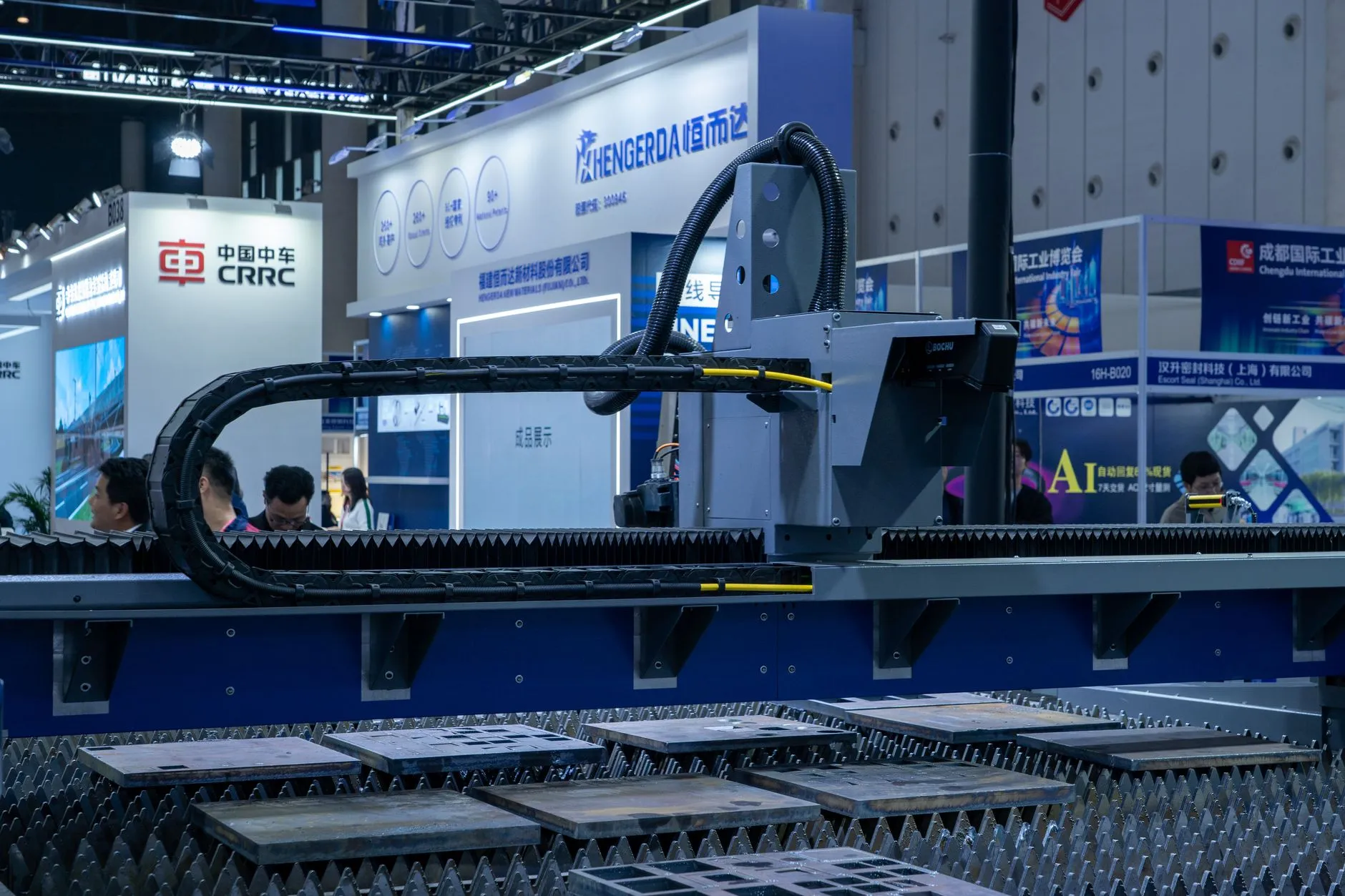
Not the busiest morning of the year in absolute terms — the traffic was maybe four times a normal Tuesday, which is not a remarkable number. But it was four times a normal Tuesday arriving on the two days when the company's entire annual marketing spend was pointed at a QR code on a booth backdrop, and the people scanning it were exactly the buyers the sales team had flown to meet.
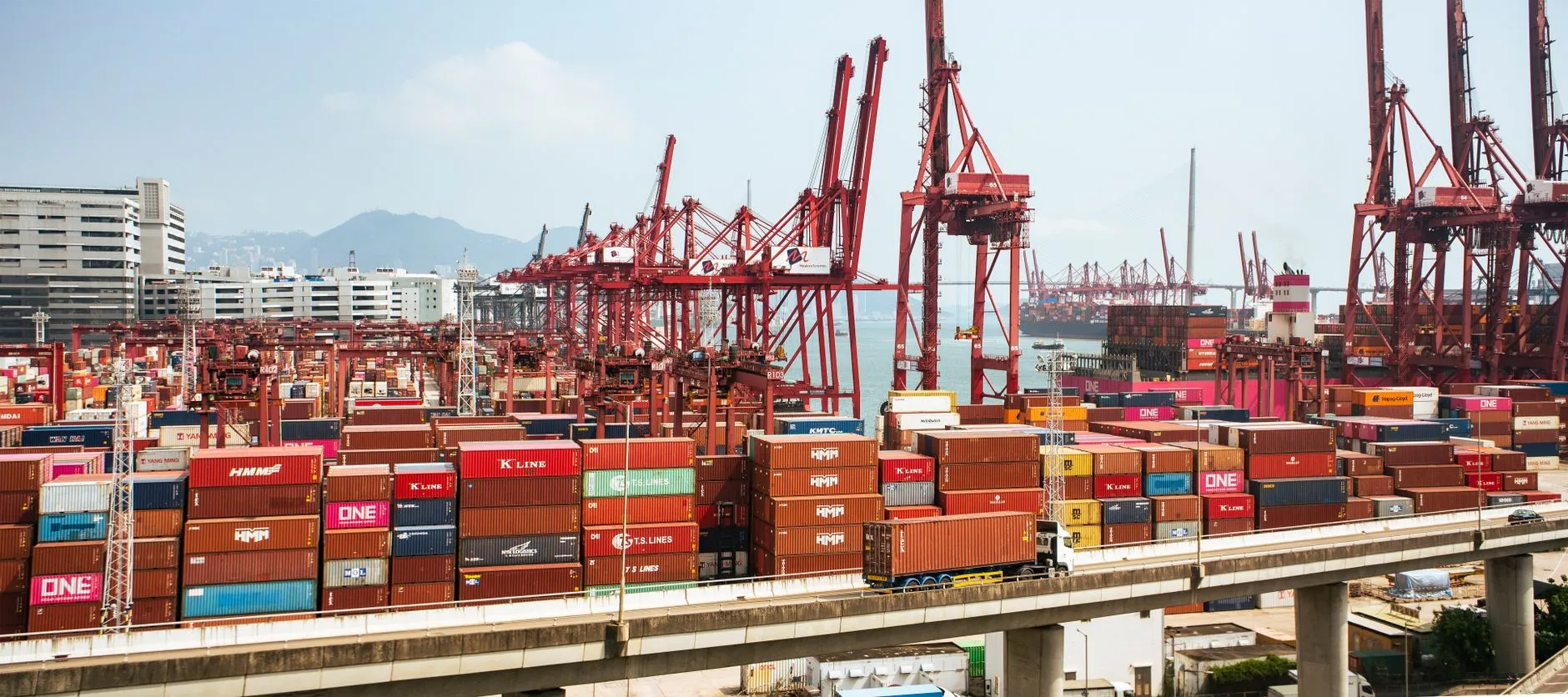
This is a composite scenario rather than a named client. Call it a Hong Kong B2B distributor of industrial equipment — pumps, valves, compressors, that kind of catalogue — somewhere between sixty and a hundred and twenty staff, selling to contractors, facilities operators and plant engineers across Hong Kong and the Pearl River Delta. The website is a WordPress install with a product catalogue, spec-sheet downloads and a quote-request form. It is not brand decoration. It is the top of the funnel, and the quote-request form is where the pipeline starts.
The agency that built it moved on in 2024. The plugin list has not been touched in fourteen months, because the last time somebody updated a plugin the quote form stopped sending, and it took three days to notice and another day to fix. After that, updates stopped.
The industry: when the website is the inbound quote channel
B2B distributors and industrial suppliers occupy a particular position online. Their websites are not doing brand work in the way a consumer brand's site does. They are doing something narrower and more commercially direct: a buyer with a specification searches for a part, lands on a product page, downloads a spec sheet, and fills in a form. That form is a qualified lead in a way that very little other marketing activity is.
Three things follow from that, and they are the reason this class of company gets hurt by website downtime more than its size would suggest.
Traffic is spiky and calendar-driven. Trade shows, catalogue launches, campaign email sends, and the annual procurement cycles of large customers. The load is not a smooth curve — it is a flat line with a handful of tall, predictable spikes, and the spikes are precisely when the traffic is worth the most per visitor.
The site is technically ordinary and commercially critical. It is a WordPress install. It is not complicated. That is exactly why it tends to be nobody's responsibility: it does not look like infrastructure, so it does not get treated like infrastructure.
Losses are invisible. When a factory line stops, everyone knows. When a quote-request form silently stops delivering, nothing happens at all — no alert, no complaint, no reconciliation. The buyer who filled it in assumes someone will be in touch, waits two days, and calls a competitor. Nobody at the distributor ever learns that the lead existed.
The scenario: one install carrying the pipeline
What an honest look at this site turns up:
One WordPress install, no staging. Changes are made on the live site because there is nowhere else to make them. This is also the reason updates stopped: with no staging environment, every update is a live experiment on the sales pipeline.
Twenty-odd plugins of mixed provenance. Some are well-known and actively maintained. Some were installed by the agency in 2019 to solve a specific problem and have not had a release since 2022. At least one is doing something structural — the product catalogue, the form handling, the spec-sheet gating — and nobody currently at the company knows which one.
Updates deferred on a rational basis. This is worth being fair about. The reason nobody updates is not laziness; it is that the last update broke the form and cost the company real leads. In the absence of a staging site and a tested restore, deferring updates is a genuinely reasonable response to a genuinely bad experience. The problem is not the decision. The problem is the missing capability that made it the only sensible decision available.
Backups that belong to the host. The hosting plan includes backups. Whether they include the database in a consistent state, how far back they go, how long a restore takes, and whether anyone has ever performed one — unknown on all four counts.
No monitoring that reaches a person. The site being down is discovered the way it was discovered during the trade show: somebody tried to load it.
What this actually costs
Downtime lands exactly when traffic is worth the most. This is the arithmetic that makes website availability a commercial issue rather than an IT preference. A site that is down for four hours on an average Tuesday has cost very little. The same four hours during a trade show has cost a significant fraction of the return on the entire event — the booth, the flights, the stand build, the shipping of demo units, the staff time. Availability failures are not distributed evenly across the year; they concentrate, by nature, on the days you spent the most money to create traffic.
Unpatched plugins are the most common compromise route for a WordPress site. This is the least controversial statement in this article. WordPress core is reasonably well maintained and updates quickly; the plugin layer is where the exposure concentrates, and an abandoned plugin with a known vulnerability is a standing invitation. For a B2B distributor the consequence is not usually dramatic data theft — it is SEO spam injection, redirect malware, or the site being used to serve something unrelated, all of which damage exactly the search visibility the site exists to capture, and all of which take weeks to unwind.
"We'll just resize the server" is a fix that arrives after the spike. Reactive scaling requires somebody to notice, diagnose, decide and execute. During a trade show, the people who would do that are on a plane, on a stand, or asleep. By the time the resize is done, the two days are over.
Lost form submissions are never reconciled. There is no report anywhere in the business that shows quote requests that were attempted and failed. The number is not small and it is not knowable, which is a bad combination.
How we think about it: this is production infrastructure with an owner
The framing that resolves most of this is straightforward. A website that carries revenue should be treated as production infrastructure — with an owner, a patch cadence, a tested restore and a monitoring path — rather than as a marketing asset that happens to be technical.
Marketing assets are judged on whether they look right and say the right thing. Production infrastructure is judged on availability, recoverability and change control. The distributor's site needs both standards applied to it, and it is currently only getting the first.
The practical test we find most useful is a single question: who is accountable when it is down at 9pm on a Tuesday? Not who would probably help, or who knows the WordPress admin password. Who is accountable, with a defined response path and somewhere for an alert to land.
For most companies of this size, the answer to that question is much simpler when the site sits inside the same managed IT plan as everything else. The disciplines are not website-specific. Patch management, monitoring with escalation, backup with tested restore, and a change record are exactly what a managed plan already applies to endpoints and servers. Applying them to the website too is a scope decision, not a new capability — and it means one accountable party and one audit trail rather than a separate arrangement with separate gaps.
There is a second, subtler point. The reason this company stopped updating was that it had no safe way to update. That is the actual defect. Solve it — a staging path, a tested restore, coordinated rather than blind updates — and the patching problem solves itself, because the rational reason for deferring disappears.
What this looks like in practice, including the numbers
For WordPress specifically there is an autoscaling option worth understanding, because it addresses the trade-show failure mode directly rather than by adding headroom and hoping.
Cloudways Autonomous runs WordPress on Kubernetes-based autoscaling, with Cloudflare Enterprise CDN and Object Cache Pro included and no per-visit metering. The public list tiers, observed 19 August 2026, are:
- Growth — US$99 per month, 20 GB storage, 150 GB bandwidth, one published site.
- Scale — US$199 per month, 50 GB storage, 250 GB bandwidth.
- Plus — US$399 per month, 100 GB storage, 1 TB bandwidth.
- Enterprise — on request.
Two honest qualifications. First, these are the platform's public list prices; Brocent's management, migration and support are quoted separately on top, and vendor prices change. Second, Growth is the only tier with a published site count, so we are not going to tell you how many sites Scale or Plus allow — we do not have a published figure and inventing one would be worse than saying so.
The overage arithmetic matters and is easy to check: US$1 per GB of disk and US$0.04 per GB of bandwidth beyond the plan. Run the numbers on your own worst month before choosing a tier. A trade-show spike that pushes 100 GB over the Growth allowance costs four US dollars in bandwidth overage, which is a much less frightening number than most people assume when they hear "overage" — and is a far better outcome than the site falling over.
What autoscaling actually changes about a spike is worth being precise about. It does not make traffic free and it does not make capacity infinite. What it changes is *who has to act*. On a fixed plan, a spike beyond capacity requires a human to notice and resize. On an autoscaling plan, the platform adds capacity as load rises without anyone being paged — which is the entire difference between a trade-show Tuesday that works and one that does not.
For the patching problem specifically, there are two relevant add-ons at public list prices: SafeUpdates, automated WordPress updates, at US$3 per application per month, and malware protection from US$4 per application per month. Cloudflare Enterprise CDN is available from US$4.99 per domain per month where it is not already included in the tier.
We are going to describe what these do rather than what they guarantee, because security add-ons are routinely oversold. SafeUpdates automates the WordPress update process; it does not make an update incapable of breaking a form, and it does not remove the need for a restore path. Malware protection scans and responds; it is not a guarantee that a site will not be compromised. Anyone telling you otherwise about any product in this category is selling rather than explaining.
One more note on scope: Autonomous is WordPress and WooCommerce only. Every other stack — Magento 2, Laravel, Drupal, custom PHP — runs on the standard Flexible plans, which start at US$11 per month for a 1 GB DigitalOcean Standard server. For the distributor in this scenario, with a single WordPress install carrying the pipeline, Autonomous is the relevant half of the catalogue.
Three ways to run a lead-generating WordPress site
Cheap shared hosting plus DIY updates
- The lowest monthly cost by a wide margin, and the model most B2B distributor sites are actually on.
- Updates depend on somebody remembering and being willing — and after one bad update, willingness is usually gone.
- No staging, so every change is a live experiment on the sales pipeline.
- Capacity is fixed and a spike is handled by hoping; the response to overload is manual and arrives late.
- Backups exist as a host feature with unknown restore characteristics.
An agency retainer that includes "maintenance"
- Often a genuinely good arrangement, and we want to be fair here: a good agency brings design judgement, content capability and product knowledge that no infrastructure provider has.
- The weakness is rarely competence. It is that "maintenance" in a creative retainer is scoped loosely, has no defined cadence, and competes for the same hours as campaign deadlines — and campaign deadlines have dates attached while patching does not.
- Continuity risk is real: the knowledge, and often the credentials, belong to the agency rather than to you.
- Out-of-hours accountability is usually undefined, because agencies are not generally staffed for 9pm on a Tuesday and never claimed to be.
- Works well when the retainer explicitly names a patch cadence, a restore test and an escalation path. Works poorly when "maintenance" is a line item nobody has defined.
Managed WordPress hosting inside the IT plan (the Brocent model)
- Patching, monitoring, backup and restore testing are the same disciplines already applied to endpoints and servers, extended to the site, with one owner and one audit trail.
- Autoscaling handles calendar-driven spikes without requiring a human to notice and act.
- Escalation is defined, including out of hours, because it uses the same path as everything else in the plan.
- Platform list price and management fee are separate, visible lines.
- The trade-off: it costs more per month than shared hosting, and the case rests on availability during exactly the weeks that matter plus the removal of a standing security exposure. If your site is genuinely not commercially critical, this is over-engineering and you should not buy it.
Frequently asked questions
Why did the site go down if traffic was only moderate?
Because absolute traffic is not what matters — headroom is. A site provisioned for a flat baseline has no slack, and a plugin-heavy WordPress install with uncached dynamic pages consumes far more resource per visitor than a static page would. Four times normal traffic against a plan with no headroom is enough. The volume was ordinary; the provisioning was not designed for the spike.
Does autoscaling mean unlimited traffic?
No. It means capacity is added as load rises without a human having to notice and act, and that visits are not metered per view. Storage and bandwidth allowances still apply, with overage billed at US$1 per GB of disk and US$0.04 per GB of bandwidth. Autoscaling changes the response time to a spike from hours to seconds; it does not remove the plan's limits.
Who updates plugins, and what happens if an update breaks something?
On a managed arrangement, updates are a defined responsibility on an agreed cadence rather than an occasional act of courage, and the automated update add-on (SafeUpdates, US$3 per application per month at list) can carry the routine cases. The more important half is the safety net: a tested restore and a staging path, so that a broken update is a ten-minute rollback rather than a three-day incident. Without that safety net, no update policy survives contact with the first bad update — which is precisely what happened to the distributor in this scenario.
Is a host's backup the same as a real backup?
Only if someone has restored it. A backup is a claim until it is tested; the useful questions are how far back it goes, whether the database is captured in a consistent state, how long a restore takes in practice, and when a restore was last actually performed. Offsite backup is also available as an add-on at US$0.033 per GB at list price, which is worth considering when the only copy lives with the same provider as the site.
What does managed WordPress hosting cost in Hong Kong?
The platform component is public and checkable: Cloudways Autonomous at US$99, US$199 or US$399 per month for Growth, Scale and Plus respectively, or the Flexible plans from US$11 per month if autoscaling is not needed, all as public list prices observed 19 August 2026. Brocent's management, migration and support are quoted separately on top of that. We deliberately do not publish a single bundled "fully managed from" figure, because it would hide which part of the cost is the platform and which part is the work.
Can you take over a site an agency built?
Yes, and it is a common starting point. The first phase is discovery rather than migration: establishing the plugin and theme inventory, the PHP version, what is handling forms and the catalogue, where DNS and mail are administered, and which credentials actually exist. On a site nobody has touched in fourteen months this is usually where the surprises are, and it is better done before a busy season than during one.
Do we need a staging site?
For a site that carries the sales pipeline, yes — and the scenario above is the argument for it. A staging environment is what converts "we stopped updating because the last update broke the form" into a routine operation. It is not an expensive capability, and its absence is what made deferring updates the rational choice in the first place.
Where to start
If your website is genuinely the top of your sales funnel, the useful first step is not a hosting comparison. It is answering three questions honestly: when was the last plugin update, when was a restore last tested, and where does an alert go at 9pm on a Tuesday. If those have clear answers, your arrangement is probably fine regardless of who provides it. If they do not, the gap is the thing to fix.
Website patching, backup and monitoring are the same disciplines a managed plan already applies to every other system you run, which is why we think the right home for this is inside the plan rather than beside it — see managed IT support and pricing for what that covers. The platform tiers, add-ons and overage figures quoted above are set out in full on the cloud hosting and application services page, and the patching discipline itself is described under vulnerability and patch management; cloud solutions covers the wider architecture side.
If you have a trade show or a campaign in the next quarter and the site has not been updated in a year, that is the time to look at it — not the week of. Get in touch and we will start with what is actually installed.
Share:
Ready to take action?
Turn these insights into a roadmap for your business.
Book a 15-minute no-obligation consultation with our APAC IT experts. We'll review your current setup and provide a tailored IT roadmap within 24 hours.
Free Checklist
10 Critical Checks Before Expanding IT to Greater China
PIPL compliance, network segmentation, bilingual helpdesk setup, and more — everything your IT team needs before Day 1 in China.
Request the checklist →📬 Monthly Asia IT Insights
China compliance updates, cybersecurity alerts, and IT tips for APAC teams — once a month.
No spam. Unsubscribe anytime.