How to Build a China-Compliant Internal Knowledge Base Assistant With DeepSeek
A practical guide to building a China-compliant internal AI knowledge base assistant with DeepSeek — deployment options, data residency, and the governance work a technical how-to usually skips.
Published
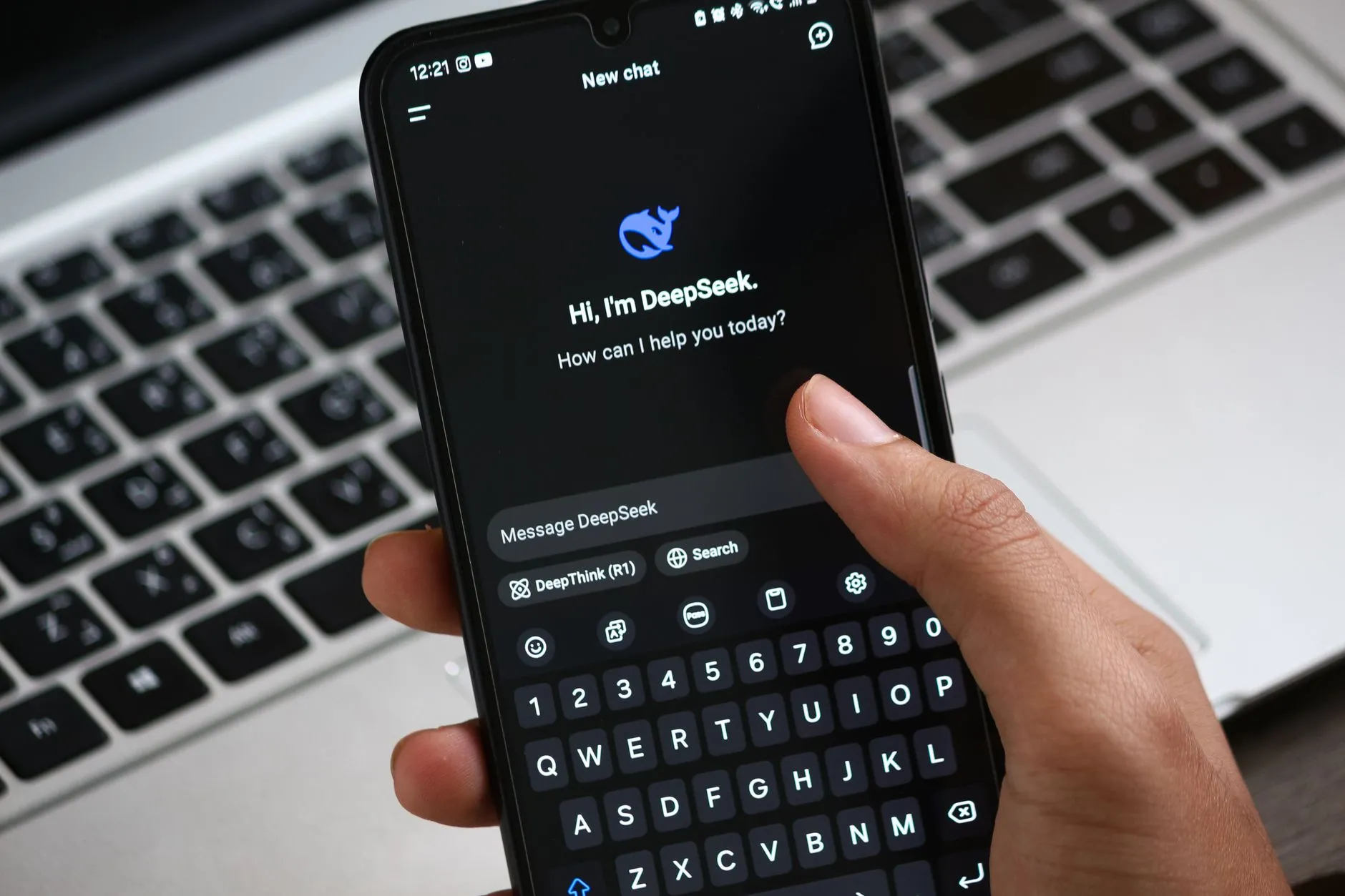
The short answer: DeepSeek's models are released as open weights, which is the real lever for China data residency — instead of routing an internal knowledge base through a foreign LLM vendor's API, you can self-host DeepSeek on infrastructure that stays inside mainland China, or use a China-based cloud provider's hosted version, keeping the AI-processing step under PIPL- and MLPS-relevant control while still getting a genuinely capable, bilingual assistant grounded in your company's own documents.
If your company runs a China office and someone has floated "an internal AI assistant that can answer questions from our SOPs, contracts, and internal wiki," DeepSeek keeps coming up in that conversation for a specific reason that has little to do with marketing and everything to do with where the data physically sits. Unlike Claude, ChatGPT, or Gemini, DeepSeek's flagship models — DeepSeek-V3 and DeepSeek-R1 — are published as open-weight models you can download and run on infrastructure you control, and DeepSeek's own hosted product operates out of mainland China rather than the US or EU. That flips the usual cross-border data question on its head for organizations whose priority is keeping China-origin data inside China's borders rather than keeping it out. This guide covers what a real internal knowledge base assistant on DeepSeek looks like in practice, the deployment options that actually determine where your data lives, and the governance work — data classification, consent, credential handling — that a purely technical how-to usually skips.
What Does "China-Compliant Internal Knowledge Base Assistant" Actually Mean?
Three genuinely different builds get lumped under this phrase, and the differences matter more than the marketing copy suggests. The first is using DeepSeek's own hosted app or API (chat.deepseek.com, or the DeepSeek API directly) as a convenience tool — the same trust model as any external SaaS AI product, with data processed on DeepSeek's own infrastructure inside China and governed by DeepSeek's own privacy terms, which you should read for your specific use case rather than assume. The second is a self-hosted deployment of the open-weight model on infrastructure you or your IT partner actually control — on-premises GPU servers, or a China-region cloud instance from a provider like Alibaba Cloud, Tencent Cloud, or Huawei Cloud — where you decide precisely where inference happens and what data ever leaves the building. The third is a China-region managed AI platform hosting DeepSeek as a service, such as Alibaba Cloud's Model Studio or a comparable offering from Volcano Engine or Baidu's Qianfan platform — a middle path where you don't run the GPUs yourself, but the hosting entity and data location are still inside mainland China and covered by a commercial agreement rather than a general consumer terms of service. For an internal knowledge-base assistant specifically, options two and three are what "China-compliant" usually means in practice, since both let your compliance team point to a specific, auditable data location.
What DeepSeek Can Actually Do With Your Internal Knowledge Base Today
Once connected to your document store through a retrieval-augmented generation (RAG) pipeline — indexing SOPs, HR policies, contracts, and wiki pages into a searchable format the model can draw on — DeepSeek's genuine strengths line up well with the tedious parts of internal knowledge work. It can answer natural-language questions grounded in your actual documents, pulling the relevant passage rather than making something up, provided the retrieval step is doing its job. It can summarize long policy documents into something an employee can actually read in two minutes instead of twenty. It has a genuine and well-documented strength in bilingual Chinese-English fluency, having been trained on a substantial volume of Chinese-language text, which is a real differentiator for company content that originates in Mandarin rather than being translated from English first. It can surface the right document when someone doesn't know where to look, which is often the actual bottleneck in a large SOP library, more than the documents themselves being hard to understand. What it structurally can't do is know anything outside the indexed corpus, replace proper document version control, or guarantee it won't misstate a specific detail like a policy number or a date if the retrieval step returns a weak or outdated match — all solvable with a properly maintained pipeline, not solved by the model alone.
Building the Knowledge Base Connection: What Are the Real Options?
Three Ways to Connect: A Direct Comparison
- DeepSeek API + a RAG Pipeline You Build — A developer, in-house or via your IT partner, sets up a vector database (Milvus is a popular open-source option with strong China-based maintainership, though any comparable vector store works), chunks and embeds your documents into it, and calls the DeepSeek API with the retrieved context alongside each user question. This gives full control over exactly which documents are indexed and how retrieval permissions are scoped, at the cost of real engineering effort to build and maintain.
- A China-Region Managed AI Platform With Built-In Knowledge Base Features — Platforms like Alibaba Cloud's Model Studio bundle document ingestion, vector storage, and DeepSeek model access into one managed service. This is a meaningfully lower engineering lift than building your own RAG pipeline, still keeps data inside mainland China, but ties you to that cloud provider's ecosystem and pricing.
- Self-Hosted Open-Weight Model on Your Own Infrastructure — Running DeepSeek's model weights directly via an inference server such as vLLM or Ollama, on your own GPU hardware or a leased China-region GPU instance, gives you the highest degree of "this data genuinely never leaves servers we control." It also requires meaningful GPU budget and real infrastructure operations capability — the full DeepSeek-V3 and R1 models are large, though DeepSeek has also released smaller distilled variants that are considerably more tractable to self-host for teams without a large GPU budget; check current documentation for which sizes are currently available and their hardware requirements.
A Realistic Internal Knowledge Base Workflow: What This Looks Like Day to Day
A document ingestion pipeline pulls source material from wherever SOPs and policies actually live — SharePoint, an internal wiki, a shared drive — on a recurring schedule, chunks and embeds each document into the vector store, and tags it with metadata such as department, sensitivity level, and language. When an employee asks a question through a simple internal chat interface, Slack, or an internal Teams channel, the system embeds the question, retrieves the most relevant document chunks, sends both the question and the retrieved context to DeepSeek, and returns an answer with a citation back to the source document so the employee can verify anything consequential before acting on it. This is meaningfully different from an employee simply copy-pasting internal text into DeepSeek's public consumer app, which sends that content to DeepSeek's general-purpose service outside any access-control or audit framework your company has built — a distinction worth explaining clearly to staff, since the informal version is often what happens by default if no sanctioned tool exists.
Getting the Data Classification and Access Control Piece Right
This is the step that actually determines whether the deployment is compliant, not the choice of model. China's Multi-Level Protection Scheme (MLPS, 等保) may apply to systems processing certain categories of data and sets specific technical and procedural requirements depending on the assigned protection level. The Personal Information Protection Law (PIPL) requires separate, specific consent for processing personal information in many cases, which matters directly if your knowledge base ingests HR files or other employee personal data. China's rules on cross-border transfer of "important data" are triggered specifically when data crosses the border — which is precisely what a self-hosted-in-China deployment avoids for the AI-processing step, though the underlying source documents still need their own classification review regardless of which model eventually touches them. Access control on who can query the knowledge base is a separate axis entirely: the assistant should never become a backdoor way for any employee to retrieve HR, legal, or finance documents they wouldn't otherwise be able to see, so retrieval permissions need to mirror your existing document access controls rather than flatten them into one shared index.
What DeepSeek Won't Do Automatically — and Why That Matters
It's worth being direct here, because the most common real-world mistake isn't a technical failure — it's assuming self-hosting equals compliance. DeepSeek doesn't know your organization's document permissions unless the retrieval layer is deliberately built to respect them. It doesn't automatically classify data sensitivity, flag personal information, or determine whether a given document falls under MLPS or PIPL obligations — that's a legal and compliance review, not a model capability. Self-hosting the open-weight model inside China is a genuinely useful architectural choice, but it's one input into a compliance program, not a substitute for one; policy review, a designated data protection contact, and periodic audits still need to exist around it. And because DeepSeek's licensing terms and hosted-product terms of service can change, check current documentation for the exact license attached to whichever model version you deploy and whatever commercial terms apply to the hosting option you choose, rather than relying on what was true when this guide was written.
Getting This Right: Credential Handling, Data Governance, and Where a Managed IT Partner Matters
Everything above is achievable with a competent developer or platform team, but "achievable" and "governed properly" are different bars. Credential handling: your DeepSeek API key, or the access credentials for whichever China-region cloud account hosts your deployment, amount to standing access to a system that can see everything in your knowledge base — these belong in a proper secrets manager, never hardcoded into a script or a deployment config file, and should be rotated on a schedule with access logged. Data governance: know precisely which document categories are ingested into the knowledge base, and deliberately exclude categories that shouldn't be there by default — legal-privileged material and active HR investigations are the obvious candidates — rather than indexing everything simply because it's technically possible. Where a managed IT partner genuinely matters: this isn't a project for one enthusiastic engineer to stand up over a weekend and hand off unsupervised. A partner adds real value at three points — scoping the retrieval-permission architecture through an AI integration support engagement so it actually mirrors your existing document access controls rather than flattening them, running a proper cybersecurity review of the deployment before real company documents ever touch it, and providing the ongoing managed IT support that keeps the underlying infrastructure — China-region cloud accounts, GPU instances, or on-premises servers — patched, monitored, and actually available when staff need it. Brocent has run managed IT and cybersecurity engagements across Asia, including mainland China, since our founding in Beijing in 2007, with a Singapore headquarters and a Hong Kong office open since 2016 doing exactly this kind of cross-border infrastructure and compliance coordination.
Frequently Asked Questions
Is DeepSeek actually safe to use with company data?
It can be, but "safe" depends entirely on which deployment option you choose and how it's governed, not on the model itself. Using the public consumer app or hosted API carries the same trust profile as any external SaaS AI tool; self-hosting the open-weight model inside infrastructure you control removes that specific external-vendor dependency for the AI-processing step, but doesn't by itself handle document access control, data classification, or consent requirements.
Does self-hosting DeepSeek in China automatically make us PIPL or MLPS compliant?
No. Self-hosting inside mainland China addresses where the AI-processing step happens, which is genuinely useful for cross-border data transfer concerns, but PIPL consent requirements, MLPS classification obligations, and general data governance still apply based on what data you're processing, not based on which model or hosting location you chose. Treat this as one input to a compliance program, not the whole program.
What's the real difference between the DeepSeek app and self-hosting the model?
The DeepSeek app and hosted API run on DeepSeek's own infrastructure under DeepSeek's own terms of service — convenient, but you're trusting an external vendor with whatever you send it, same as any SaaS AI tool. Self-hosting downloads the published model weights and runs them on infrastructure you or your IT partner control, giving you direct control over data location and access, at the cost of needing real infrastructure operations capability.
Do we need our own GPU hardware to self-host DeepSeek?
Not necessarily. You can lease GPU capacity from a China-region cloud provider rather than buying hardware outright, and DeepSeek has released smaller distilled model variants that are considerably easier to run than the full-size DeepSeek-V3 or R1 models. Check current documentation for which model sizes are available and their specific hardware requirements before committing to a budget.
How good is DeepSeek at handling a bilingual English-Chinese knowledge base?
This is a genuine strength — DeepSeek's models were trained on a substantial volume of Chinese-language text and generally perform well on Mandarin content, which is a real differentiator for company documents that originate in Chinese rather than being translated from English. Test it against your own actual documents before assuming this holds for your specific terminology and industry jargon.
How does this compare to using Alibaba Cloud's or another China cloud provider's own AI models instead of DeepSeek?
Both are legitimate China-hosted options; the comparison usually comes down to model capability, cost, and how each vendor's terms handle data. Several China-region cloud platforms, including Alibaba Cloud, also offer DeepSeek's models as a hosted service alongside their own, so it isn't always an either-or choice.
Is DeepSeek's open-weight license actually free to use commercially?
DeepSeek has released recent model versions under permissive open-weight licenses that generally allow commercial use, but license terms attached to specific model versions can differ and do change over time. Confirm the exact license attached to the specific model version and release you plan to deploy before building a production system on top of it.
Choosing the Right Approach for Your Business
For most China-office deployments, the sensible starting point is narrow: pick one well-defined document set — say, HR policies and general SOPs, explicitly excluding legal and financial material at first — run it through a China-region managed AI platform rather than building a full self-hosted pipeline on day one, and see whether retrieval quality and bilingual performance actually hold up against your real documents before expanding scope or investing in dedicated GPU infrastructure. That gives you a genuine sense of whether DeepSeek's strengths match your content before either belief becomes an assumption. The technical build is achievable without a large team, but the governance side — data classification, access control that mirrors your real document permissions, and credential handling — is where experienced setup and ongoing support matter, and it's exactly where Brocent's cybersecurity services and managed IT support fit in. If you'd like help scoping a DeepSeek-based knowledge base assistant that fits your compliance requirements rather than a generic template, get in touch.
Share:
Ready to take action?
Turn these insights into a roadmap for your business.
Book a 15-minute no-obligation consultation with our APAC IT experts. We'll review your current setup and provide a tailored IT roadmap within 24 hours.
Free Checklist
10 Critical Checks Before Expanding IT to Greater China
PIPL compliance, network segmentation, bilingual helpdesk setup, and more — everything your IT team needs before Day 1 in China.
Request the checklist →📬 Monthly Asia IT Insights
China compliance updates, cybersecurity alerts, and IT tips for APAC teams — once a month.
No spam. Unsubscribe anytime.