Quantitative Trading System: Historical Data Collection, Regression Processing Techniques, IT Infrastructure Requirements, and Mainstream Backtesting Frameworks
This article systematically outlines historical data collection techniques, regression processing methods, mainstream market backtesting frameworks, and provides an in-depth analysis of server, storage, and network IT infrastructure requirements.
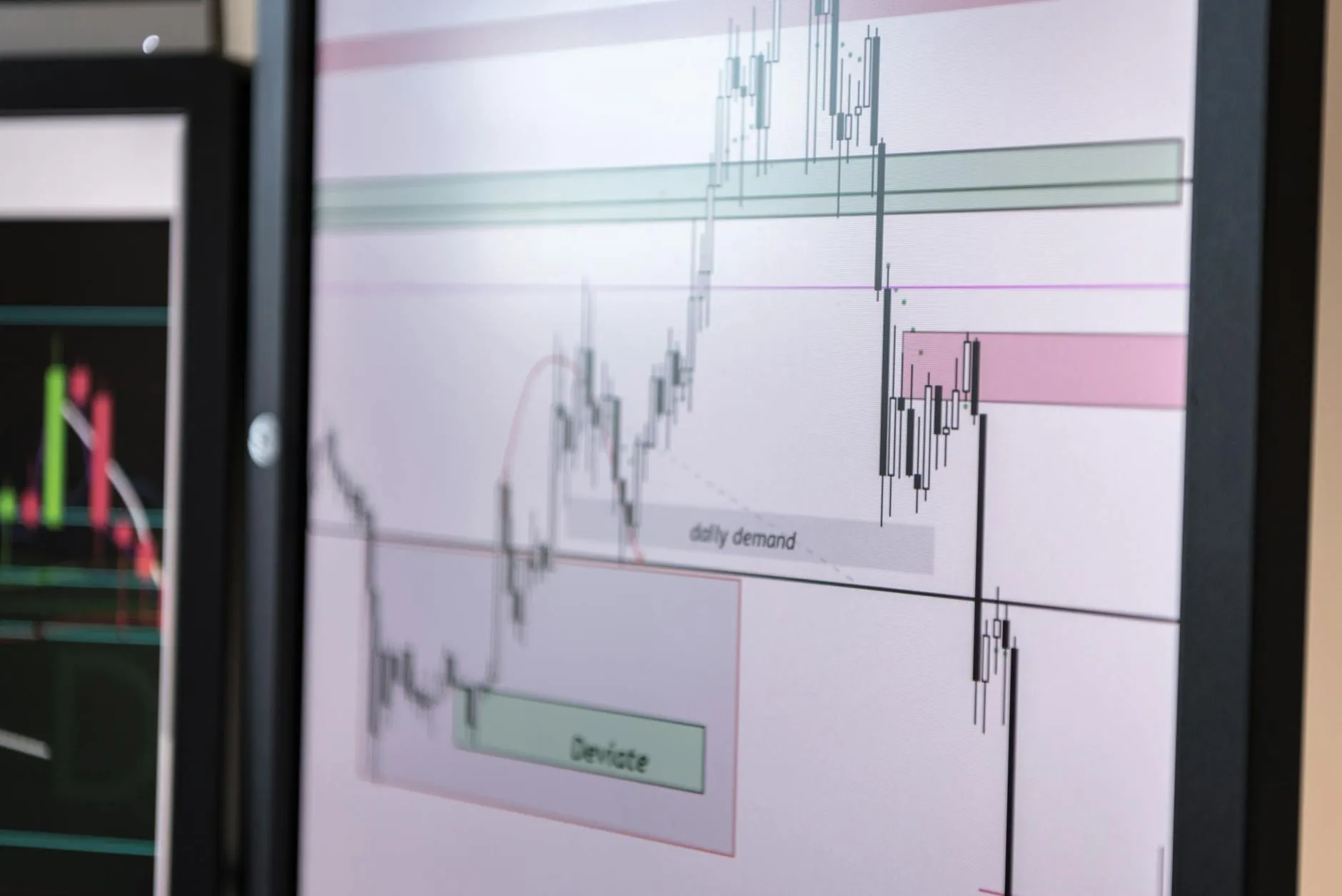
Quantitative Trading System: Historical Data Collection, Regression Processing Techniques, IT Infrastructure Requirements, and Mainstream Backtesting Frameworks
In the field of quantitative trading (Quantitative Trading), the collection, cleaning, and regression processing of historical data form the core foundation for strategy development. Whether for low-frequency value investing or high-frequency arbitrage, high-quality data and efficient backtesting frameworks directly determine a strategy’s success and live trading performance. In 2026, with the explosive growth of AI large models and Tick-level data, quantitative practitioners face increasingly stringent demands on data pipelines and IT infrastructure. This article systematically outlines historical data collection techniques, regression processing methods, mainstream market backtesting frameworks, and provides an in-depth analysis of server, storage, and network IT infrastructure requirements. BROCENT, as a global leader in managed IT services, cloud solutions, low-latency networking, and cybersecurity. Their expertise in hybrid managed IT services, cloud migration (Microsoft 365, Azure, AWS, Alibaba Cloud), and APAC-focused low-latency infrastructure delivers end-to-end stability for quantitative trading systems in Hong Kong and across the Asia-Pacific region.
1. Historical Data Collection Techniques: Full-Stack Practices from API to Time-Series Databases
Historical data—Tick-level quotes, tick-by-tick trades, order book snapshots, K-lines, and financial indicators—is the most valuable asset in quantitative trading. Data quality directly impacts backtest realism and factor effectiveness.
Primary data sources fall into three categories : (1) official exchange APIs such as Shanghai/Shenzhen Level-2, futures CTP interfaces, and U.S. NYSE/NASDAQ FIX protocols; (2) third-party data providers including Tushare Pro, Wind, East Money Choice, Yahoo Finance, and Polygon.io; and (3) open-source/free channels like yfinance and akshare, ideal for small teams to quickly validate ideas.
Collection relies primarily on APIs. RESTful APIs suit bulk historical pulls, while WebSocket enables real-time streaming with latency under 100 ms. Institutional trading often uses the FIX protocol for microsecond-level market data. The Python ecosystem dominates development, leveraging libraries such as requests, websocket-client, and tushare. Incremental update mechanisms are essential: only new Ticks are fetched, avoiding full reloads and saving bandwidth and storage costs.
Post-collection, an ETL pipeline is built. Apache Airflow or custom schedulers handle timed or event-driven ingestion; message queues like Kafka, RabbitMQ, and Redis Stream decouple producers from consumers for high-concurrency buffering. Multi-threading or distributed processing enables parallel cleaning across multiple instruments. Pandas and NumPy handle missing values, abnormal quotes, zero/negative prices, and corporate actions (dividends, splits), standardizing everything into OHLCV format.
Storage completes the pipeline. Traditional relational databases cannot handle billions of Ticks per second, so time-series databases are the standard: TDengine (domestic quantitative favorite, supporting billions of Ticks/second writes and millisecond queries), TimescaleDB, InfluxDB, ClickHouse, DolphinDB, or kdb+. The recommended “one instrument, one sub-table” design minimizes lock contention. A hot-cold separation architecture further optimizes costs: hot data stays in Redis or memory, while historical data uses Parquet format in S3/OSS object storage. Apache Arrow columnar format enables zero-copy transfers, and NVMe SSD + mmap technology reduces I/O latency to microseconds. Full-market petabyte-scale storage requires date/instrument partitioning and compression algorithms.
High-quality data collection demands not only technology but also compliance and security. Authorized sources are prioritized to avoid legal risks from scraping. BROCENT IT Managed cybersecurity services and PDPO compliance support provide endpoint protection, encrypted transmission, and vulnerability management, ensuring sensitive market data remains secure and compliant in Hong Kong and cross-border China-to-global scenarios.
2. Regression Processing Techniques: Deep Integration of Statistical Regression and Backtesting
In quantitative contexts, “regression processing” has two layers: (1) statistical regression models for factor discovery and prediction, and (2) backtesting (Backtesting), i.e., “regressing” strategy validity on historical data.
Common statistical regression models include OLS linear regression, Lasso/Ridge (to prevent overfitting), logistic regression, and non-linear models such as XGBoost and random forests. The Python toolchain features statsmodels (time-series analysis), scikit-learn (machine-learning regression), and pandas for data preparation. In practice, researchers regress historical data to compute Beta, Alpha, factor IC/IR values, or construct mean-reversion strategies (pairs trading + cointegration tests). For large-scale workloads, Dask distributed computing or GPU acceleration (PyTorch) processes petabyte datasets efficiently.
Backtesting is the essential gateway to live deployment. It simulates real trading: load cleaned data → feed Ticks/Bars to the strategy → match orders → calculate Sharpe ratio, maximum drawdown, and equity curves. The key is avoiding look-ahead bias by strictly using Point-in-Time data and realistically simulating slippage, commissions, and liquidity impact.
3. Mainstream Market Backtesting Frameworks: Event-Driven vs. Vectorized
By 2026, Python backtesting frameworks have matured into two camps: event-driven (realistic simulation) and vectorized (ultra-fast optimization).
Event-Driven Frameworks :
- Backtrader : Open-source classic with clean code, TA-Lib indicators, multi-data-source support, and Matplotlib visualization. Perfect for beginners and medium/low-frequency strategies.
- **VN.PY**(vnpy) : Domestic quantitative benchmark, supporting A-shares, futures, CTP live interfaces, Tick-level backtesting, and a full GUI. The top choice for institutions and professional quants.
- Zipline-reloaded : Academically rigorous with seamless Pandas integration and strong look-ahead bias prevention.
- Hikyuu : C++/Python hybrid optimized for A-shares; one million K-lines backtested in just 2–3 seconds.
Vectorized Frameworks :
- VectorBT : Performance champion using Numba/GPU acceleration; parameter optimization drops from minutes to seconds.
- Qlib : Alibaba/Microsoft open-source AI quantitative platform with end-to-end ML/DL pipelines—ideal for factor mining and deep-learning strategies.
Other commercial platforms such as QuantConnect (cloud multi-asset) and MyQuant (local low-latency terminal) are also widely used.
4. IT Infrastructure Requirements: Extreme Optimization of Servers, Storage, and Networks
Quantitative systems impose extreme demands on IT infrastructure. High-frequency trading requires microsecond latency, while backtesting and ML training prioritize high throughput and massive capacity. Hybrid cloud (on-prem + cloud) has become the mainstream.
Servers : High-clock-speed CPUs (AMD EPYC or Intel Xeon, 24+ cores) for parallel backtesting; 128 GB+ RAM (kdb+ recommends 4× data volume); NVIDIA A100/H100 GPUs for deep learning acceleration. HFT strategy machines favor bare-metal servers plus low-latency NICs (Mellanox RDMA).
Storage : NVMe SSDs deliver millions of IOPS; petabyte capacity uses distributed Ceph or object storage (S3/OSS) with hot-cold separation. Parquet compression and partitioning are standard.
Networks : 25 Gb+/100 Gb+ switches with <1 μs forwarding latency; co-location in exchange data centers or dedicated lines; RDMA/RoCE for zero-copy. Peak bandwidth must reach GB/s levels.
Deployment complexity is high. **BROCENT**professional managed IT services (Managed IT Services) has the deeper experience in the finance industry. As a global IT support leader covering 100+ countries, BROCENT offers hybrid managed IT services, cloud solutions (Microsoft 365, Azure, AWS, Alibaba Cloud migration management), cybersecurity (SOC, endpoint protection, PDPO compliance), AI-driven IT automation, and flexible IT Token (Bulk Hours Support) billing. Their Hong Kong and APAC low-latency infrastructure perfectly matches quantitative needs for server hosting, storage optimization, and network deployment. Whether co-locating in Hong Kong, Singapore or supporting global China outbound operations, BROCENT expert team guarantees 7×24 high availability, SLA response times, and AI automation to cut operational costs. Choosing BROCENT lets teams focus on strategy research instead of infrastructure headaches, with multilingual support (English, Chinese, Cantonese, Japanese) and on-demand scalability.
5. Summary and Practical Recommendations
Quantitative trading success = premium data + efficient regression processing + rock-solid IT foundation. From Tushare collection to TDengine storage, VectorBT ultra-fast backtesting to VN.PY live integration, and BROCENT professional managed IT services, a closed loop is essential for real-world deployment. Small teams should start in the cloud: Python + TDengine + VectorBT + BROCENT cloud solutions for low cost and fast scaling. Institutions can advance to C++/Rust + kdb+ + co-lo + Brocent global IT support.
Although the quantitative journey is challenging, mature technologies and professional partners enable any team to break through from zero to one. Visit Brocent.com for more global IT management service insights and build an efficient, secure quantitative trading system together.
For teams that would rather have this infrastructure delivered and supported than self-managed, Brocent's managed IT support plan covers server, network and security operations across Hong Kong, Singapore and mainland China.
Share:
Ready to take action?
Turn these insights into a roadmap for your business.
Book a 15-minute no-obligation consultation with our APAC IT experts. We'll review your current setup and provide a tailored IT roadmap within 24 hours.
Explore all servicesFree Checklist
10 Critical Checks Before Expanding IT to Greater China
PIPL compliance, network segmentation, bilingual helpdesk setup, and more — everything your IT team needs before Day 1 in China.
Request the checklist →📬 Monthly Asia IT Insights
China compliance updates, cybersecurity alerts, and IT tips for APAC teams — once a month.
No spam. Unsubscribe anytime.