Four Hours: The Critical Impact of IT Service Response Times on Customers' Businesses
Overview In the context of global economic integration, Chinese companies are emerging on the world stage with their outstanding efficiency and execution. Wheth
Published
Overview
In the context of global economic integration, Chinese companies are emerging on the world stage with their outstanding efficiency and execution. Whether in China's local market, overseas Chinese-speaking regions, or even international markets dominated by languages and cultures such as English and French, efficient enterprise operations are not only the key to creating more business value, but also an important way to enhance user experience. IT system, as the core support of modern enterprise management, plays a crucial role in this process. When faced with IT failure, fast and effective repair becomes the basic condition to ensure the continuous and efficient operation of the enterprise. By implementing the "Four Hour Principle", BROCENT provides strong support for Chinese overseas enterprises in their daily operations in over 100+ countries, ensuring business continuity and user satisfaction.
An urgent network failure repair
Early in the morning of November 3, 2016, I was awakened by a call from a customer in Singapore. Jasmine, the Service Delivery Manager, immediately explained the situation: the network of Paya Lebar Shell gas station was down, remote reboot was ineffective, and it needed to be restored before work, and Fortinet spare parts had to be prepared urgently to go to the site. It was just after 6am, so I quickly estimated that it would take about 90 minutes to go from my place to the company's warehouse to pick up the parts and then to the gas station. With no time to lose, I got up and set off immediately. Fortunately, we have done a good job of planning in advance: not only have we completed the equipment configuration, but we have also pre-loaded the configuration into the backup machine. After arriving at the site, we quickly found out that the cause of the failure was the power supply damage caused by the high temperature of the equipment. After replacing the spare parts, the network quickly returned to normal. This is just an example of how we practice the "four-hour rule" in our daily service delivery.
The Importance of the Four-Hour Principle
The "Four-Hour Principle" refers to the time from the time a customer reports a problem to the time the service team completes resolving the problem (referred to as the SBD4H Resolution Time). This principle emphasizes the ability to respond quickly to customer needs and is one of the most important criteria for measuring the quality of an IT service provider's services. For organizations that rely on information technology for their daily operations, time is money. Any service interruption due to technical failure can directly affect the client's revenue and reputation. Therefore, quickly locating and resolving problems becomes the key to ensuring the normal operation of an organization. 16 years of practicing the "Four Hour Principle": Global service to protect customers' "Peace Mind " Adopting the Four Hour Principle not only effectively reduces downtime, but also reduces the number of hours of downtime, which is the most important criterion for the quality of service. The adoption of the four-hour rule not only reduces downtime, but also significantly improves customer satisfaction. By responding to emergencies in a timely manner, it is a commitment to professionalism and quality of service that fundamentally guarantees the continuity of our customers' business. Over the past 16 years, we have handled countless customer IT incidents that required the "four-hour rule" - from unexpected outages in Dubai and the UAE for overseas customers to CPE equipment anomalies in the Amsterdam data center; from fault recovery after cutover in the U.S. data center to fault recovery after cutover in Ho Chi Minh City, Vietnam to fault recovery after cutover in the U.S. data center. From the fault recovery after the data center cutover in the United States to the emergency repair of servers in the Ho Chi Minh office in Vietnam. Behind every cross-border support is our solemn promise to our customers: to protect their "Peace of Mind" with efficient response.
The importance of the "four-hour rule" is even more prominent in the service scenarios of different industries:
Cross-border trade industry:* When the cross-border ordering system of a customer in Dubai was stuck due to IT failure, the "recovery within four hours" principle was applied. "Recover in Four Hours" prevents order loss and supply chain delays, and ensures a smooth global business link.
Financial technology industry:* If the CPE equipment in the Amsterdam data center fails, it may affect the cross-border payment data transmission of the customer, and the "four-hour rule" can reduce the risk of fund settlement and protect the bottom line of the security of financial business.
Manufacturing industry:* If the cutover failure in the US data center is not repaired after the expiration date, it will lead to the failure to synchronize the production data of factories around the world, and the "four-hour restoration" can reduce the loss of production line downtime and maintain the stability of the global manufacturing network.
Internet industry:* A delayed server failure in the Ho Chi Minh office could affect user access and data storage in all branches of the customer's Vietnam office, and the "four-hour rule" can quickly restore the user experience and protect the serviceability of the business.
Application of the four-hour rule in the retail industry
Scenario: Troubleshooting the store POS system Background description: A well-known international luxury brand retailer's store POS system in Kuala Lumpur's Twin Cities had a problem. A well-known international luxury brand retailer in Kuala Lumpur's Twin Towers has experienced an anomaly in its store POS system that has prevented customers from successfully completing the payment process. Application of the four-hour rule: Diagnosis and isolation - The MaxicoM technical support team quickly arrived at the affected store to perform an initial diagnosis and isolate the problem area to avoid further impact.
1. After replacing the old machine, we re-plugged scanner guns, printers, ticket machines, cash boxes and other peripherals one by one to ensure that the hardware was connected properly. The data was backed up and then restored to the new machine;
2. Rapidly completing the function test, finally confirming that all the equipments were running without any error before 10 o'clock, and successfully guaranteeing that the sales activities in the store were not interfered with in any way.
Application Scenarios of the Four-Hour Principle in the Financial Industry
Emergency Support for Financial Clients: Quickly Unlocking the CEO's Accounts and Guarding Business Continuity
Background Description:
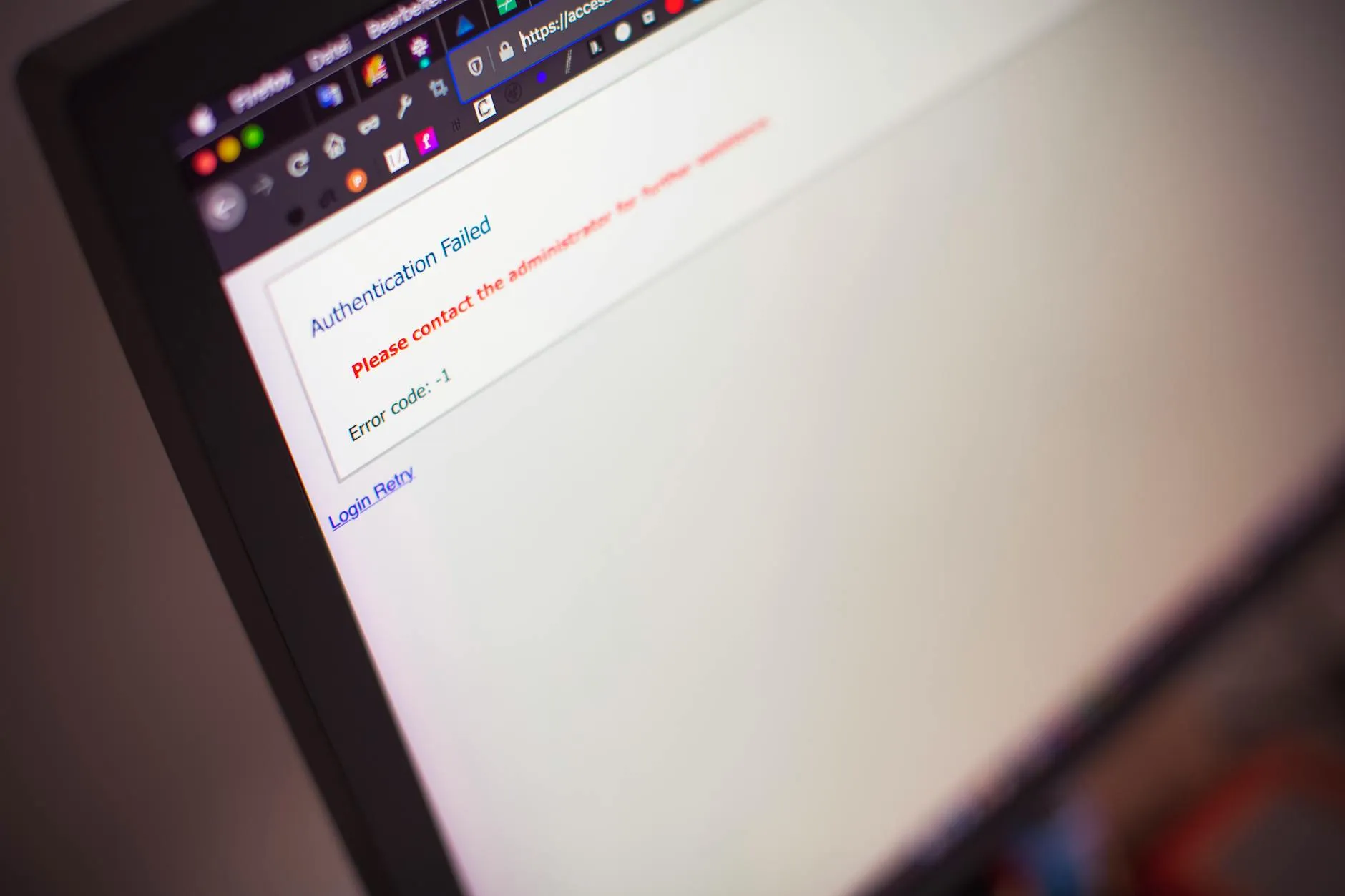
At 7:00 a.m. we received an emergency call from Winston Tusi, CEO of our Hong Kong asset management client. Winston Tusi, the CEO of a Hong Kong-based asset management client, called us at 7:00 a.m. - his computer was unable to log on to the system, and there were only two hours left before the stock market opened. What's more, because he works from home, he had no access to an emergency backup computer. The situation was urgent, and he needed to locate the root cause of the problem and solve it quickly and remotely. From our long experience in serving financial clients, we know that daily information security and system availability is not only a mandatory requirement to meet industry compliance, but also a rigid need to support the normal operation of clients' business. In this emergency response, engineer Alvin remotely viewed the customer's Azure AD access records and quickly located the root cause of the problem - the customer had entered the wrong password several times, resulting in account lockout. What's more special is that the customer is a CEO (key sensitive user), and his account's self-service function and multi-factor authentication (MFA) are restricted by the policy, so he can't unlock it by himself. After clarifying the problem, Alvin immediately completed the account unlocking operation from the backend, and instructed the customer to reconfigure MFA in real time via phone, solving the problem efficiently throughout the whole process and ensuring that the customer's core business would not be affected.
Four Hour Principle support in 100+ countries
Expertise has established a strong service supply chain in more than 100+ countries around the world, which enables seamless cross-region and cross-cultural integration. Our experienced localization teams are familiar with local regulatory requirements and technical environments, and are able to ensure the effective implementation of the four-hour rule. Whether in a bustling city or a remote area, Boon Edam can provide a consistent and high quality service experience to help companies overcome geographical constraints and achieve efficient global operations.
Conclusion
To sum up, as an efficient service response mechanism, the "four-hour rule" plays an irreplaceable role in ensuring the stable operation of an enterprise's information system. Whether it is support for promotional activities in the retail industry, troubleshooting of POS systems in stores, or repairing faults in production line automation control systems and solving data synchronization problems in ERP systems in the manufacturing field, we can see the reflection of its importance. With years of industry experience and technology accumulation, BoonEx has always been adhering to this principle, helping many enterprises to solve various complex IT problems and realize business continuity and growth goals. In the future, we will continue to optimize our service process and enhance our technology to help more Chinese enterprises going overseas to reach the world stage and achieve greater success and development.
Contact Us | Learn More
Author: Yamazumi | Global IT Services Supply Chain Architect 20+ years of cross-border delivery experience, serving 100+ countries, 500+ overseas enterprises; leading the construction of an integrated platform of "Demand Definition - Resource Orchestration - Compliance Delivery". Compliance Delivery" integrated platform, realizing cost reduction, efficiency and delivery cycle shortening by 80%. Focusing on global new office IT construction, network maintenance, operation and maintenance support, and cross-border data compliance, we integrate standardization, automation, and compliance into the delivery process, and help enterprises turn global IT capabilities into growth momentum with minute response.
Disclaimer This article is written by BROCENT with reference to third-party information and represents the views of BROCENT only. The data, facts or information quoted in this article may contain inaccuracies or errors, and BROCENT does not guarantee their accuracy, completeness or reliability. If you find any inaccuracies or errors, please contact the author for timely revision. The content of this article is for reference only and does not constitute any investment, legal or other professional advice, readers should make their own judgment and bear the corresponding risks.
Share:
Ready to take action?
Turn these insights into a roadmap for your business.
Book a 15-minute no-obligation consultation with our APAC IT experts. We'll review your current setup and provide a tailored IT roadmap within 24 hours.
Free Checklist
10 Critical Checks Before Expanding IT to Greater China
PIPL compliance, network segmentation, bilingual helpdesk setup, and more — everything your IT team needs before Day 1 in China.
Request the checklist →📬 Monthly Asia IT Insights
China compliance updates, cybersecurity alerts, and IT tips for APAC teams — once a month.
No spam. Unsubscribe anytime.
Related Articles

Mar 28, 2026
Ad Hoc On-Site Technical Support in Nanjing, China: Flexible “Token Bulk Hours” for Your Edge Devices and Remote Infrastructure

Mar 26, 2026
Fortifying Semiconductor IP: Tailored IT Infrastructure & Cybersecurity for a Singapore Small Team

Mar 23, 2026
Hong Kong Singapore two major financial markets in Asia ITO research report